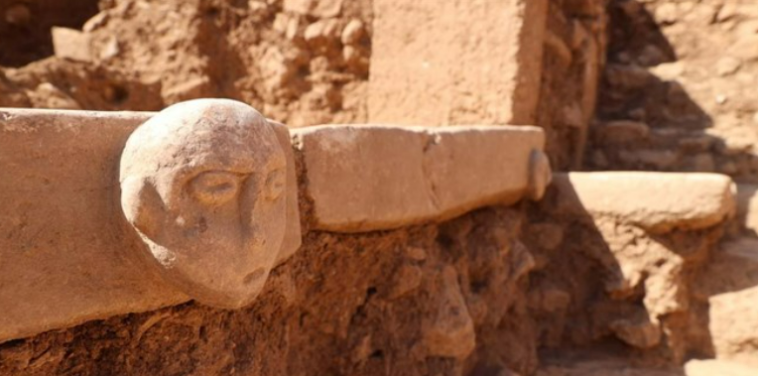
The ancient world continues to surprise us, especially in southeastern Turkey. A fascinating and critically important announcement has just come out of the Göbeklitepe region, confirming 30 new discoveries, including two distinct human face reliefs unearthed at the Sefertepe site as part of the ongoing “Taş Tepeler Project” in Şanlıurfa. These stunning finds provide new, tangible evidence of the incredible artistic diversity and regional style differences that flourished during the Neolithic period, approximately 10,500 years ago.
The “Taş Tepeler Project,” spearheaded by the Ministry of Culture and Tourism, is transforming our understanding of the early settled communities in the Şanlıurfa province. Assoc. Prof. Dr. Emre Güldoğan, a faculty member at Istanbul University’s Department of Prehistoric Archaeology and the head of the Sefertepe excavations, shared the details of these groundbreaking findings with the Anadolu Agency.
Two Faces, 10,500 Years Apart in Style
During this year’s digs, archaeologists recovered two meticulously carved human face reliefs on the front surface of a four-block limestone structure. What makes these especially notable is the technique: the faces were crafted using both high- and low-relief methods, resulting in strikingly distinct facial features.
Dr. Güldoğan elaborated that these figures offer fresh insights into the Neolithic-era concept of art. “We determined that both faces, depicted facing the north, are part of a structure surrounded by stone blocks, possibly demarcating a special area,” he said.
Crucially, the Sefertepe faces exhibit characteristics that differentiate them from the human figures previously documented at nearby world-famous sites like Göbeklitepe, Karahantepe, and Sayburç.
- Stylistic Differences: One face uses a low-relief technique, while the other employs a high-relief technique, creating noticeable differences in style.
- Detailed Features: The high-relief example shows carefully worked details around the pupils, eyes, brow ridge, nose, and mouth. The low-relief example, however, appears to have its eyes closed.
- Distinct Anatomy: Unlike the plump-lipped form known from Karahantepe, the low-relief example has a different nasal and mouth structure. In the high-relief depiction, the ears are very clearly represented, and a complete head is rendered.
Dr. Güldoğan underscored the significance of these distinctions, noting that the emphasis on the details of the eyes, ears, and nose is a key feature setting the Sefertepe figures apart. This artistic variation is powerful evidence of the regional stylistic differences and artistic diversity within the early Neolithic communities.
The platform containing these reliefs was clearly purpose-built for the site, as indicated by the presence of pits dug into the bedrock around it, suggesting it was part of a specific architectural arrangement.
🌍 Beyond Sefertepe: Other Archaeological Wonders of November
The discoveries in Şanlıurfa dominated the archaeological headlines in November, but they were far from the only exciting finds. Experts from Arkeofili, a platform dedicated to making archaeology accessible, compiled a list of the 10 most significant archaeological discoveries of the month globally, showcasing the staggering breadth of ongoing research.
Here are a few highlights that captivated the world:
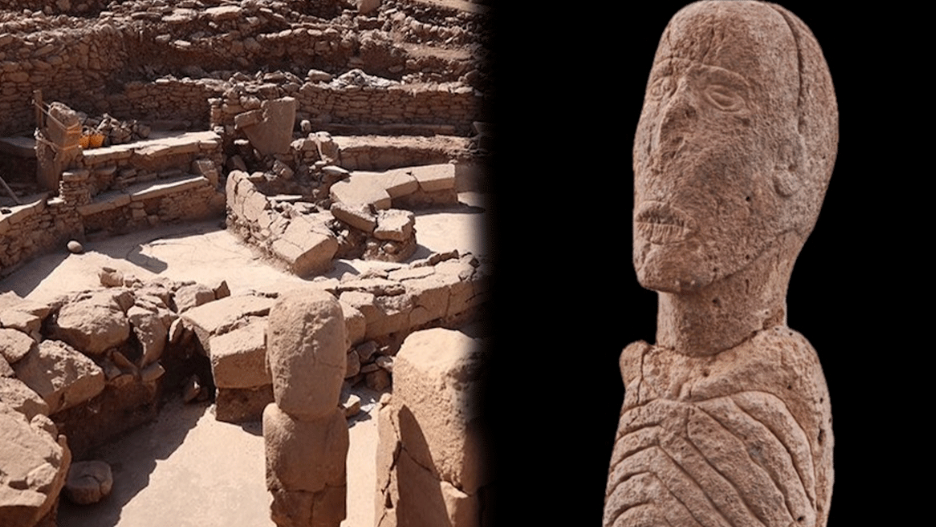
- Karahantepe’s Massive 17-Meter Structure: Also in the Şanlıurfa area, a colossal, 17-meter-diameter public structure resembling an amphitheater was unearthed at Karahantepe. Used for ritualistic purposes, this monumental find dates back to around 9,400 to 8,000 BCE and features human heads embedded in the walls and seated human statues on the floor.
- The World’s Oldest City Map Proves Accurate: A 3,500-year-old clay tablet from Mesopotamia, depicting the city of Nippur, was found to align perfectly with the excavated fortifications, proving its stunning cartographic accuracy.
- A Statue from Sayburç with Stitched Mouth: Another Taş Tepeler site, Sayburç, yielded a striking human statue believed to date to c. 9,500 BCE. The figure appears to have a stitched mouth and eye sockets filled with shell fragments, offering dramatic clues about the early settled communities’ death rituals.
- Early Evidence of Animism: A 12,000-year-old baked clay figurine from Israel, depicting a woman and a bird (possibly a goose), may represent some of the earliest evidence of animistic beliefs in Southwest Asia, predating the Greek myth of Leda and the Swan by millennia.
The Göbeklitepe region and the surrounding Taş Tepeler sites continue to deliver world-changing insights into humanity’s earliest complex societies. The two new faces at Sefertepe are not just pieces of art; they are voices from 10,500 years ago, speaking volumes about the creativity and regional identities of the people who shaped the very foundation of civilization.
