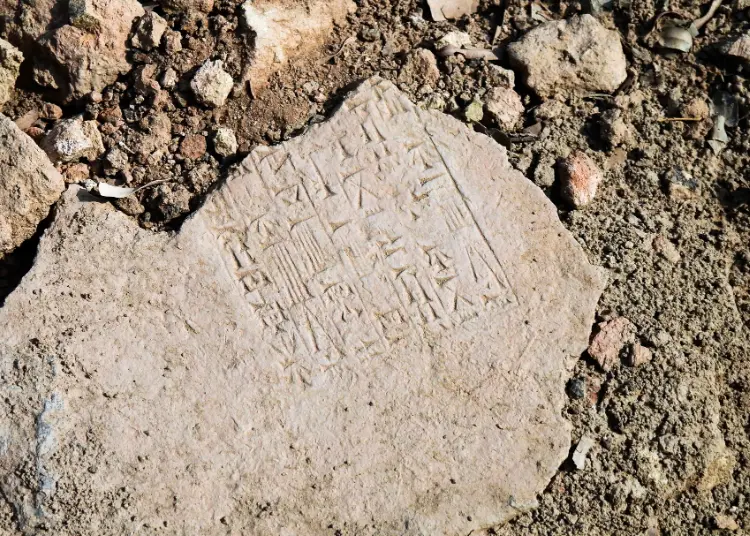
4,000-year-old cuneiform tablet inscriptions decoded by modern scholars have revealed a chilling message from the ancient world: a king will die. After more than a century of obscurity, a small collection of clay tablets from ancient Babylonia has finally been translated, uncovering a detailed system of ominous predictions tied to celestial events, political instability, and fears of societal collapse.
The discovery does not involve newly excavated artifacts, but rather newly understood ones. The tablets themselves were uncovered in the late 19th and early 20th centuries and have spent decades stored among thousands of similar objects in museum collections. What has changed is scholars’ ability to read, contextualize, and fully understand the messages inscribed upon them.
The result is a rare and unsettling glimpse into how ancient Mesopotamian civilizations interpreted the universe—and how seriously they took signs of impending disaster.
Decoding a 4,000-Year-Old Cuneiform Tablet
The tablets were written in cuneiform, one of the earliest known writing systems in human history. Used widely across Mesopotamia, cuneiform employed wedge-shaped impressions pressed into soft clay, which was then hardened. Over time, this writing system was adapted to record multiple languages, including Akkadian, the Semitic language used in ancient Babylonia.
In a recently published academic study in the Journal of Cuneiform Studies, researchers presented translations of 73 individual omens preserved on four tablets. These texts are now believed to date back roughly 4,000 years, placing them in the early second millennium BCE.
The inscriptions form part of a standardized divinatory tradition used by Babylonian scholars to interpret supernatural warnings. One of the most striking lines, repeated in variations across the tablets, states plainly that under certain conditions, “a king will die.”
Why Lunar Eclipses Terrified Ancient Babylonia
A defining feature of the omens is their connection to lunar eclipses. In modern times, eclipses are predictable astronomical events. In ancient Babylonia, however, they were viewed as dangerous disruptions of cosmic order.
Babylonian scholars believed that the moon was closely tied to royal authority and divine favor. When the moon darkened unexpectedly, it was interpreted as a sign that the gods were displeased or preparing to unleash punishment upon the state.
The 4,000-year-old cuneiform tablet texts link eclipses to specific outcomes:
- The death of a ruler
- Invasions by enemy forces
- Widespread famine
- Disease outbreaks and plagues
- Drought and agricultural failure
These predictions were not abstract myths. They were practical warnings used to guide political and religious decisions.
Ancient Divination as a Tool of Governance
Divination was not fringe behavior in Babylonia—it was an official state practice. Royal courts employed trained scholars whose sole responsibility was to interpret omens and advise rulers on how to respond.
When a tablet predicted something as severe as a king’s death, the warning triggered a multi-step response. According to the decoded texts, priests would conduct extispicy, a ritual involving the examination of a sacrificed animal’s internal organs, particularly the liver. This practice was believed to offer clarification on whether the danger was real, symbolic, or avoidable.
If the threat was confirmed, further actions followed. Rituals were performed to divert the danger, sometimes involving the appointment of a temporary substitute king. This stand-in ruler would symbolically absorb the curse, allowing the real king to survive once the ominous period passed.
The seriousness of these measures shows that Babylonian leaders genuinely believed their fate could be influenced—or destroyed—by celestial signs.
A Window into Babylonian Anxiety and Power
From a modern perspective, the tablets are less about predicting the future and more about revealing the fears of the past. The disasters described—war, famine, disease—were very real threats in ancient Mesopotamia, where political instability and environmental hardship were constant concerns.
The 4,000-year-old cuneiform tablet omens reflect a worldview in which kings were responsible not only for governance but for maintaining cosmic balance. If a ruler failed, the consequences were believed to extend far beyond politics, endangering the entire population.
These anxieties were encoded into a formal system that attempted to impose order on uncertainty. By cataloging signs and their meanings, Babylonian scholars tried to make sense of an unpredictable world.
Why the Tablets Took So Long to Be Translated
Although the tablets were acquired by the British Museum between the 1890s and 1914, they remained largely unstudied for decades. The reason is simple: scale and specialization.
The museum holds more than 150,000 cuneiform tablets, many fragmented or damaged. Deciphering them requires deep expertise in ancient languages, writing conventions, and historical context. For much of the 20th century, there were relatively few specialists capable of performing this work.
The tablets were rediscovered in the 1970s by a scholar who recognized their importance, but full translation required years of careful analysis. The process involved repeated readings, detailed line drawings, and comparison with other known divinatory texts.
Only recently have scholars been able to confidently publish a complete and coherent translation.
What the Language Reveals About Their Origins
The tablets are written in Akkadian, confirming their Babylonian origin. Their structure follows a well-known Mesopotamian format: conditional statements beginning with “if” and ending with a predicted outcome.
For example, a line might read:
If an eclipse occurs under specific conditions, then the king will die.
This standardized format allowed scholars to build extensive reference lists, creating a shared system of interpretation across generations.
The consistency of language and structure also suggests that these tablets were part of a larger educational or archival tradition rather than isolated records.
Why This Discovery Still Matters Today
The translation of the 4,000-year-old cuneiform tablet collection adds to a growing body of evidence that ancient civilizations were far more intellectually sophisticated than once believed. Babylonian scholars carefully observed astronomical patterns, recorded historical events, and developed complex interpretive frameworks.
While their conclusions were rooted in belief rather than science, their methods—observation, documentation, comparison—laid early foundations for systematic knowledge.
More importantly, these texts humanize the ancient world. They show that people thousands of years ago worried about leadership, disaster, and survival in ways that are still recognizable today.
Reconstructing Ancient Lives Through Clay Tablets
Over the past 150 years, the study of cuneiform has transformed modern understanding of Mesopotamia. Before these texts were deciphered, knowledge of Babylonian and Assyrian cultures came mostly from Greek historians and biblical references.
Now, scholars can hear the voices of the ancient people themselves—priests, scribes, merchants, and kings—preserved in clay.
Each translated tablet adds detail to a civilization that helped shape writing, law, astronomy, and governance. The warnings inscribed on these tablets remind us that history is not just about achievements, but also about fears, beliefs, and attempts to control an uncertain future.
A Message That Survived Four Millennia
Whether or not anyone ever heeded the warning that “a king will die,” the message itself has endured for 4,000 years. Carved into clay, buried by time, and finally understood by modern scholars, it stands as a testament to humanity’s long struggle to understand fate.
The 4,000-year-old cuneiform tablet may not predict our future—but it tells us a great deal about our past.
And in doing so, it reminds us that even ancient warnings can still speak across millennia.
