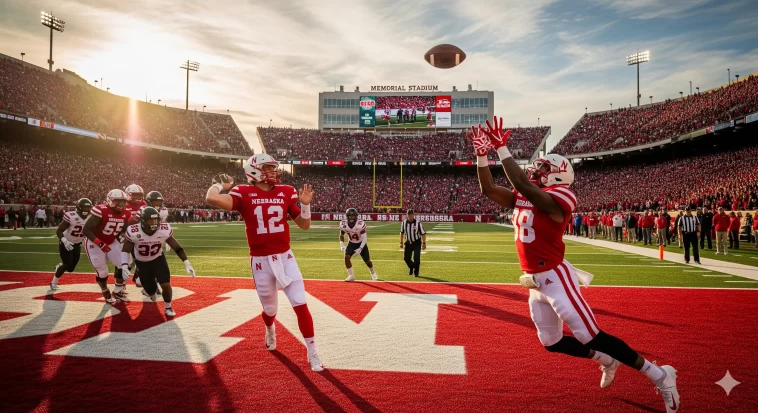
The Nebraska Cornhuskers are one of the most storied college football programs in the United States. With a legacy built on championships, legendary coaches, passionate fans, and unforgettable traditions, Nebraska football has long been a powerhouse in the NCAA. Even though the program has faced ups and downs in recent years, the Cornhuskers’ influence on college football is undeniable.
Here are 50 Nebraska Cornhuskers facts that dive into the team’s history, legacy, and culture.
Early History and Program Beginnings
1. The Nebraska football program was established in 1890, making it one of the oldest programs in college football.
2. The team’s original name was the Old Gold Knights before officially becoming the Cornhuskers.
3. The name “Cornhuskers” was first popularized by sportswriter Charles “Cy” Sherman in 1900.
4. Nebraska’s first-ever football game took place on November 27, 1890, against the Omaha YMCA. Nebraska won 10–0.
5. The Cornhuskers’ early success helped establish them as a regional power in the Midwest during the early 20th century.
Championships and Success
6. Nebraska has won five national championships in football: 1970, 1971, 1994, 1995, and 1997.
7. The Cornhuskers have won 46 conference championships throughout their history.
8. From 1969 to 2001, Nebraska finished in the Top 25 rankings for 33 consecutive seasons.
9. Nebraska had an incredible 33 consecutive bowl game appearances between 1969 and 2002.
10. The 1995 team is often considered one of the greatest in college football history, finishing 12–0 and outscoring opponents by a wide margin.
Legendary Coaches
11. Bob Devaney, hired in 1962, revitalized Nebraska football and won two national championships (1970 and 1971).
12. Tom Osborne is the most iconic Nebraska coach, leading the program from 1973 to 1997.
13. Osborne won three national championships (1994, 1995, 1997).
14. Under Osborne, Nebraska won 255 games, making him one of the winningest coaches in college football history.
15. Osborne retired with a career winning percentage of .836, one of the highest in NCAA history.
16. Frank Solich, Osborne’s successor, led Nebraska to the national title game in 2001, where they lost to Miami.
17. Scott Frost, a former Nebraska quarterback who won a national championship in 1997, returned as head coach in 2018.
18. Matt Rhule became head coach in 2022, tasked with rebuilding the program.
Famous Players
19. Johnny Rodgers, Nebraska’s star wingback, won the Heisman Trophy in 1972.
20. Mike Rozier won the Heisman Trophy in 1983 after rushing for 2,148 yards.
21. Eric Crouch became Nebraska’s third Heisman winner in 2001 as a dual-threat quarterback.
22. Ndamukong Suh, one of the most dominant defensive tackles in college football history, was a Heisman finalist in 2009.
23. Tommie Frazier, Nebraska’s quarterback in the mid-1990s, is considered one of the greatest option quarterbacks ever.
24. Grant Wistrom, a defensive end, was a consensus All-American and Lombardi Award winner.
25. Will Shields, an offensive lineman, went on to have a Hall of Fame career in the NFL.
Memorial Stadium Facts
26. Nebraska plays its home games at Memorial Stadium in Lincoln, Nebraska.
27. Memorial Stadium first opened in 1923 with a capacity of 31,080.
28. Today, the stadium’s capacity is 85,000+, making it one of the largest in college football.
29. Since 1962, Nebraska has sold out every home game, holding the NCAA record for consecutive sellouts.
30. On game days, Memorial Stadium becomes the third-largest city in Nebraska, after Omaha and Lincoln.
31. The stadium is nicknamed the “Sea of Red” because nearly every fan wears red.
32. In 2006, Memorial Stadium added a giant HuskerVision video board, one of the largest in the country at the time.
Rivalries
33. Nebraska’s biggest historical rival was the Oklahoma Sooners, with the rivalry peaking during the Big Eight era.
34. The 1971 “Game of the Century” between Nebraska and Oklahoma ended in a 35–31 Huskers victory.
35. Nebraska also had a heated rivalry with Colorado, especially during the 1980s and 1990s.
36. Since joining the Big Ten in 2011, Nebraska has developed rivalries with Iowa and Wisconsin.
37. The annual “Heroes Game” against Iowa is played on the Friday after Thanksgiving.
Traditions and Culture
38. The “Tunnel Walk” is one of the most famous traditions, where players walk onto the field through the stadium tunnel while fans roar.
39. Fans release red balloons after Nebraska scores its first touchdown in each home game.
40. The marching band, known as the Cornhusker Marching Band, has been part of the program since 1879.
41. Nebraska’s official fight song is “Hail Varsity.”
42. The mascot, Herbie Husker, is one of the most recognizable mascots in college football.
43. Nebraska’s alternate mascot, Lil’ Red, is an inflatable character introduced in 1993.
44. Husker fans are often called “The Sea of Red” for their loyalty and stadium atmosphere.
Fans and Community
45. Nebraska fans are considered some of the most loyal in the nation, consistently traveling to bowl games in large numbers.
46. Even during down seasons, Nebraska’s attendance ranks among the best in the NCAA.
47. Visiting teams have often commented that Nebraska fans are unusually respectful and knowledgeable about football.
48. The Huskers have one of the largest fan followings on social media among college programs.
49. Nebraska’s fan base extends beyond the state, with alumni chapters across the United States.
50. Nebraska football is often referred to as the state’s “religion”, uniting fans from every corner of the region.
Final Thoughts
The Nebraska Cornhuskers are more than just a football team — they are a cultural phenomenon. From legendary coaches like Tom Osborne and Bob Devaney to iconic players like Johnny Rodgers, Mike Rozier, Eric Crouch, and Ndamukong Suh, the program has produced greatness for over a century. The traditions at Memorial Stadium, the unmatched loyalty of the fan base, and the historic rivalries have cemented Nebraska’s place in college football history.
These 50 Nebraska Cornhuskers facts highlight why the Huskers remain one of the most iconic programs in the NCAA. No matter the ups and downs, the Cornhuskers’ spirit continues to thrive, and their fans believe the best days are still ahead.
