
Renaissance maps not only provide geographical information, but also reveal the fear and fascination of the people of the time for the oceans and the unknown. One of the most striking elements of these maps is the elaborately painted figures of sea monsters. Although they often appear to be ornamental, these monsters actually reflect the perception of the ocean at the time and people’s imagination of the unknown. At the time, people believed that giant creatures lived in the depths of the ocean and even attacked ships. The sirens, leviathans and other monsters on the maps are the elements that shaped the adventures of explorers and the perceptions of those living on land. Let’s take a look at what is known about the sea monsters on Renaissance maps.
Maps made during the Renaissance were not only used for navigation, as they are today.
Rather, they were works of art and status symbols for the aristocracy of the time. The wealthy and nobility in particular wanted to emphasize their power and wealth by displaying ostentatious maps in their homes. Owning a map was both a sign of financial power and a symbolic representation of control over the territory on the map. In these maps, not only geographical shapes but also details such as people, ships and sea monsters were carefully rendered as aesthetic elements.
The maps used during the Renaissance period can be categorized under three main headings: nautical maps, world maps and maps based on Ptolemy’s Geography
While nautical charts were specifically designed for navigation, world maps were mostly kept and displayed by private collectors. These maps were also an important source for people of the period to get to know the rest of the world. Especially information about sea creatures thought to be in the oceans was disseminated through these maps.
In the early Renaissance, the ocean was perceived as an unruly force of nature that humans had to control
In the Age of Exploration, the wealthy in the Western world wanted to control unknown lands and the high seas. But the sea often remained an unpredictable place, full of unexplored dangers. The sea monsters that inhabited the depths of the sea were a reflection of sailors’ fears. Besides storms and the danger of getting lost, ship crews worried about being attacked by giant creatures from the depths of the sea.
The sirens, which often appeared on charts, were half-woman, half-fish figures that lured sailors into danger
These creatures from Greek mythology would cause sailors to lose their way and be drawn into deadly waters. The prevailing religious and social values of the Renaissance tended to see the female figure as such a dangerous element.
It was believed that women could seduce men and lead them astray from the “right path”, and these beliefs were also reflected on maps. The sirens on the maps symbolized many perceptions about women in the social structure of the period
The myth of Leviathan was strengthened by the influence of Christianity in the Renaissance. In the Old Testament, this ferocious creature, which even God found difficult to deal with, was portrayed as a monster that punished sinners. Often depicted on maps around the Mediterranean Sea, Leviathan was shown as a terrifying force lurking in the depths of the ocean to devour sailors. The inclusion of Leviathan on maps shows how dangerous the seas were perceived at the time and how unbridled they were even in the face of the power of the divine.
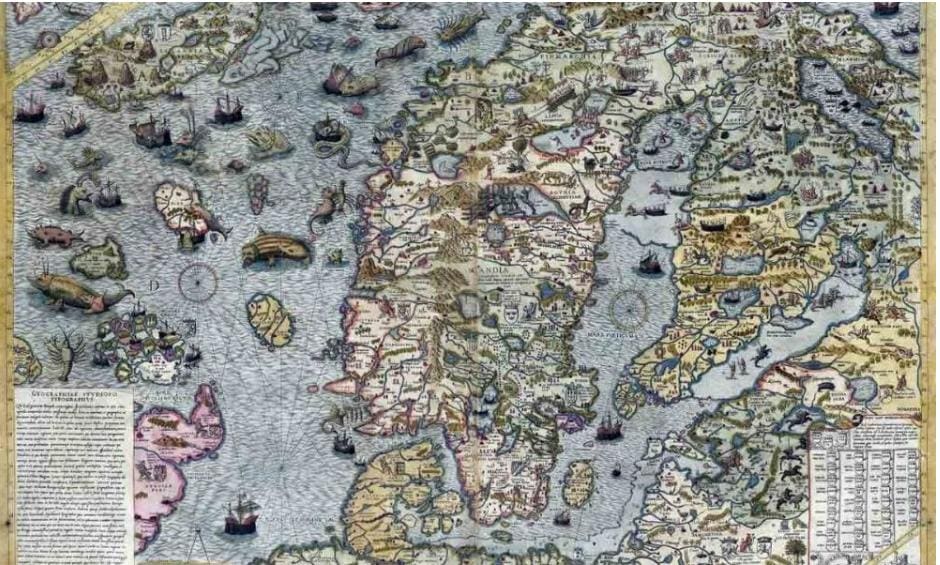
Huge sea serpents, spiny creatures, and sometimes exaggerated drawings of real animals found their way onto these maps. Whales, walruses and giant squid were interpreted by cartographers as monsters and depicted in frightening detail
For example, legendary stories of whales camping on what were mistaken for islands and then plunging into the sea, killing the campers, often found their way onto maps.
The sea monsters drawn during the Renaissance also symbolized the fears that people felt with the discoveries
The unknowable nature of the oceans, combined with the myths and imagination that pervaded society, made it inevitable that unrealistic monsters would frequently appear on maps. Over time, with technological advances, the depictions of sea monsters on maps became more realistic, and as the mysteries of the deep waters were unraveled, the belief in these monsters gradually faded. We have come to the end of our article on sea monsters on Renaissance maps
