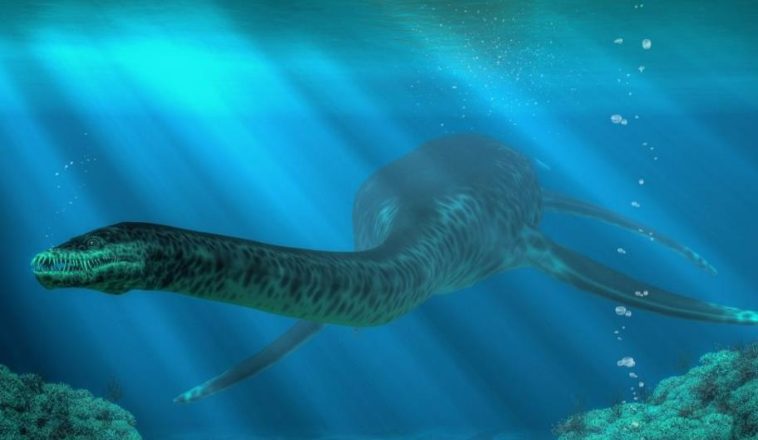
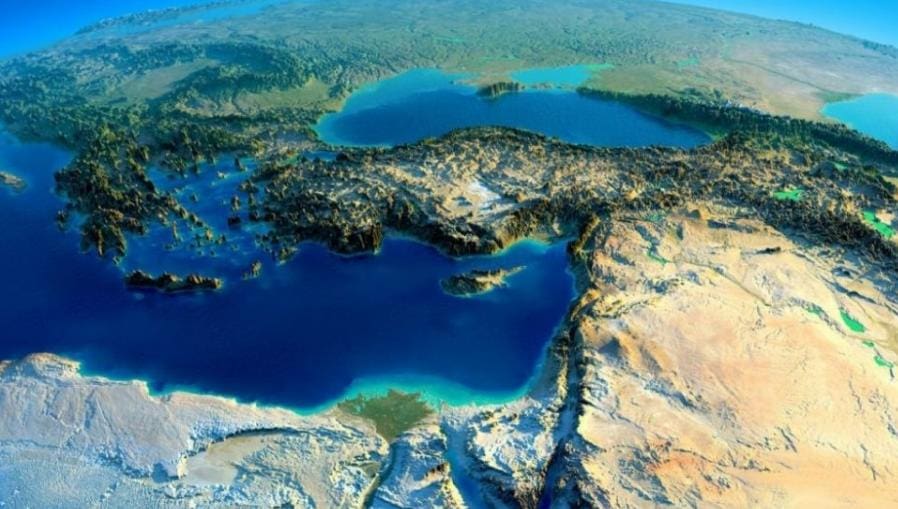
Millions of years ago, the Earth was a very different place. There was a body of water called the Tethys Sea that covered Anatolia.
We take you back millions of years to a time when the Earth had a completely different face. Are you imagining a planet covered in ice caps? You’re wrong! Because back then, the Earth was very different from the climate we know now. The oceans may seem endless, but they are actually one of the most dynamic parts of our planet! Over millions of years, Earth’s giant oceans have constantly changed shape, shifted and sometimes disappeared completely. One of them was a body of water known as the Tethys Sea or the Tethys Ocean. Let’s take a look at the details.
Now, we jump in a time machine and travel to the beginning of the Mesozoic Era! Earth is not a planet full of continents as we know it today
Rather, there is a single supercontinent called Pangea and a huge ocean surrounding it: Panthalassa! But hidden inside Pangea was another body of water: The Tethys Sea. This was the scene of one of the most important events that shaped Earth’s future oceans and climate.
By the Jurassic Period, Earth’s continents began to move slowly.
Yes, these movements were limited to a few centimeters, but they lasted for millions of years and completely changed the map of the planet! In the process, the continents squeezed the Tethys Sea, creating a long, thin equatorial seaway. So the Tethys didn’t stay still like a giant lake; rather, it became a liquid highway stretching from today’s Caribbean to the Himalayas.
The position of this giant sea was also radically changing the Earth’s climate system
Now let’s imagine:
In today’s world, large land masses block the equator. Because of this, the oceans cannot continuously circulate freely at the equator. Instead, closed-loop vortices form and transport heat from the equator to the poles. This helps to form polar ice caps.
But at the time of the Tethys, ocean waters were free to circulate! The result? A warmer and wetter world! This allowed tropical forests to spread over larger areas and different species to thrive.
Today’s Mediterranean Sea, the Black Sea and the peaks of the Himalayas… all were once part of the Tethys Sea!
In fact, that’s why marine fossils have been found on the top of Mount Everest. Yes, you heard that right! What was once the seabed is now a terrestrial mountain. Thanks to the ever-changing nature of the Earth, the Tethys has managed to leave its mark, though not forever.
Millions of years before the present, especially during the Mesozoic era, the Earth was not in “ice house” mode
On the contrary, there was a climate dominated by tropical temperatures, the so-called greenhouse effect. How? Because the Tethys formed a giant waterway connecting the Atlantic and Pacific. The equatorial waters traveled unimpeded all over the planet, keeping the earth warm. This made it almost impossible for glaciers to form.
The ideal climatic conditions that allowed dinosaurs to grow to gigantic sizes were precisely due to this greenhouse effect! Maybe these tropical waters played a big role in their gigantism, who knows? Scientists are still searching for the answer to this question!
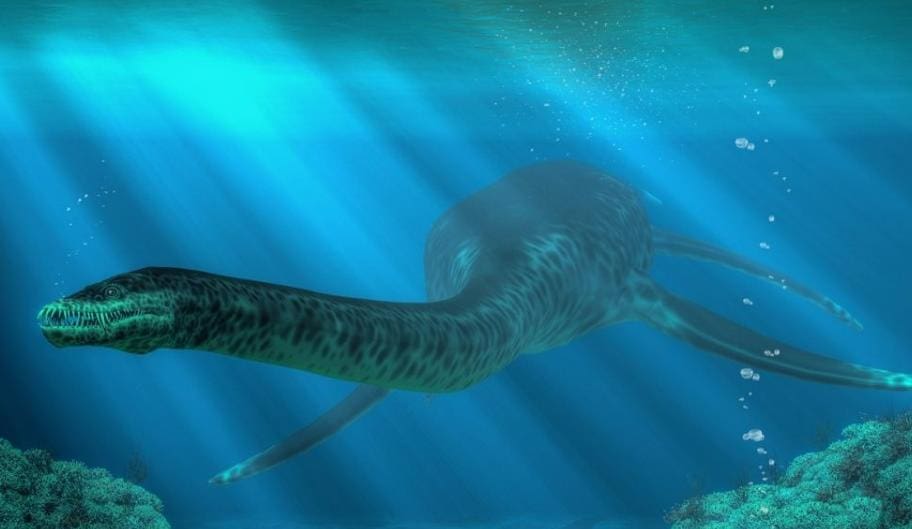
The Tethys Sea not only offered dinosaurs a tropical paradise, but also provided an incredible space for biodiversity to flourish. Plants, animals and sea creatures could move freely in this huge corridor of warm and relatively shallow water.
But all good things must come to an end, right? The Tethys also disappeared over time. One of the biggest reasons was the movement of the continents and the rise of the Isthmus of Panama.
When the Isthmus of Panama joined North and South America, the currents shifted and the flow of tropical water from the Tethys was cut off. This caused the global climate to change and the planet to gradually become what it is today. In other words, it contributed to the Earth’s entry into the “ice house” era.
In fact, the Tethys Sea has not completely disappeared, its remnants still exist today in many parts of the Earth!
The Mediterranean, Black, Caspian and Aral Seas are the remaining parts of this ancient sea! But is that all? Of course not! The ancient seafloor of the Tethys contributed to the formation of giant mountain ranges such as the Himalayas, Alps, Carpathians and Pamir Mountains. So these mountains, whose summits seem impossible to reach today, were once at the bottom of the sea!
And now, hold on tight! The traces of Tethys are hidden not only in the seas, but also in the stones! The “shaligram” stones found on the banks of the Gandaki River in Nepal are actually formed from the sediments of this ancient sea. Moreover, the logarithmic spirals in these stones are considered sacred symbols in Hinduism, Buddhism and Jainism. So Tetis is not only a sea, but also a mystical legacy!
