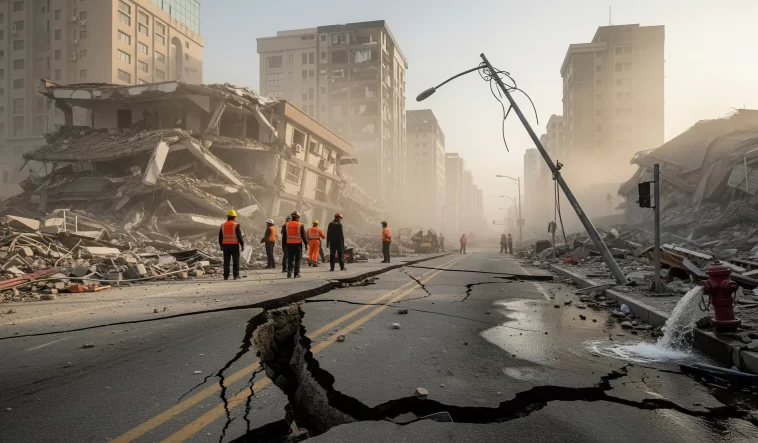
Earthquakes are one of the most unpredictable and destructive natural disasters on Earth. They can occur without warning, shake entire cities, and cause catastrophic damage in seconds. Understanding the causes, effects, and how to stay safe during an earthquake is crucial for everyone—whether you live in an earthquake-prone area or not.
In this in-depth blog post, we explore what earthquakes are, how they happen, what you can do to stay safe, and how to prepare ahead of time.
What Is an Earthquake?
An earthquake is a sudden and violent shaking of the ground caused by movements within the Earth’s crust. Most earthquakes are caused by the shifting of tectonic plates, massive sections of the Earth’s surface that move slowly over time.
These shifts build up tension, and when the pressure becomes too great, it is released as energy—this energy radiates outward as seismic waves, causing the ground to shake.
🌍 Fun Fact: There are over 500,000 earthquakes detected around the world each year, but most are too small to be felt.
What Causes Earthquakes?
The main cause of earthquakes is the movement of tectonic plates along fault lines, but they can also be triggered by:
- Volcanic activity
- Man-made explosions (like mining or nuclear tests)
- Landslides or collapses
- Fracking and reservoir-induced seismicity
The Role of Tectonic Plates
The Earth’s crust is divided into about a dozen large tectonic plates. When these plates collide, slide past each other, or pull apart, stress builds up. Eventually, the built-up energy is released, causing an earthquake.
Types of Earthquakes
There are several types of earthquakes based on how tectonic plates move:
- Strike-slip earthquakes – Plates slide past one another (e.g., San Andreas Fault)
- Normal earthquakes – Plates move apart (divergent boundaries)
- Reverse (thrust) earthquakes – Plates collide and one is forced over the other (convergent boundaries)
- Induced earthquakes – Result from human activities like drilling or dam construction
How Are Earthquakes Measured?
Earthquakes are measured in magnitude and intensity:
- Magnitude: The amount of energy released (measured using the Richter scale or moment magnitude scale)
- Intensity: The observed effects on people, buildings, and the Earth’s surface (measured by the Modified Mercalli Intensity Scale)
Magnitude Guide:
| Magnitude | Description | Potential Damage |
|---|---|---|
| 2.0–2.9 | Micro | Not felt |
| 3.0–3.9 | Minor | Often felt, no damage |
| 4.0–4.9 | Light | Some shaking, minor damage |
| 5.0–5.9 | Moderate | Can damage poorly built structures |
| 6.0–6.9 | Strong | Destructive in populated areas |
| 7.0–7.9 | Major | Serious damage |
| 8.0+ | Great | Devastating |
What Are the Effects of an Earthquake?
Earthquakes can trigger a wide range of destructive consequences:
- Structural damage to buildings, roads, and bridges
- Landslides and avalanches
- Tsunamis (especially with underwater quakes)
- Fires from broken gas lines
- Power outages
- Ground rupture
- Emotional and psychological trauma
Notable Earthquakes in History
Here are some of the most devastating earthquakes in modern history:
- 2004 Indian Ocean Earthquake (Magnitude 9.1–9.3)
- Triggered a massive tsunami that killed over 230,000 people.
- 2010 Haiti Earthquake (Magnitude 7.0)
- Caused the deaths of more than 160,000 people and left 1.5 million homeless.
- 2011 Tōhoku Earthquake, Japan (Magnitude 9.1)
- Generated a tsunami and nuclear disaster in Fukushima.
- 1906 San Francisco Earthquake (Magnitude 7.9)
- Destroyed most of San Francisco, killing over 3,000.
Earthquake Safety Tips
🏠 Before an Earthquake
- Secure heavy furniture and shelves to walls.
- Know where shutoff valves are for gas and water.
- Prepare an emergency kit with:
- Water, food, flashlight, first aid, medications
- Whistle, phone charger, dust mask, copies of documents
🔥 During an Earthquake
- Drop, Cover, and Hold On!
- Drop to the ground
- Take cover under a sturdy table or desk
- Hold on until the shaking stops
- Stay away from windows, mirrors, and glass
- If outside, move to an open area away from buildings or trees
- If driving, pull over and stop
🧯 After an Earthquake
- Check yourself and others for injuries
- Watch out for aftershocks
- Turn off utilities if you suspect damage
- Avoid using elevators
- Listen to emergency broadcasts or alerts
- Expect road and service disruptions
Earthquake Preparedness: What You Can Do
Being prepared saves lives. Here are steps to protect your home and family:
✔️ Emergency Kit Checklist
- 3-day water and food supply
- Flashlight with extra batteries
- First aid kit
- Personal hygiene items
- Blankets and clothes
- Cell phone with solar charger
- Cash and ID copies
✔️ Create a Family Emergency Plan
- Identify meeting points
- Practice evacuation routes
- Teach children safety protocols
- Assign emergency contacts
Earthquakes and Climate Change: Is There a Link?
Many wonder if climate change contributes to seismic activity. While climate change doesn’t directly cause earthquakes, some researchers believe melting glaciers and rising sea levels may influence fault lines over time. Additionally, human activities like fracking and dam building can increase earthquake frequency in certain regions.
Where Are Earthquakes Most Common?
Earthquakes can happen anywhere, but some regions are more prone due to tectonic activity. The most well-known zone is:
🌐 The Ring of Fire
A horseshoe-shaped area in the Pacific Ocean where 90% of the world’s earthquakes occur. Countries like:
- Japan
- Indonesia
- Philippines
- Chile
- California (USA)
- Alaska
…are all in this high-risk zone.
Final Thoughts: Stay Alert, Stay Safe
Earthquakes are unpredictable, but with knowledge and preparation, you can greatly reduce your risk. Always be informed, practice safety drills, and have a disaster plan in place.
🚨 Earthquakes don’t kill people—buildings do. Invest in safe construction and stay ready.
Frequently Asked Questions (FAQ)
✅ Can animals sense earthquakes?
Yes, some animals show unusual behavior before seismic activity, but it’s not yet scientifically reliable for prediction.
✅ Can earthquakes be predicted?
Currently, earthquakes cannot be predicted with exact time or location, but scientists can assess risk levels.
✅ What is the difference between epicenter and hypocenter?
- Epicenter: Point on the Earth’s surface directly above the origin.
- Hypocenter: Actual location beneath the surface where the quake starts.
Share This Post to Spread Earthquake Awareness!
Whether you live in a high-risk zone or not, earthquake knowledge saves lives. Share this blog post with your loved ones and help your community prepare better for the unexpected.
