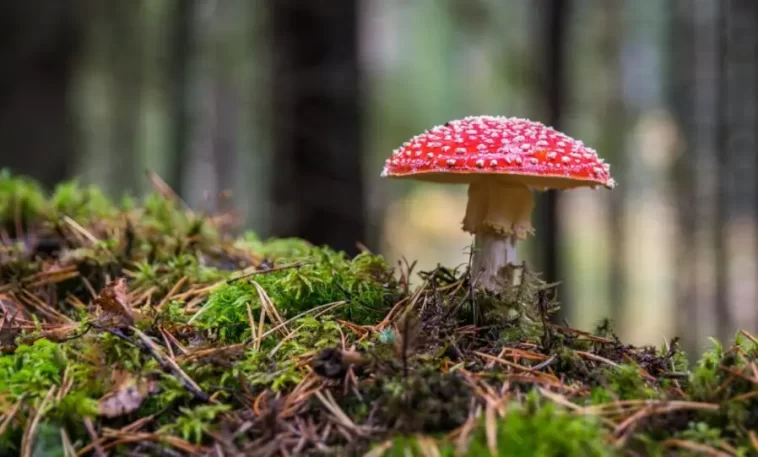
Interesting Facts About Mushrooms are far more surprising than most people imagine. Mushrooms are not just food ingredients or strange shapes you see in the forest. They belong to the mysterious kingdom of fungi, which plays a vital role in ecosystems, medicine, and even technology. From their ability to communicate to their strange growth habits, mushrooms are full of secrets waiting to be uncovered.
In this article, we’ll explore 16 fascinating facts about mushrooms that will change the way you look at them forever.
1. Mushrooms Are Neither Plants Nor Animals
Unlike what many assume, mushrooms don’t belong to the plant or animal kingdoms. They are part of a separate group called fungi, which also includes yeasts, molds, and lichens. This makes them unique in the natural world, with their own biological rules.
2. Mushrooms Are Mostly Water
Did you know that mushrooms are about 90% water? Their sponge-like structure allows them to absorb moisture easily, which is why they feel soft and delicate when fresh.
3. Mushrooms Don’t Need Sunlight to Grow
Unlike plants, mushrooms don’t rely on photosynthesis. They absorb nutrients from decaying organic matter, meaning they can thrive in dark environments such as caves or forest floors.
4. Mushrooms Grow Extremely Fast
Some mushrooms can double in size within 24 hours. Their rapid growth makes them one of the fastest-developing organisms in nature.
5. Mushrooms Can Live for Days or Decades
While some mushrooms survive only a week, others can live for decades depending on their environment. Certain fungi networks underground can exist for thousands of years.
6. Mushrooms Communicate Using Electricity
Through their underground networks called mycelium, mushrooms send electrical signals similar to how nerves work in animals. Scientists believe this fungal “language” may contain up to 50 words.
7. Mushroom Spores Are Incredibly Resilient
Spores, the reproductive units of mushrooms, can survive extreme conditions such as radiation and vacuum. This resilience makes them one of the toughest life forms on Earth.
8. China Is the Largest Producer of Edible Mushrooms
China produces around 40 million tons of edible mushrooms annually, accounting for nearly 70% of the world’s supply.
9. Mushrooms Can Be Used as Building Materials
Mycelium, the root-like structure of mushrooms, can be used to make leather alternatives, bricks, and insulation materials. This eco-friendly innovation is gaining popularity in sustainable design.
10. Lightning Helps Mushrooms Grow Faster
Japanese farmers discovered that lightning can stimulate mushroom growth, sometimes doubling production. This strange connection between electricity and fungi is still being studied.
11. Mushrooms Clean the Environment
By breaking down decaying matter, mushrooms recycle nutrients and help maintain ecosystems. They act as natural cleaners, preventing waste from piling up in forests.
12. Some Mushrooms Turn Ants into Zombies
The Ophiocordyceps fungus infects ants and manipulates their behavior to spread its spores. This bizarre phenomenon even inspired the popular video game and TV series The Last of Us.
13. There Are Over 14,000 Known Mushroom Species
Out of these, about 3,000 are considered edible. The rest are either poisonous, medicinal, or still being studied.
14. Mushrooms Are Packed with Nutrients
Mushrooms are rich in vitamins, minerals, and antioxidants. For example, a cup of portabella mushrooms contains more potassium than a medium-sized banana.
15. Mushrooms Have Been Used as Medicine for Centuries
Ancient Greeks used fungi to reduce inflammation, while Native Americans applied mushrooms to wounds. Today, mushrooms are studied for their potential in cancer treatment and immune support.
16. Some Mushrooms Can Break Down Plastic
The fungus Aspergillus tubingensis can decompose plastic in just a few weeks, a process that normally takes hundreds of years in nature. This discovery could help fight pollution.
Why Mushrooms Are More Fascinating Than You Think
These interesting facts about mushrooms show that fungi are not just food but essential players in our world. They recycle waste, inspire medicine, and even offer solutions to modern problems like plastic pollution. Next time you see a mushroom, remember that you’re looking at one of nature’s most mysterious and powerful organisms.
