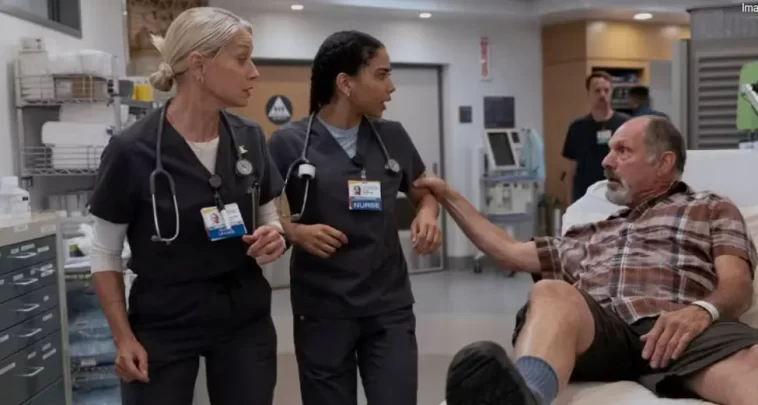
The Pitt Season 2 opens one of its most emotionally layered chapters with a confrontation that looks gentle on the surface but cuts deep underneath. When Dr. Langdon returns to the emergency department after rehab, viewers might expect a clear path toward reconciliation. Instead, the series delivers a far more human outcome—one where forgiveness is complicated, incomplete, and shaped by unresolved pain.
At the center of this moment is Dana, played by Katherine LaNasa, and Dr. Langdon, portrayed by Patrick Ball. Their long-awaited one-on-one scene in Episode 6 doesn’t explode with anger or tears. It’s quiet, controlled, and—according to many fans—far more devastating because of it.
This article breaks down why The Pitt Season 2 chose restraint over melodrama, how the scene redefines sympathy, and why Dana’s reaction matters just as much as Langdon’s apology.
A Tense Return to the ER
Langdon’s return to work lands on July 4th, symbolically a day associated with freedom and second chances. For him, it’s anything but. Fresh out of rehab, he walks back into an ER that hasn’t paused in his absence. His colleagues are busy. The pace is relentless. And Robby, played by Noah Wyle, makes it clear that trust will not be rebuilt overnight.
Robby assigns Langdon to triage, a subtle but firm boundary. It keeps him working, but at a distance. By the time Episode 6 arrives, tension has been simmering for days, setting the stage for a private conversation between Langdon and Dana that many viewers expected to resolve things.
It doesn’t.
The Apology That Sounds Right—but Feels Wrong
In Episode 6 (“12:00 PM”), Langdon finally gets his moment. He opens up. He explains. He apologizes.
He talks about his difficult first day back.
He mentions that no one from the ER checked in on him while he was gone.
He admits he feared his wife would take the kids and leave.
Dana responds calmly. She tells him the patient outcomes weren’t his fault. She says she’s sorry no one called. She reassures him that his wife stayed because he deserved a second chance. When Langdon begins a formal, step-by-step amends speech, Dana stops him.
“You can check me off your list. We’re good.”
On paper, it sounds like forgiveness. In execution, it’s something else entirely.
Why This Scene Sparked So Much Conversation
According to LaNasa, this was one of the most discussed scenes of The Pitt Season 2 even before cameras rolled. The reason? Its intention wasn’t comfort—it was discomfort.
Directed by Noah Wyle himself, the scene was shaped around a simple but powerful idea: Dana does not have time to emotionally carry Langdon.
LaNasa has explained that the goal was not to soothe him completely, but to leave him unsettled. Dana listens. She responds kindly. But she doesn’t fully absorb his pain, and she doesn’t center his feelings.
The subtext is clear: kindness is not the same as absolution.
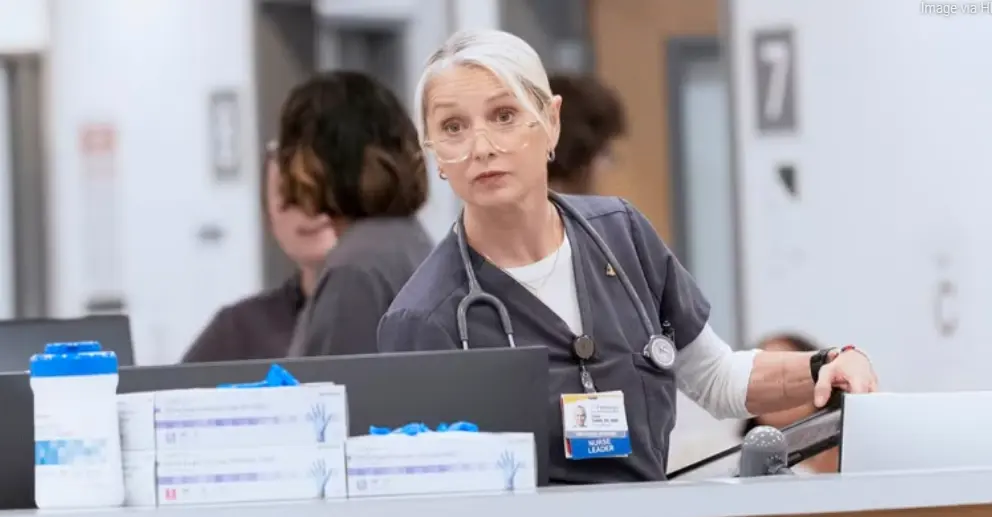
Dana’s Truth: Forgiveness Isn’t Forgetting
One of the most striking revelations about The Pitt Season 2 is that Dana does forgive Langdon—just not in the way he wants.
LaNasa has said that, on a personal level, she understands him. She sees his youth. She recognizes his self-absorption. She even empathizes with his fear and shame. But empathy doesn’t erase what happened.
Dana was punched in the face during a previous shift. That moment didn’t just leave a bruise—it triggered an existential crisis. While Langdon’s consequences involved rehab and professional setbacks, Dana’s involved physical harm and emotional fallout she never chose.
That imbalance matters.
Langdon is asking for understanding in a situation he helped create. Dana is still living with the consequences of something that was done to her.
Why Sympathy Isn’t Guaranteed in The Pitt Season 2
What makes The Pitt Season 2 stand out is its refusal to hand out easy sympathy. Langdon is trying. He’s sober. He’s apologetic. But the show doesn’t pretend that effort alone repairs damage.
Dana’s reaction sends a clear message:
You can be sorry.
You can be forgiven.
And still not be owed emotional care.
This is a rare portrayal in television, especially in medical dramas where redemption arcs often move fast. Here, growth is slow. Trust is conditional. And healing doesn’t happen on someone else’s timeline.
The ER Never Stops—Even for Emotional Closure
Another layer often overlooked in this scene is the setting itself. The emergency department is overwhelmed. Patients keep coming. Dana is responsible for keeping things moving.
Part of her response—cutting short the apology, encouraging Langdon to get back to work—is practical. She needs him functional, focused, and out of his own head. There simply isn’t room for a full emotional reckoning in the middle of a chaotic shift.
In that sense, The Pitt Season 2 uses environment as character. The ER doesn’t allow pauses for personal catharsis. Survival, professionalism, and teamwork come first.
“Look Good for Robby”: Quiet Wisdom Over Urgency
One of Dana’s most telling pieces of advice is also the simplest: do your job well, and let time do the rest.
She encourages Langdon to focus on working, not explaining. To earn trust through consistency, not speeches. It’s an older, steadier form of wisdom—one that contrasts sharply with Langdon’s urgency to fix everything immediately.
This generational divide adds realism. Younger characters often crave instant resolution. Older ones understand that some wounds only close slowly, if at all.
Why This Moment Defines The Pitt Season 2
This single scene encapsulates what The Pitt Season 2 does best: it respects emotional complexity.
No one is villainized.
No one is fully redeemed.
No one gets exactly what they want.
Instead, viewers are left with something more honest—a reminder that accountability doesn’t guarantee comfort, and forgiveness doesn’t always come with warmth.
For many fans, this is the moment that elevated the season from compelling to unforgettable.
