Pluribus Rhea Seehorn may now be closely associated with layered, emotionally intelligent television, but her earliest steps into prestige drama happened long before audiences recognized her as one of modern TV’s most compelling performers. Years before Better Call Saul and her latest collaboration with Vince Gilligan, Seehorn quietly appeared on one of television’s most influential — and underrated — crime dramas.
That appearance came on Homicide: Life on the Street, a series that would later be acknowledged as a blueprint for what we now call “prestige television.”
From Cult Card Games to Crime Drama
Before her rise as Kim Wexler on Better Call Saul, Seehorn’s career path was anything but typical. In 1997, she appeared in a tutorial video for Magic: The Gathering, the fantasy-based collectible card game that was rapidly growing into a cultural phenomenon. That same year, she landed a small but meaningful on-screen role in Homicide: Life on the Street, then airing its sixth season on NBC.
While the role didn’t make her a household name overnight, it placed her inside a show that would later be viewed as historically significant. For many actors, these early, nearly invisible roles serve as quiet training grounds — and for Seehorn, it was no different.
Why Homicide: Life on the Street Still Matters
To understand why this early appearance is noteworthy, it helps to understand the impact of Homicide: Life on the Street itself.
Premiering in 1993, the series rejected the neat formulas of traditional police procedurals. Rather than portraying law enforcement as heroic problem-solvers, the show presented detectives as deeply flawed people navigating moral ambiguity, emotional burnout, and institutional pressure.
The series was based on Homicide: A Year on the Killing Streets, a nonfiction book by David Simon, who spent a year embedded with the Baltimore Police Department. Simon initially hoped to adapt the book into a film, but director Barry Levinson convinced him the story needed room to breathe. Television, not cinema, was the answer.
That decision quietly changed TV history.
A Show Ahead of Its Time
Despite its creative ambition, Homicide: Life on the Street struggled with ratings during its early seasons. NBC reportedly had trouble marketing a series that didn’t deliver comforting resolutions or easily likable characters. At the time, audiences weren’t fully prepared for its bleak realism.
With hindsight, however, the show looks revolutionary. Its handheld camera work, naturalistic dialogue, and moral complexity paved the way for later classics — including Simon’s own The Wire.
Many critics now argue that modern police comedies and dramas alike owe a debt to Homicide, including shows like Brooklyn Nine-Nine, which blended humor with character-driven storytelling.
The Episode That Featured Rhea Seehorn
Seehorn appears in Season 6, Episode 5, titled “All Is Bright.” The episode follows detectives Laura Ballard and Stuart Gharty as they investigate a murder connected to a laundromat. What begins as a routine inquiry gradually unfolds into something far more emotionally devastating.
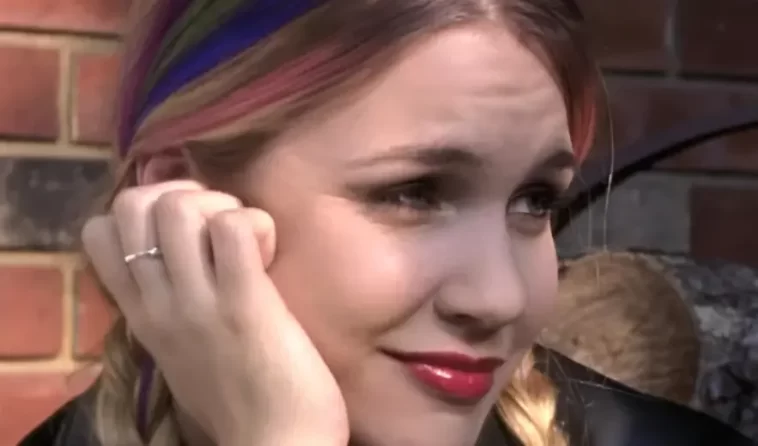
Seehorn plays Jenny, the victim’s girlfriend, appearing in two brief scenes. While the role is small, it serves the episode’s emotional framework rather than demanding attention for itself — a fitting introduction for an actor who would later excel at subtle, internalized performances.
The episode was directed by Matt Reeves, years before he would become known for large-scale blockbusters. It also features standout performances from Kathryn Erbe and Andre Braugher, whose portrayal of Detective Frank Pembleton remains one of the most respected performances in television history.
Andre Braugher’s Lasting Influence
Braugher’s presence connects Homicide to later generations of TV viewers. His intense, intellectually driven performance as Pembleton defined the show’s identity. Decades later, his work on Brooklyn Nine-Nine introduced him to an entirely new audience — proving how flexible and enduring his talent truly was.
That throughline reinforces Homicide’s importance. It wasn’t just a great show; it was a training ground for performers and creators who would shape television for decades.
Why This Role Still Matters for Pluribus Rhea Seehorn
Seen through today’s lens, Seehorn’s brief appearance feels almost prophetic. The emotional restraint she would later master is already visible in her limited screen time. She doesn’t overplay her scenes, instead allowing the episode’s weight to speak for itself.
This approach mirrors her later work with Vince Gilligan, particularly in Pluribus, where restraint, moral complexity, and character psychology are central to the storytelling.
In many ways, Homicide: Life on the Street shares DNA with Pluribus. Both trust the audience. Both avoid easy answers. And both use genre as a framework for deeper human questions.
A Series Worth Revisiting
While viewers can watch “All Is Bright” as a standalone episode, Homicide rewards long-term commitment. Its pilot, directed by Barry Levinson, immediately establishes a sense of claustrophobia and urgency that still feels modern. Each season deepens the characters rather than resetting them.
For anyone interested in the roots of prestige television — or in understanding how actors like Rhea Seehorn developed their craft — the series remains essential viewing.
