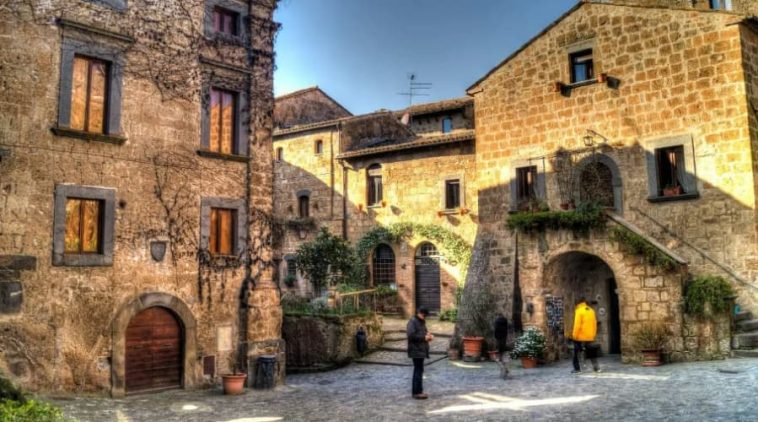
Civita di Bagnoregio Italy is one of the most fascinating historical destinations in Europe. Perched dramatically on a fragile hilltop in central Italy, this ancient town dates back around 2,500 years and continues to capture the imagination of travelers from all over the world. Built by the mysterious Etruscans, the town later evolved into a remarkable medieval settlement that still reflects layers of history.
Today, Civita di Bagnoregio is often called “the dying town” due to the ongoing erosion threatening its very existence. Despite this, it remains one of Italy’s most visited and unique tourist attractions.
A Town Shaped by History
The story of Civita di Bagnoregio Italy begins around 500 BC, when the Etruscans established the settlement along an important trade route. Over the centuries, the town came under the influence of various civilizations, including the Roman Empire and later medieval communities.
What makes Civita so special is its ability to preserve not just Etruscan roots, but also medieval and Renaissance characteristics. Walking through its narrow streets feels like stepping into a living museum where history is still alive.
A Unique Landscape on the Edge
The town is located in the stunning Valle dei Calanchi, a valley known for its dramatic cliffs and constantly eroding terrain. Built on a hill of volcanic rock, Civita di Bagnoregio has always been vulnerable to natural forces.
A major turning point came in 1695, when a powerful earthquake significantly damaged the town. In the years that followed, landslides and further seismic activity caused many buildings to collapse. Over time, the population decreased, and Civita gradually transformed into a near-abandoned village.
This continuous erosion is the reason behind its nickname—“Il paese che muore,” meaning “the dying town.”
A Living Historical Treasure
Despite its fragile condition, Civita di Bagnoregio Italy still holds incredible historical and architectural value. Visitors can explore:
- Ancient tunnels like Bucaione
- Etruscan necropolises (burial sites)
- Medieval stone houses
- Charming cobblestone streets
Each corner of the town tells a story from a different era, making it a rare place where multiple civilizations intersect.
A Village Almost Abandoned
Today, only about 10 to 15 people permanently live in Civita di Bagnoregio. This tiny population adds to the town’s quiet and almost surreal atmosphere.
Reaching the town is also part of the experience. The only access point is a 300-meter-long pedestrian bridge built in 1968, connecting Civita to the nearby modern town. In earlier centuries, historians believe there were five different प्रवेश gates, but these have disappeared over time due to erosion.
A Must-Visit Destination in Italy
Even with its challenges, Civita di Bagnoregio Italy attracts more than one million visitors each year. Tourists come to experience its breathtaking views, rich history, and the unique feeling of standing in a place that is slowly disappearing.
It offers a rare journey—from modern life back to ancient times—in just a short walk across a bridge.
A Town Between Past and Future
The future of Civita di Bagnoregio remains uncertain. Ongoing erosion and natural disasters continue to threaten its survival. However, preservation efforts and global interest are helping to keep this historical gem alive.
Civita di Bagnoregio Italy is not just a travel destination—it is a reminder of how fragile history can be, and why protecting cultural heritage matters more than ever.
