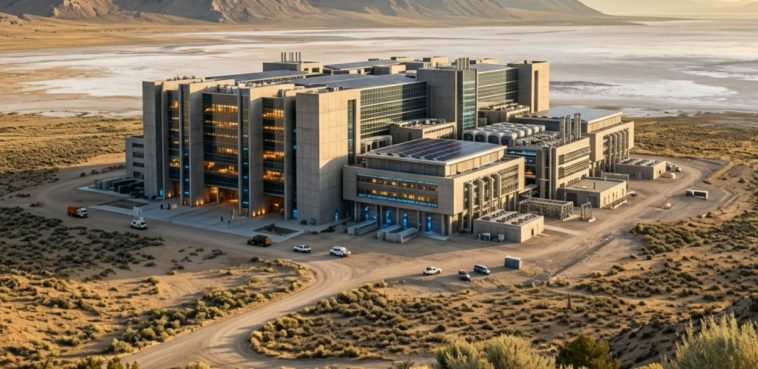
In the quiet, windswept expanses of Box Elder County, Utah, a storm is brewing that has nothing to do with the weather. It’s a clash between the future of artificial intelligence and the preservation of one of America’s most fragile ecosystems. At the center of this whirlwind is none other than “Shark Tank” star Kevin O’Leary—popularly known as Mr. Wonderful—and his ambitious, $50 billion vision for what he calls “Wonder Valley.”
But for the locals who have lived on this land for generations, the project looks less like a wonder and more like a looming catastrophe.
The Scale of the Ambition
To understand the outcry, you first have to grasp the sheer scale of O’Leary’s proposal. We aren’t talking about a couple of server warehouses. We are talking about a 40,000-acre tech “campus” designed to house the massive computing power required for the next generation of AI.
The numbers are staggering. The project, backed by O’Leary Digital, is projected to eventually require up to 9 gigawatts of power. To put that into perspective, that is roughly double the current electricity consumption of the entire state of Utah. It is a plan so big that it doesn’t just push the boundaries of infrastructure; it threatens to rewrite the energy map of the Western United States.
A Unanimous Vote Amidst a Sea of Protest
On May 4, 2026, despite a room packed with hundreds of vocal protesters, the Box Elder County Commission voted unanimously to allow the Utah Military Installation Development Authority (MIDA) to move forward. The creation of the “Stratos Project Area” in Hansel Valley was officially greenlit.
For the commissioners, the allure of massive tax revenue and technological prestige was too strong to pass up. But for the residents who stood in the back of that meeting room, the vote felt like a betrayal of their way of life.
The Great Salt Lake: A Fragile Balance
The primary concern for many Utahns isn’t the sight of the buildings, but what’s happening beneath them. The Great Salt Lake is already in a state of crisis, with receding shorelines and rising salinity levels threatening a biological collapse that could send toxic arsenic dust into the air of Salt Lake City.
O’Leary’s team insists they will use “salty groundwater” that isn’t suitable for farming or drinking. However, environmentalists and local farmers aren’t buying it. They argue that the hydrological systems are connected and that pulling massive amounts of water—even brackish water—could further deplete the aquifer and accelerate the death of the lake.
“We are playing a dangerous game with our most precious resource,” one local activist said during the protest. “You can’t eat data, and you can’t drink AI.”
The Carbon Footprint of “Progress”
Then there is the issue of power. While O’Leary has talked at length about his commitment to sustainability, citing his educational background in environmental studies, the current plan relies heavily on natural gas from the Ruby Pipeline.
Kevin Perry, an atmospheric scientist at the University of Utah, has warned that if the project runs at full capacity, it could increase the entire state’s carbon dioxide emissions by more than 50%. In an era where every major corporation is touting “Net Zero” goals, a project of this magnitude moving backward on carbon emissions has raised eyebrows from coast to coast.
Mr. Wonderful Strikes Back
In typical fashion, Kevin O’Leary hasn’t taken the criticism lying down. During his recent media appearances, he dismissed the protesters, claiming without evidence that many were “professional protesters” bussed in from outside the county. He even suggested that the social media backlash was being amplified by AI—a move some critics called “ironic” given that his project is built to power the very technology he’s blaming.
O’Leary maintains that sustainability is “at the heart” of the project. He promises a future transition to solar, wind, and advanced battery storage. But for many, these promises feel like “greenwashing” designed to get the permits signed today while leaving the environmental bill for the next generation to pay.
Why This Matters for America
The fight in Box Elder County isn’t just a local dispute; it’s a preview of the “Data Center Wars” that will likely define the next decade of American development. As our hunger for AI, cloud storage, and digital processing grows, companies are looking for cheap land and massive power grids.
But as “Wonder Valley” shows, the “cloud” isn’t just a metaphor. It has a physical footprint. it requires real water, real land, and real electricity. It creates real noise—the project’s 55-decibel limit is a small consolation for those who moved to the desert for its legendary silence—and it has real consequences for the people who live next door.
The Road Ahead
While the May 4 vote was a major victory for O’Leary, the battle is far from over. The project still faces a gauntlet of state environmental permits, air quality reviews, and water usage rights.
Utah is at a crossroads. Does it become the “AI Capital of the West,” reaping billions in investment while risking its environmental soul? Or does it demand a slower, more sustainable path that puts the Great Salt Lake before the data needs of Silicon Valley?
One thing is certain: Kevin O’Leary wanted to make a splash. In the dry, dusty plains of Northern Utah, he’s certainly done that. But as the salt flats continue to recede, the question remains—is “Wonder Valley” a dream come true, or a nightmare in the making?
