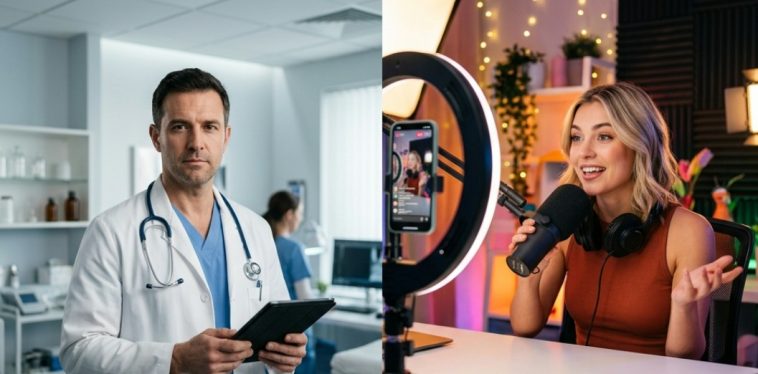
For decades, the path to health advice was clear: you felt a symptom, you made an appointment, you sat in a sterile waiting room, and you consulted a person with a decade of medical schooling. But according to a groundbreaking study released today by the Pew Research Center, that tradition is rapidly becoming a relic of the past.
The data is striking: nearly half of all Americans under the age of 50 now report that they obtain a significant portion of their health and wellness information from social media influencers, TikTok creators, and podcast hosts. We have officially entered the era of the “Digital MD,” and the implications for public health in America are profound.
The Death of the “Gatekeeper”
Why are millions of Americans turning to a 20-something TikToker for advice on cortisol levels or gut health instead of their primary care physician? The answer isn’t just about laziness; it’s about accessibility and the erosion of trust.
The American healthcare system is notoriously difficult to navigate. Between the soaring costs of co-pays, the weeks-long wait times for an appointment, and the hurried, ten-minute consultations that often leave patients feeling unheard, it’s no wonder people are looking elsewhere. In contrast, an influencer on Instagram is “available” 24/7. They speak in plain English, they share personal stories, and they build a sense of community that a cold clinical setting simply cannot replicate.
The Power of the “Relatable” Expert
What the Pew study highlights is a shift from “Authority” to “Authenticity.” To a Gen Z or Millennial reader, a doctor in a white coat represents a distant institution. An influencer who films their morning routine, talks about their struggles with anxiety, and shares the exact supplements they take feels like a friend.
This “parasocial relationship” creates a high level of trust. When a popular podcast host spends three hours diving into the benefits of a specific diet, listeners feel they have done “deep research,” even if the host has no formal medical training. The influencer isn’t just a source of information; they are a lifestyle brand. People aren’t just buying the health advice; they are buying the hope that they can look, feel, and live like the person on the screen.
The Misinformation Minefield
Of course, this shift comes with a massive “Red Alert” from the medical community. While some influencers are indeed licensed professionals using social media to reach more people, a vast majority are not.
The danger of “Health-Tok” isn’t necessarily that everything is a lie, but that nuanced medical science is being boiled down into 60-second soundbites. Complex conditions like ADHD, thyroid issues, or hormonal imbalances are often oversimplified into “3 signs you have X.” This leads to self-diagnosis and, in many cases, the purchase of unregulated supplements that may do more harm than good.
The Pew study found that while people get their information from social media, they don’t always verify it. Only a small fraction of those surveyed said they always cross-reference influencer advice with a medical professional. We are witnessing the democratization of information, but it is a democracy without a moderator.
The Business of “Biohacking”
Follow the money, and you’ll find another reason for this trend. Health and wellness is a multi-billion dollar industry. Many influencers who share “health tips” are also sponsored by supplement companies, meal-prep services, or wearable tech brands.
The line between a genuine health recommendation and a paid advertisement has become almost invisible. In a traditional doctor’s office, there are strict ethical guidelines regarding the promotion of specific products. On a podcast or a YouTube channel, those lines are often blurred by the need for “monetization.” The advice you’re receiving might be tailored more to a sponsor’s needs than your biological ones.
Is There a Middle Ground?
It’s easy to dismiss this trend as a sign of declining intelligence, but that’s a mistake. The popularity of digital health advice shows a massive, unmet need in the American public for health education that is engaging, understandable, and affordable.
Some forward-thinking doctors are meeting patients where they are. We are seeing a rise in “Med-Fluencers”—actual doctors, nurses, and researchers who are building large followings to combat misinformation with evidence-based content. They are using the same tools as the influencers—high-quality video, engaging storytelling, and platform algorithms—to bring back the voice of science to the digital town square.
The Future of the Family Doctor
The family doctor isn’t going away, but their role is changing. The modern patient now arrives at the office armed with a list of things they saw on TikTok or heard on a podcast. This can be frustrating for physicians, but it also represents a more engaged patient base.
The challenge for the next decade will be “Information Literacy.” As more Americans turn to their screens for health guidance, we need to teach people how to distinguish between a “vibe” and a “fact.”
Final Thoughts
As we navigate this new landscape, the burden of proof has shifted to the consumer. The Pew Research study is a wake-up call for the medical establishment: if the experts don’t find a way to communicate effectively in the digital age, the “Podcast Doctors” will continue to fill the void.
For the American audience, the message is clear: your health is too important to be left to an algorithm. By all means, listen to the podcasts and watch the reels—but keep your doctor’s number on speed dial.
