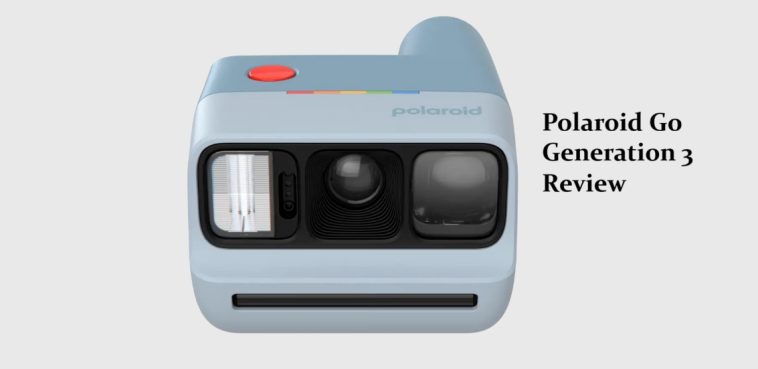
I picked up the Polaroid Go Generation 3 mostly out of nostalgia, expecting a cute but limited toy camera. This Polaroid Go Generation 3 review is based on a few weeks of actually shooting with it at gatherings, on walks, and during a couple of trips, and it ended up surprising me more than I expected.
Polaroid didn’t reinvent the Go series with this generation. Instead, the company focused on fixing the two biggest complaints people had with earlier models: a soft lens and a weak flash. After using it regularly, I can say those fixes genuinely change the experience.
Quick Answer
The Polaroid Go Generation 3 is the world’s smallest instant analog camera, now with a sharper lens, a stronger Xenon flash, and five fresh color options. It costs $89.99 and remains a simple, fixed-focus, point-and-shoot experience.
If you want a genuinely pocketable instant camera for spontaneous moments, parties, and travel snapshots, this is one of the best options available. Just don’t expect manual controls or consistent results in harsh sunlight.
Design and Build Quality
The first thing that stands out about the Go Generation 3 is just how small it actually is. At 106.5 x 83.8 x 64.6mm and weighing under 252 grams without film, it genuinely disappears into a jacket pocket or small bag.
The body is made from ABS and polycarbonate, which keeps it light without feeling cheap or fragile. It comes in five colors at launch: Black, White, Teal, Purple, and Light Blue, so there’s a reasonable amount of personality to choose from.
A few design details worth knowing:
- Built-in selfie mirror on the front for easier self-portraits
- Only three controls: a large shutter button, an on/off switch, and a flash toggle
- USB-C charging, a welcome modern touch on an otherwise analog device
- Includes a wrist strap in the box
The Improved Lens
This is the headline upgrade, and it matters. The Go Generation 3 uses a new 63.75mm equivalent lens, up from 51.1mm on the previous generation. The lens also sits deeper inside the camera body, which helps reduce glare in bright conditions.
In practical terms, this translates to sharper images with noticeably better contrast compared to earlier Go cameras. Selfies in particular benefit, since the longer focal length is better suited to portraits than the wider lens used before.
What You Should Expect From the Camera
If you’re deciding whether the Go Generation 3 fits your shooting style, here’s what to expect:
- You’ll get sharper, better-contrasted prints compared to the Gen 2 model.
- You can expect improved close-up selfies, especially with up to three people in frame.
- You should watch out for overexposure on very sunny days, since highlights can blow out easily.
- You won’t get autofocus or manual exposure control, since this remains a fixed-focus point-and-shoot camera.
Flash Performance
Polaroid upgraded the flash to a genuine Xenon unit, replacing the weaker flash found on earlier Go models. This is a meaningful improvement for a camera that’s often used exactly where lighting is unpredictable: indoors, at night, and during spontaneous gatherings.
In my testing, indoor and low-light shots came out noticeably more even than what I remember from older Go cameras. The classic on-camera flash look also adds to the retro charm rather than looking like a cheap LED afterthought.
Print Format and Film
The Go Generation 3 uses Polaroid’s small-format Go film, producing prints measuring 66.6mm by 53.9mm with an image area of 47mm by 46mm. For comparison, that’s noticeably smaller than a standard I-Type Polaroid print.
This smaller format is intentional. The prints fit neatly into wallets, phone cases, journals, and scrapbooks in a way that larger Polaroid prints simply can’t.
Here’s what you should know about the film itself:
- Go film comes in double-packs of 16 shots, unlike Instax which sells single packs of 10
- Cost works out to roughly $1.24 per shot, higher than Instax Mini film at around $0.79 per shot
- The smaller print size means less room for detail in landscapes or group shots
- The format works best treated as its own creative choice, not a scaled-down substitute for full-size Polaroid prints
Ease of Use
Simplicity is the entire point of the Go series, and the Generation 3 continues that philosophy. There are no menus, no settings, and no learning curve. You point, you press the shutter, and you wait for the print to develop.
The viewfinder is noticeably brighter than earlier generations, which makes composing shots easier in practice. Between the selfie mirror, self-timer, and double exposure mode, there’s just enough functionality to keep things interesting without overwhelming a first-time user.
Where It Struggles
No camera at this price and size is without compromises, and the Go Generation 3 has a few worth knowing about before you buy.
- Bright, direct sunlight can easily overexpose prints, which is unfortunate since sunny days are often when people want to shoot
- The fixed-focus lens means you can’t fine-tune sharpness for closer or farther subjects
- Go film costs more per shot than Instax alternatives
- The tiny viewfinder, while improved, is still limited compared to larger instant cameras
Polaroid Go Generation 3 vs Instax Mini 13
| Feature | Polaroid Go Generation 3 | Instax Mini 13 |
|---|---|---|
| Price | $89.99 | $93.95 |
| Print Format | Square, smaller Go format | Credit-card shaped |
| Cost Per Shot | Around $1.24 | Around $0.79 |
| Focal Length | 63.75mm equivalent | Varies by model |
| Flash | Xenon flash | LED flash |
| Controls | Fixed-focus, point-and-shoot | Fixed-focus, point-and-shoot |
| Charging | USB-C | Battery-dependent, varies |
What Actually Worked For Me
I expected the smaller print size to bother me, and it didn’t. Treating the Go format as its own thing, rather than a mini version of a “real” Polaroid, made the whole experience more enjoyable. I found myself shooting more often simply because the camera was small enough to always have with me.
I did make one mistake early on. I assumed the improved flash meant I could rely on it outdoors during overcast conditions, and the results were inconsistent. Once I started reserving flash use for genuinely dim indoor settings, my results improved noticeably.
Who Should Buy the Polaroid Go Generation 3?
You should consider this camera if:
- You want the smallest, most pocketable instant camera available
- You value spontaneous, low-stakes photography over technical control
- You’re shooting mostly indoors, at parties, or in low light where the new flash shines
- You like the idea of small, personal prints for wallets, journals, or gifting
You might want to skip it if:
- You frequently shoot in bright, direct sunlight
- You want manual exposure control or autofocus
- Per-shot film cost is a major factor in your decision
- You prefer the larger, more iconic Polaroid print format
Pros and Cons
Pros:
- Genuinely pocket-sized, among the smallest instant cameras available
- Sharper lens with noticeably better image quality than previous Go models
- Strong Xenon flash improves low-light and indoor shooting
- Five fun color options and a lightweight, durable build
- Simple enough for literally anyone to use immediately
Cons:
- Prone to overexposure in bright, direct sunlight
- Fixed-focus lens limits creative control
- Go film costs more per shot than Instax alternatives
- Small print size may feel limiting for landscapes or group shots
FAQ
How much does the Polaroid Go Generation 3 cost? It launched at $89.99 in the US, with a bundle option available for $109.99 that includes extra film or accessories.
What’s different about the Generation 3 compared to Generation 2? The biggest changes are a new 63.75mm lens, up from 51.1mm, and a stronger Xenon flash. Polaroid also added five new color options while keeping the same compact size.
Does the Polaroid Go Generation 3 have autofocus? No. It remains a fixed-focus, point-and-shoot camera with no manual controls, keeping the experience simple and accessible.
How much does Polaroid Go film cost per shot? Go film works out to roughly $1.24 per shot, sold in double-packs of 16 exposures, which is more expensive than Instax Mini film at around $0.79 per shot.
Is the Polaroid Go Generation 3 good in bright sunlight? Not always. Reviewers and testers, myself included, found that very sunny conditions can easily overexpose prints, so cloudy days or shaded areas tend to produce more consistent results.
Is the Polaroid Go Generation 3 worth buying? For anyone who wants the smallest possible instant camera experience and values spontaneity over technical precision, yes. It’s a clear improvement over previous Go generations and a fun, approachable way into analog photography.
Final Thoughts
The Polaroid Go Generation 3 doesn’t try to compete on specs, and it doesn’t need to. It succeeds by being genuinely small, genuinely simple, and noticeably better than its predecessors where it actually matters: the lens and the flash.
If you’ve been curious about instant photography but didn’t want to carry a bulky camera everywhere, this is one of the easiest entry points available right now. Just keep an eye on the sun, and keep extra film on hand.
Editor’s Opinion
ok i wasnt expecting to like this as much as i did, its literally tiny enough to just live in my bag now. the flash upgrade is real, indoor pics came out so much better then i thought theyd be. only issue is sunny days, my shots kept getting blown out which was annoying. still, for the price and the fun factor its a solid buy if ur into instant cameras like me.
