I’ve been wearing the Amazfit Balance 3 every day for the past few weeks, through workouts, work trips, and way too many early mornings where I really didn’t want to check my recovery score. This Amazfit Balance 3 review covers what actually happened during that time, not just the spec sheet.
Amazfit launched this watch alongside the higher-end Balance Ultra, both built around a new hybrid training philosophy. After using the Balance 3 daily, I can say it delivers on the parts that matter most: battery life, GPS accuracy, and genuinely useful recovery insights.
Quick Answer
The Amazfit Balance 3 is a well-rounded hybrid training smartwatch with a bright 3,000-nit AMOLED display, up to 21 days of battery life, and a new HybridCharge system that actually gives useful recovery guidance. It costs $369.99.
If you want a Garmin alternative that doesn’t demand daily charging and still delivers accurate GPS and heart rate tracking, the Balance 3 is one of the strongest options in its price range right now.
Design and Build Quality
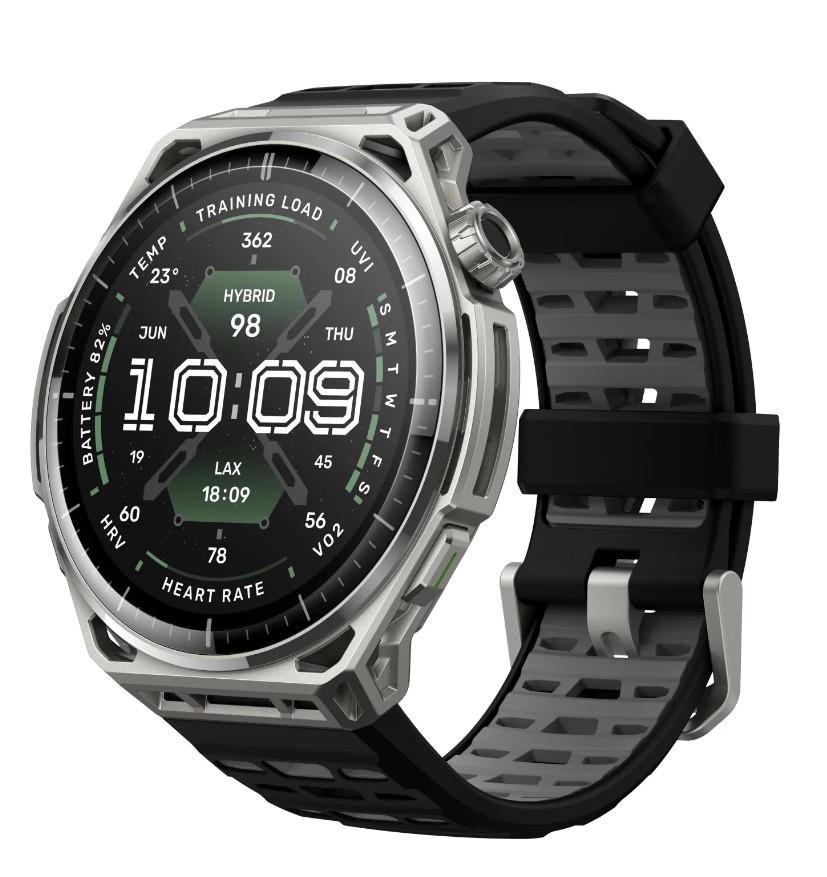
The Balance 3 comes in a stainless steel case measuring 51.4mm in diameter and 12.5mm thick, or 14.6mm including the heart rate sensor bump. It’s a large watch, and if you have smaller wrists like I do, it’s worth trying one on before buying.
The display is protected by sapphire crystal glass, a material usually reserved for pricier watches, which is a nice touch at this price point. Amazfit also added two new buttons on the left side this generation, joining the existing crown and button on the right for four total controls.
A few design details worth knowing:
- Available now in stainless steel, with a titanium version coming soon
- 22mm quick-release silicone strap included, fitting wrists from 140mm to 210mm
- Water resistance rated at 10 ATM, suitable for swimming and recreational freediving to 45 meters
- Passed MIL-STD-810G military-grade durability testing for temperature, vibration, and impact resistance
Display Quality
The Balance 3 uses a 1.5-inch AMOLED display at 480×480 resolution, and it’s genuinely bright. Amazfit rates peak brightness at 3,000 nits, a 50% increase over the previous generation, which makes a real difference for outdoor visibility in direct sunlight.
In daily use, the screen stayed easily readable during outdoor runs, even under harsh midday light. Text and data fields looked crisp, and the touchscreen felt responsive throughout testing.
What You Should Expect From the Display
If display quality matters to your buying decision, here’s what to expect:
- You’ll get excellent outdoor visibility thanks to the high peak brightness.
- You can expect sharp, clear text and graphics from the 480×480 resolution.
- You should get around 7 days of battery life even with always-on display enabled.
- You won’t need to worry about scratches thanks to the sapphire crystal coating.
Battery Life
This is where the Balance 3 genuinely stands out. Amazfit rates the 658mAh battery for up to 21 days of typical use, and even under heavier daily use with workouts, GPS tracking, and notifications running constantly, it still comfortably lasted over a week in my testing.
GPS is usually where battery life collapses fastest on smartwatches, so this figure carries real weight: up to 41 hours in accuracy mode, and up to 84 hours in power-saving GPS mode. For long runs, hikes, or an entire week of training, that’s a genuine advantage over watches that need daily charging.
GPS and Heart Rate Accuracy
I tested the Balance 3 head-to-head against a high-end Garmin Forerunner during a 7.5km outdoor run in hot conditions, and the results were close enough to trust. The Amazfit tracked the route within about 30 meters of the Garmin’s total distance.
Heart rate tracking was similarly close, recording an average of 144 bpm against Garmin’s 146 bpm, with both watches matching at a 162 bpm maximum. For most runners, that level of accuracy is more than sufficient for daily training.
HybridCharge Training System
This is the headline software feature, and it’s more useful than I initially expected. HybridCharge combines training load, recovery data, stress levels, sleep quality, and daily activity into a single system designed to tell you how much you realistically have left to give.
In practice, this showed up in ways I didn’t expect. After a rough travel week with poor sleep and back-to-back flights, the watch flagged my recovery as low and suggested an easier workout instead of the hard run I had planned. I ignored it once, regretted it the next day, and started trusting the recommendations after that.
What You Should Expect From HybridCharge
If you’re curious how this system fits into daily training, here’s what to expect:
- You’ll get daily recovery scores based on sleep, stress, and training load combined.
- You can expect the watch to occasionally recommend easier workouts when your recovery is low.
- You should see advanced metrics like VO2 max estimates and training load without needing a sports science background to understand them.
- You won’t be forced into elite-athlete-only features, since the system scales to casual training schedules too.
Offline Maps and Navigation
The Balance 3 includes 64GB of onboard storage, which covers full-color contour maps, ski resort maps, and offline navigation with automatic rerouting and turn-by-turn guidance. I expected to barely use this feature, since smartwatch maps are often more marketing than substance.
That wasn’t the case here. I used the offline maps multiple times while navigating unfamiliar streets during work trips, and they were genuinely helpful rather than a checkbox feature.
HYROX and Hybrid Training Focus
Amazfit is an official HYROX partner, and the Balance 3 reflects that with structured race preparation plans, race simulation tools, and virtual pacing support. If you’re into hybrid fitness racing, these tools are a genuine differentiator compared to more running-focused competitors.
Beyond HYROX specifically, the watch supports over 180 sports modes and syncs with a wide range of third-party platforms, including Strava, TrainingPeaks, Runna, Apple Health, and Google Health Connect.
Amazfit Balance 3 vs Balance Ultra
| Feature | Amazfit Balance 3 | Amazfit Balance Ultra |
|---|---|---|
| Case Material | Stainless steel | Full titanium |
| Battery | 658mAh, up to 21 days | 780mAh, up to 30 days |
| GPS Accuracy Mode | Up to 41 hours | Up to 50 hours |
| Buttons | 4 total | 5 total |
| Included Straps | 1 silicone | 2 (silicone and composite) |
| Display | Same 1.5-inch, 3,000 nits | Same 1.5-inch, 3,000 nits |
| Price | $369.99 | $599.99 |
What Actually Worked For Me
I expected HybridCharge to be another wellness score I’d check once and ignore, and instead it became the feature I relied on most. Having a watch tell me honestly when I wasn’t ready for a hard session, and being right often enough that I stopped arguing, genuinely changed how I structured my training weeks.
I did make one early mistake. I assumed the larger 51.4mm case would feel bulky on my smaller wrist, and while it’s certainly a large watch, the relatively thin profile helped it sit better during runs than I expected.
Who Should Buy the Amazfit Balance 3?
You should consider this watch if:
- You want long battery life without sacrificing GPS accuracy or features
- You’re juggling work, training, and recovery and want honest guidance rather than raw data overload
- You do HYROX or hybrid-style training and want dedicated tools for it
- You want a Garmin alternative at a lower price point
You might want to skip it if:
- You have a small wrist and prefer a more compact watch case
- You want the absolute maximum battery life, in which case the Balance Ultra is worth the upgrade
- You need Garmin’s more detailed training load modeling for elite-level analysis
Pros and Cons
Pros:
- Excellent battery life, comfortably lasting weeks on a single charge
- Bright, sharp AMOLED display with sapphire crystal protection
- Accurate GPS and heart rate tracking, close to high-end Garmin watches
- HybridCharge system offers genuinely useful, honest recovery guidance
- Useful offline maps and dedicated HYROX training tools
Cons:
- Large case size may not suit smaller wrists
- Titanium version not yet widely available
- Training load modeling still trails Garmin’s more advanced analysis
- Comes with only one strap, unlike the Balance Ultra’s two
FAQ
How long does the Amazfit Balance 3’s battery last? Amazfit rates it for up to 21 days of typical use. With heavy daily use, including workouts and always-on display, expect closer to 7 to 10 days, which still beats most competing smartwatches.
Is the Amazfit Balance 3 accurate for running? Yes. In head-to-head testing against a Garmin Forerunner, the Balance 3 tracked distance within about 30 meters over a 7.5km run and closely matched heart rate readings throughout.
What is HybridCharge on the Amazfit Balance 3? It’s Amazfit’s training intelligence system that combines recovery data, training load, stress, and sleep quality to tell you how much effort you realistically have left, helping you decide when to push and when to rest.
Does the Amazfit Balance 3 have offline maps? Yes. It includes 64GB of storage with full-color contour maps, ski resort maps, and turn-by-turn navigation with automatic rerouting, all usable without a phone connection.
Should I get the Balance 3 or the Balance Ultra? Choose the Balance 3 if you want the same core features at a lower price. Choose the Balance Ultra if you want a full titanium build, longer battery life, and don’t mind paying $230 more.
Is the Amazfit Balance 3 worth buying? For most people who want long battery life, accurate tracking, and genuinely useful training insights without Garmin’s price tag, yes. It’s one of the better hybrid training watches available right now.
Final Thoughts
The Amazfit Balance 3 doesn’t try to out-spec Garmin at every turn, and it doesn’t need to. It focuses on getting the fundamentals right: battery life that actually lasts, GPS you can trust, and recovery guidance that holds up in real training weeks.
If you’ve been hesitant about smartwatches because of constant charging or overwhelming data, this is one of the more approachable options available. It respects your time and your training, without asking too much in return.
Editor’s Opinion
ok this watch actually suprised me, i didnt think id care about the recovery score thing but now i check it every morning lol. battery life is real too, i went almost 2 weeks without charging it once. only thing is its kinda big on my wrist but i got used to it pretty fast. for the price its a really solid buy if ur into running or just want a watch that dosent need charging every other day.
