A Newly Discovered Human Sculpture Embedded in Gobeklitepe’s Walls Sheds Light on Neolithic Rituals
Gobeklitepe human sculpture discovery
An extraordinary archaeological find in Turkey’s ancient sanctuary
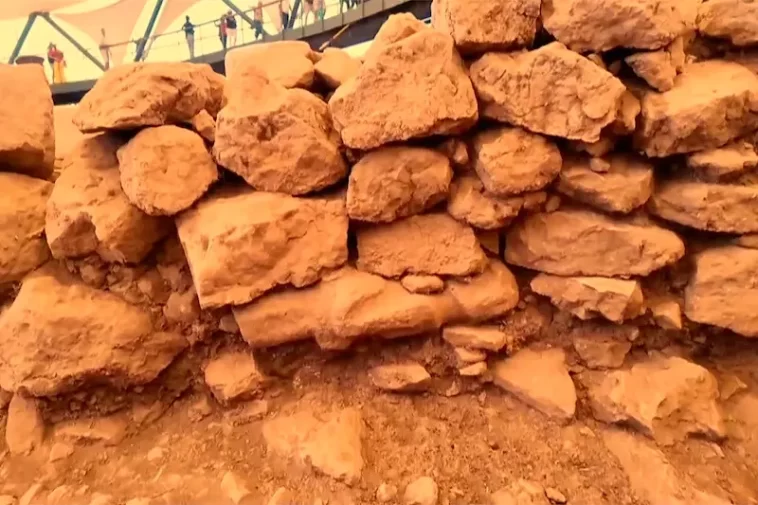
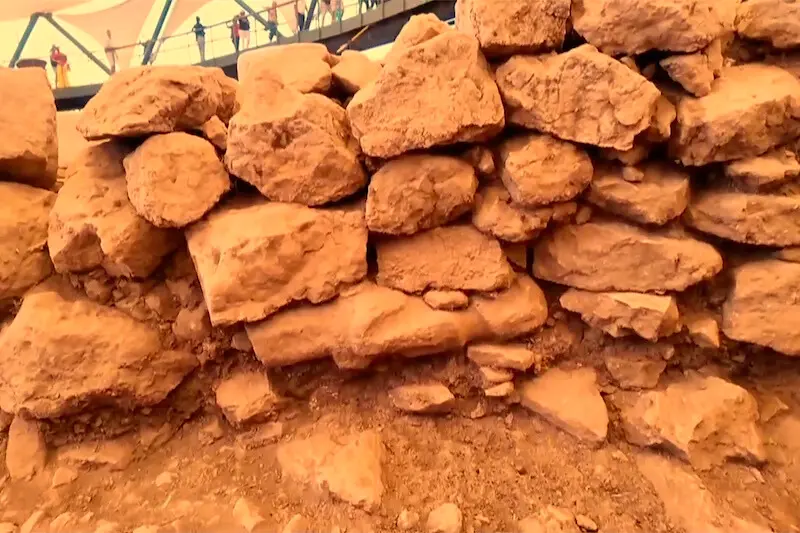
Archaeological excavations in Gobeklitepe, the world’s oldest known temple complex located in Şanlıurfa, Turkey, have revealed a breathtaking discovery: a life-sized human sculpture deliberately embedded horizontally into a wall. This unique artifact, which appears to have been placed as part of a ritual offering, adds a new dimension to our understanding of Neolithic belief systems and ritual practices.
Announced during a site visit by Turkey’s Minister of Culture and Tourism Mehmet Nuri Ersoy and Princess Akiko of Mikasa from Japan, the find has already drawn significant global attention. Scholars believe this rare sculpture represents a symbolic act of devotion, offering fresh insight into the spiritual life of the region’s early inhabitants.
Why Göbeklitepe Matters
Often referred to as the “Zero Point of History”, Göbeklitepe dates back more than 11,000 years—predating Stonehenge by around 6,000 years and the Egyptian pyramids by 7,000. Its T-shaped megalithic pillars, arranged in circular enclosures, have long puzzled archaeologists. Unlike other Neolithic settlements, Göbeklitepe was not used for permanent habitation but appears to have functioned as a sacred ritual center.
The latest discovery only deepens that mystery. While Göbeklitepe is already known for its intricately carved animal reliefs and monumental structures, this human sculpture suggests a direct form of ritual deposition, hinting that people might have embedded objects—and even symbolic representations of humans—within their architecture for spiritual reasons.
Details of the Discovery
According to the excavation team, the sculpture was found in a chamber situated between Structures B and D, two of Göbeklitepe’s most prominent enclosures. Unlike the monumental pillars, this figure is stylized and simplified, yet carefully crafted. Its placement—lying horizontally within the wall itself—suggests it was never meant to be seen in full but rather to exist as part of the wall’s spiritual essence.
Archaeologists believe the sculpture served as a ritual dedication, symbolically “feeding” or “protecting” the structure. Similar practices have been observed at other Neolithic sites, such as Karahantepe, where embedded figurines have also been unearthed. However, Göbeklitepe’s example is unique in its scale and execution.
“This is one of the clearest indications that these structures were not only architectural but deeply ritualistic,” noted an archaeologist from the Şanlıurfa excavation team.
Ritual Significance
The practice of embedding objects into walls is not exclusive to Göbeklitepe. Across the ancient world, offerings were hidden within construction as a form of sacred dedication. From Mesopotamia to Europe, builders placed figurines, animal bones, or other symbolic items into foundations to consecrate the structure.
In Göbeklitepe’s case, the use of a human figure adds extraordinary significance. Rather than simply depicting animals, which dominate most of the carvings at the site, this sculpture highlights the central role of human representation in Neolithic spirituality. It suggests that early communities were experimenting not only with monumental stonework but also with complex cosmological beliefs.
Conservation and Future Plans
The newly discovered human sculpture has not been removed from its original position, both for conservation reasons and to preserve the context. Specialists are studying the visible parts, which reveal a highly stylized artistic style.
Meanwhile, efforts to preserve Göbeklitepe continue. Extensive restoration and anastylosis projects are underway to stabilize its fragile megaliths. In the Lion Building, restoration has already been completed, while Structure C is currently undergoing similar conservation. These projects ensure that Göbeklitepe’s stones will remain standing for future generations.
The Ministry of Culture has also announced that a new visitor center, car park, and walking trails will open before the end of 2025, aiming to sustainably manage the ever-increasing flow of tourists. Over 1 million people visit Göbeklitepe each year, making it one of Turkey’s most important cultural destinations.
Scientific Advances: Geomagnetic Surveys
Excavation teams plan to conduct geomagnetic surveys in the coming months to identify buried structures without disturbing the soil. This cutting-edge technology allows archaeologists to create underground maps of the site, potentially revealing new enclosures or ritual chambers.
Such surveys have previously uncovered previously unknown Neolithic settlements in the Taş Tepeler (Stone Hills) region, a cluster of similar sites around Göbeklitepe. This suggests that Göbeklitepe was part of a much larger sacred landscape, possibly serving as a central hub in a network of ritual sites.
Broader Context: The Taş Tepeler Civilization
Göbeklitepe is not an isolated site. Archaeologists have identified at least 12 additional Neolithic settlements in the surrounding region, known collectively as Taş Tepeler (Stone Hills). Sites like Karahantepe, Sefer Tepe, and Sayburç share architectural similarities with Göbeklitepe, including circular enclosures and decorated pillars.
The newly discovered human sculpture could provide a missing link between Göbeklitepe and these sister sites. Scholars now believe that ritual practices, including embedding human figures into walls, were widespread across the region.
What This Means for Archaeology
This discovery challenges long-held assumptions about Neolithic life. For decades, archaeologists believed agriculture preceded religion. Göbeklitepe, however, proves the opposite: ritual and belief may have sparked the need for organized communities and farming.
The presence of a human sculpture in a sacred wall underscores how religion shaped every aspect of Neolithic life—from art to architecture. As more discoveries emerge, Göbeklitepe continues to rewrite human history, offering a window into the minds of humanity’s earliest spiritual communities.
Tourism and Cultural Impact
Göbeklitepe has become not only a site of archaeological importance but also a symbol of Turkey’s cultural heritage. Since its inclusion in the UNESCO World Heritage List in 2018, it has attracted scholars, tourists, and spiritual seekers alike.
With the discovery of the human sculpture, interest is expected to surge further. Local authorities are investing in infrastructure, while international researchers continue to flock to Şanlıurfa, turning the region into a global hub for Neolithic studies.
Conclusion
The discovery of a life-sized human sculpture embedded into the wall of Göbeklitepe is more than just an archaeological find—it is a revelation about humanity’s earliest rituals. It provides direct evidence that the builders of Göbeklitepe were not only skilled architects but also deeply spiritual individuals who believed in dedicating their structures to unseen forces.
As conservation continues and technology uncovers more hidden secrets, Göbeklitepe stands as a living testament to the mystery, devotion, and ingenuity of the Neolithic world.
Ugur is an editor and writer at Need Some Fun (NSF News), specializing in technology, world news, history, archaeology, cultural heritage, science, entertainment, travel, animals, health, and games. He produces in-depth, well-researched, and reliable stories with a strong focus on emerging technologies, digital culture, cybersecurity, AI developments, and innovative solutions shaping the future. His work aims to inform, inspire, and engage readers worldwide with accurate reporting and a clear editorial voice.
Contact: [email protected]