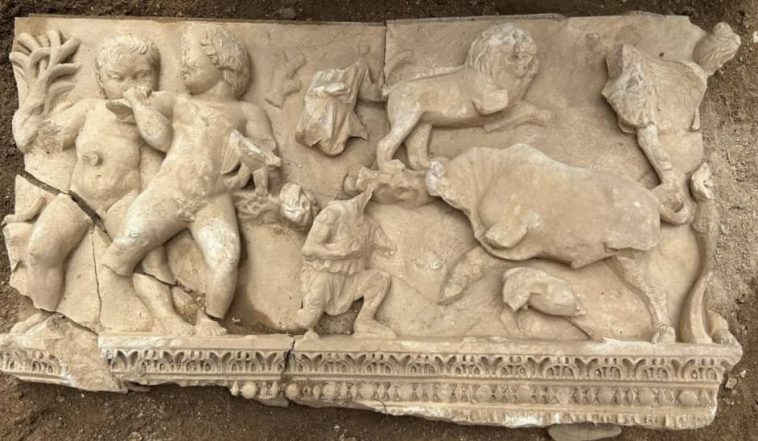
Antalya archaeology discoveries have reshaped what we know about the ancient past of southern Türkiye. New findings revealed during the 2025 excavation season show that human history in the region stretches back at least 350,000 years, making Antalya one of the most important archaeological landscapes in the Mediterranean world.
Under the Ministry of Culture and Tourism’s “Heritage for the Future” project, excavations and research were carried out at more than 20 different locations across Antalya. From coastal cities like Phaselis and Side to inland sites such as Karain Cave and Limyra, archaeologists uncovered temples, statues, mosaics, tools, and human remains that reveal a deep and layered history.
Major Discoveries Across Antalya
According to the Antalya Provincial Directorate of Culture and Tourism, the 2025 season filled major gaps in the city’s archaeological record. Excavations stretched from the Kemer coastline to the Finike valley, from the Serik plateau to the hills of Alanya, uncovering traces of religion, trade, daily life, and belief systems spanning thousands of years.
Phaselis: Daily Life and Belief Systems
In the ancient harbor city of Phaselis, excavations around the Domitian Agora and the Archaic Apollo altar revealed remarkable Roman-era objects. Among the most striking finds was a rolled lamella amulet kept inside a bronze case. With inscriptions, symbols, glass or obsidian fragments, and organic remains, it is considered a nearly complete example of a personal protective charm.
Other finds included bronze locks and chains, a stylus used for writing, decorated compasses, and a small bronze mouse figurine. Together, these objects offer a rare glimpse into security practices, communication, craftsmanship, and symbolic beliefs in ancient Phaselis.
Side: A City Reborn
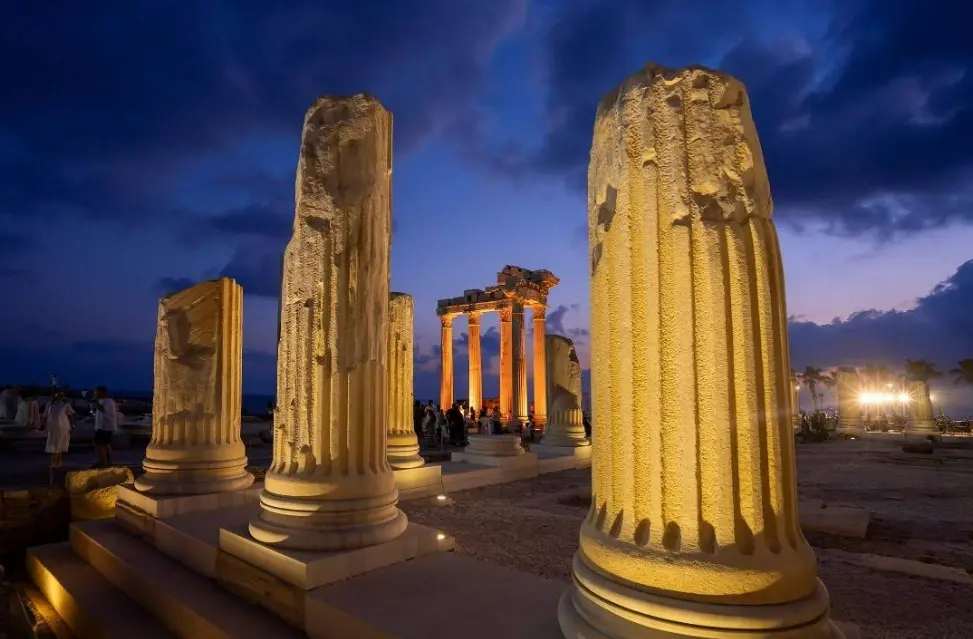
In Side, year-long excavations and restoration projects transformed the ancient city’s appearance. Monumental fountains, mosaic-covered interiors, frescoes, aqueducts, and public spaces were carefully revealed. Previously closed areas, including residential quarters and the episcopal complex, were reopened to visitors.
Night museum lighting and archaeological park arrangements now allow visitors to experience Side’s urban history at all hours.
Aspendos: Hermes Emerges
At Aspendos, archaeologists uncovered a marble Hermes statue among the ruins of a monumental fountain east of the theater street. Dating to the 2nd–3rd century AD and standing 1.65 meters tall with its inscribed base, the statue depicts Hermes holding a money pouch, staff, and cloak—highlighting trade, travel, and communication as central themes of the city.
Nearby, a massive imperial head and a bearded male head believed to represent a captive figure were also found in the forum area.
Limyra: The Lost Temple of Zeus
In Limyra, long-known from ancient texts but never precisely located, the Temple of Zeus was finally identified. Architectural remains of the eastern entrance and surrounding structures were uncovered, allowing scholars to reconstruct the city’s religious landscape for the first time based on physical evidence.
Syedra: Production and Ritual Life
Syedra revealed dozens of olive oil workshops, showing that production, trade, and daily life were tightly integrated. Finds included bronze furniture legs, door fittings, a Hermes Kriophoros statue, bone hairpins, bells, tweezers, and a rare silver-alloy curse tablet (defixio), shedding light on ritual practices.
Olympos: Tombs and Mosaics
In Olympos, a vaulted monumental tomb near the eastern sea entrance indicated elite burials along the city’s main axis. Inside the city church, floors fully covered with mosaics were uncovered, along with inscriptions related to prayers and offerings from the Christian era.
Patara and Andriake: Trade and Economy
Excavations around Patara’s city gate revealed shops and storage spaces, proving the area functioned as a busy commercial hub. Coins and amphorae pointed to intense trade activity.
In Andriake, harbor workshops and warehouses confirmed the site’s importance during Roman and Byzantine times. A unique structure linked to a natural water source suggested therapeutic water use between Myra and Andriake.
Perge, Termessos, and Sillyon
Perge yielded statues of Aphrodite and Eros, as well as a female figure believed to represent a priestess or noblewoman. A gold coin minted in Constantinople during the reign of Maurice (582–602 AD) highlighted the city’s late antique trade connections.
At Termessos, a nearly life-sized seated woman statue from the E1 Necropolis symbolized ideals of dignity and virtue. In Sillyon, a medieval clay hand grenade and a Greek-inscribed block dated to AD 223 revealed the city’s strategic military and administrative role.
Karain Cave: Türkiye’s Oldest Human Teeth
Perhaps the most groundbreaking of all Antalya archaeology discoveries came from Karain Cave, where two human teeth dating back 370,000–350,000 years were identified. These are the oldest stratigraphically documented human remains ever found in Türkiye.
Nearby Kızılin also revealed structures dating to 13,500 BC, pointing to early transitions toward Neolithic life.
A Layered Past Preserved for the Future
The 2025 excavation season proved that Antalya’s history extends far beyond what is visible on the surface. With continued excavation, conservation, and restoration under the Heritage for the Future project, this extraordinary archaeological heritage is being preserved scientifically and shared responsibly with future generations and cultural tourism.
