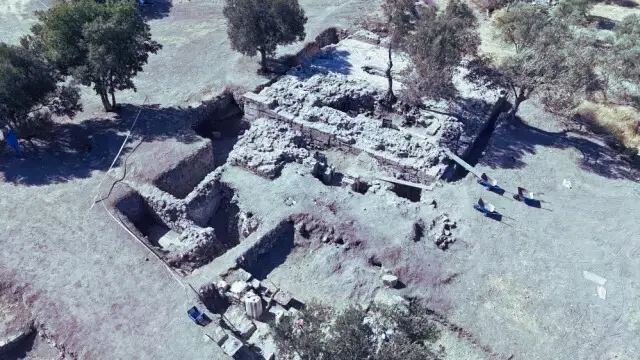
A groundbreaking discovery has been made in Çanakkale, Turkey, where archaeologists unearthed a remarkably well-preserved 1,700-year-old underfloor heating system in the ancient Roman bath of the Apollon Smintheus Sanctuary. This technological marvel, known as the hypocaust system, reveals fascinating details about how Romans engineered sophisticated methods of heating public baths centuries ago.
The excavation, carried out under the leadership of Professor Dr. Davut Kaplan from Ondokuz Mayıs University, offers new insights into the architectural brilliance of the Roman Empire and its influence on bathing culture throughout history.
Excavations at the Apollon Smintheus Sanctuary
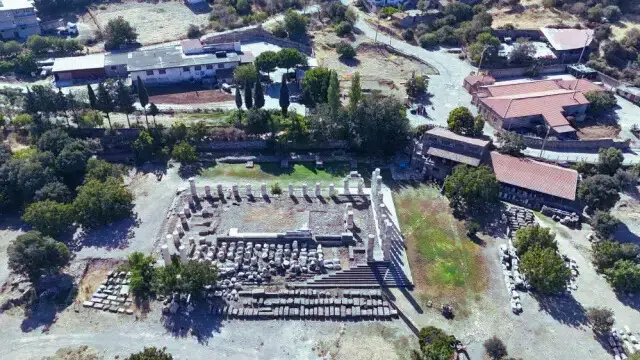
The archaeological works are being conducted in Ayvacık district, Gülpınar village, within the sacred site of Apollon Smintheus. Excavations at this site began in 1980 and have continued for decades under the supervision of the Turkish Ministry of Culture and Tourism in collaboration with the Çanakkale Archaeology Museum.
Since 2011, the excavation has been sponsored by İÇDAŞ A.Ş., and in recent years, HYDRO WORKS Engineering Co. has also supported the project. This year’s excavation team consists of about 20 members, including students, archaeologists, restorers, and architects, many of whom are working voluntarily under the Heritage for the Future Project initiated by the Ministry of Culture.
The 2025 season of excavations began three months ago, focusing on the Western Bath of the sanctuary. Here, archaeologists identified caldarium chambers—the hot sections of Roman baths—complete with underfloor and wall-heating systems.
How the Roman Hypocaust Worked
The hypocaust system was one of the most advanced Roman inventions. Professor Kaplan explained:
“The Romans gifted humanity with heated bathhouses, which became the foundation of modern bathing culture. These baths not only influenced the Christian Roman period but also shaped the traditions of the Islamic world and eventually our modern spas.”
The system functioned by creating an empty space beneath the bath’s floor, supported by small brick columns about 80–90 centimeters high. Hot air and smoke from a furnace (praefurnium) circulated under the floor and through flues in the walls, heating the entire room. The caldarium, often hot enough to make the floor uncomfortable to stand on barefoot, provided the ultimate Roman luxury.
This discovery confirms the advanced engineering capabilities of the Romans and their understanding of comfort, hygiene, and social life in public bathhouses.
A Glimpse Into the Future of Excavations
Professor Kaplan emphasized that the current findings are only the beginning:
- Future excavations aim to reveal the entire bath complex, including cold rooms (frigidarium), lukewarm rooms (tepidarium), and even areas with pools.
- Archaeologists also plan to uncover changing rooms and social spaces, shedding light on the daily rituals of ancient visitors to the sanctuary.
- The site will provide invaluable knowledge about how bathing culture spread from Rome to Anatolia and beyond.
Kaplan added that despite limited manpower due to labor shortages in rural areas, the dedication of young students and volunteers has been vital for the progress of the project.
Why This Discovery Matters
The unearthing of this 1,700-year-old hypocaust not only enriches Turkey’s already vast archaeological heritage but also connects modern society to the ingenuity of Roman civilization. It illustrates how ancient technology laid the foundation for modern heating systems still in use today.
For Çanakkale, a city already world-famous for Troy, this discovery adds yet another historical treasure that is likely to attract global attention and tourism.
Conclusion
The discovery of a Roman-era underfloor heating system in Çanakkale’s Apollon Smintheus Sanctuary is a striking reminder of the Romans’ architectural and engineering genius. As excavations continue, the bath complex is expected to reveal even more secrets, offering scholars and visitors alike a rare opportunity to step into the daily life of antiquity.
This find is not just about archaeology—it’s about preserving and understanding a cultural legacy that continues to inspire modern innovations.
