How the Puerto Rican superstar used fashion, simplicity, and symbolism on the biggest stage in sports
Bad Bunny Super Bowl outfit story discussions quickly took over social media after the global star delivered a powerful halftime performance at the 2026 Super Bowl. Held at Levi’s Stadium in Santa Clara, California, the event was not only a major musical moment, but also a defining fashion statement that challenged expectations in subtle but meaningful ways.
Fresh off a historic Grammy Awards win just one week earlier, Bad Bunny entered Super Bowl Sunday as one of the most talked-about artists in the world. While fans expected an explosive performance, few anticipated that his stage outfit would spark just as much conversation as his music.
A Celebration That Began on the Field
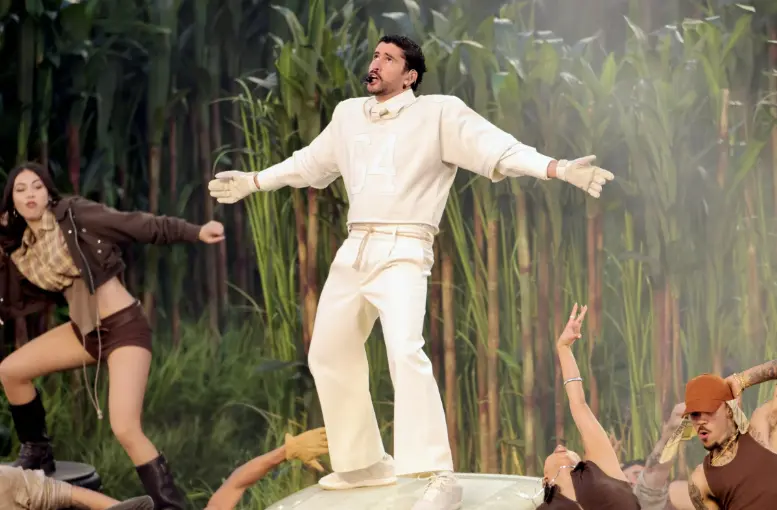
Before the game, Bad Bunny described the halftime show as “fun and easy,” saying audiences should only focus on dancing and enjoying the moment. That vision became reality when he opened the performance with Tití Me Preguntó on a grass-covered stage, transforming the stadium into a joyful celebration rather than a traditional concert setup.
Throughout the show, the Puerto Rican artist performed several fan favorites, including NUEVAYoL and DeBÍ TiRAR MáS FOToS. Surprise appearances by Ricky Martin and Lady Gaga elevated the performance even further, while legendary Latin figures such as Toñita, owner of New York’s iconic Caribbean Social Club, added cultural depth and authenticity.
A Surprisingly Minimal Look by Zara
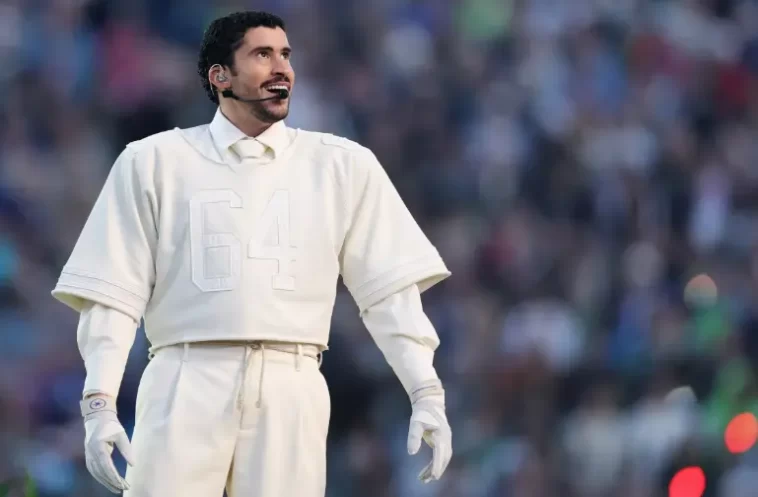
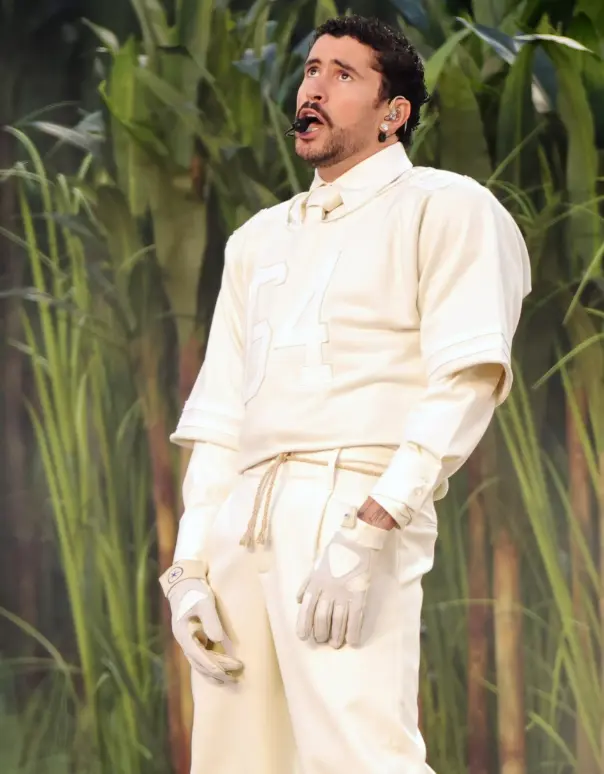
Known for his bold and unconventional fashion choices, Bad Bunny surprised many by opting for a clean, minimalist stage outfit. The look was designed by Zara and styled by his longtime collaborators Storm Pablo and Marvin Douglas Linares.
The outfit featured soft cream tones from head to toe. It included a collared shirt with a tie, a sporty jersey-style top marked with the surname “Ocasio” and the number 64, chino pants, and sneakers. Fans quickly speculated that the number 64 referenced the birth year of Bad Bunny’s mother, Lysaurie Ocasio, adding a personal layer to the look.
Choosing Zara Over Luxury Fashion Houses
Only days earlier, Bad Bunny had worn Schiaparelli’s first-ever menswear design to the Grammy Awards. Given his access to the world’s most exclusive fashion houses, his decision to wear Zara for the Super Bowl was clearly intentional.
Zara later released a short statement praising the collaboration, calling the performance unforgettable and highlighting how naturally the outfit matched Bad Bunny’s energy. The choice also reflected the artist’s deep connection to Spanish-speaking audiences, as Zara is a Spanish brand and most of his music is performed in Spanish.
A Second Look and Statement Accessories
As the show progressed, Bad Bunny added a cream-colored double-breasted blazer, creating a second Zara look for the latter part of the performance. He completed the outfit with matching cream gloves and a luxury Audemars Piguet Royal Oak watch featuring an 18-karat yellow gold case and a malachite dial.
On his feet, he wore the BadBo 1.0 sneakers, designed in collaboration with Adidas under his own name. The sneakers officially went on sale shortly after the Super Bowl, instantly drawing attention from fans and collectors.
Staying True to His Personal Style
The Bad Bunny Super Bowl outfit story becomes even more meaningful when viewed through the lens of his long-standing fashion philosophy. Whether on stage or on the red carpet, Bad Bunny consistently prioritizes authenticity over spectacle.
In a Vogue digital cover interview published in December 2025, he summed it up simply: “I don’t like it when I don’t feel like myself in what I’m wearing.” That mindset was clearly reflected in his understated yet powerful Super Bowl look.
A Historic Performance in Spanish
Beyond fashion, the performance itself made history. Bad Bunny became the first artist to deliver a Super Bowl halftime show entirely in Spanish. While the decision sparked debate in some conservative circles, it was widely celebrated as a milestone for Latin representation in American pop culture.
The performance came just days after Bad Bunny became the first Latin artist in Grammy history to win Album of the Year, thanks to DeBÍ TiRAR MáS FOToS. During his acceptance speech, he openly criticized U.S. immigration enforcement policies, delivering a message that resonated far beyond music.
Ending With a Message of Unity
Bad Bunny closed the Super Bowl halftime show by lifting an American football bearing a clear and emotional message:
“Together, we are America.”
Short, direct, and powerful, the message perfectly summed up the night — a blend of music, culture, fashion, and identity, delivered with confidence and intention.
