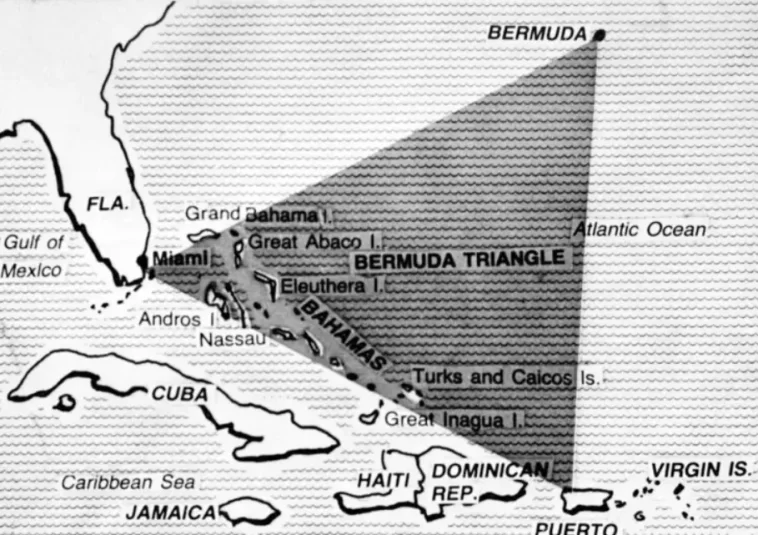
Bermuda’s 31 million-year secret has finally been solved by scientists, and the discovery is shaking the scientific world. For decades, experts wondered why Bermuda, located in the mysterious Atlantic Ocean region often linked to the Bermuda Triangle, has remained standing tall without sinking into the sea despite its volcanoes going extinct millions of years ago.
A Geological Mystery in the Atlantic
Normally, volcanic islands collapse after their volcanic activity ends. The tectonic plate moves away from the mantle’s hot spot, the crust cools, and the island slowly sinks. But Bermuda defied this rule. Researchers now believe they have uncovered the extraordinary reason behind Bermuda’s survival.
A Hidden Rock Layer Beneath Bermuda
According to a study published in Geophysical Research Letters, scientists discovered an unusual rock layer beneath Bermuda’s oceanic crust. This layer, about 20 kilometers thick, is unlike anything seen elsewhere in the world. It acts like a support system, keeping Bermuda afloat for millions of years.
Seismic Waves Reveal the Secret
The research team, led by William Frazer from Carnegie Science and Jeffrey Park from Yale University, analyzed seismic waves from 396 powerful earthquakes worldwide. These waves allowed them to create a vertical image of Bermuda’s underground structure, reaching 50 kilometers deep. The results revealed a thick, low-density layer compared to surrounding rocks.
A Floating Island Above the Ocean Floor
Frazer explained that scientists expected to find the mantle directly beneath the crust. Instead, Bermuda has a unique layer embedded within the plate. This unusual formation likely formed when magma froze inside the crust during ancient volcanic eruptions, creating a raft-like structure that continues to hold the island above sea level.
Still Standing After 31 Million Years
Bermuda’s volcanoes have been inactive for around 31 million years, yet the island remains elevated—about 500 meters higher than the surrounding ocean floor. No new volcanic activity has been observed, but the island’s unusual underground structure continues to keep it stable.
A One-of-a-Kind Discovery
Scientists emphasize that this discovery is unique. No other island has shown such a thick, supportive rock layer beneath its crust. Some experts also suggest Bermuda’s location near the center of an ancient supercontinent may have contributed to its unusual geology.
What Comes Next
Researchers plan to study other islands to see if similar hidden structures exist. Bermuda’s case is considered an “extreme example” that could help scientists better understand how Earth’s inner layers work. For now, Bermuda remains a geological wonder—an island that has stood firm for 31 million years thanks to a secret hidden deep beneath the Atlantic Ocean.
