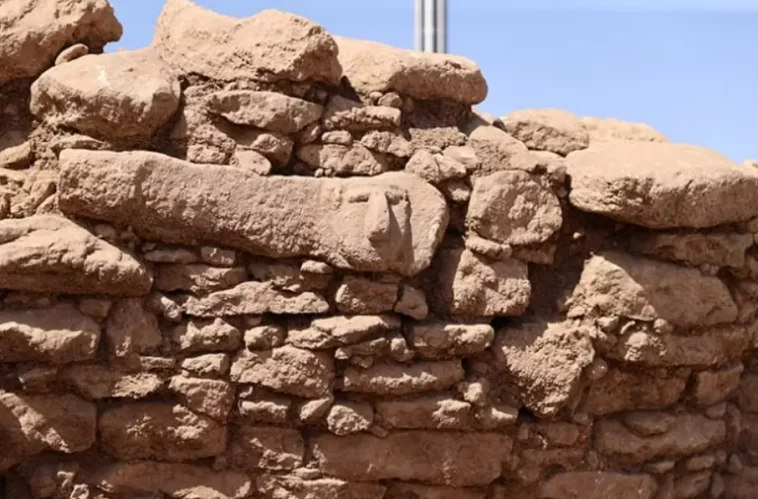
Karahantepe discovery continues to reshape the understanding of early human settlement, as a newly uncovered architectural feature resembling an amphitheater has been revealed in Şanlıurfa. The finding—described by archaeologists as one of the most intriguing structural elements of the region’s Neolithic landscape—brings renewed global attention to the ancient site and offers new clues about how early societies gathered, worshipped, and lived together.
Located around 46 kilometers from Şanlıurfa’s city center, Karahantepe sits within the protected borders of Tek Tek Mountains National Park. The area, part of the broader Taş Tepeler project that includes several early settlement sites, has yielded an increasing number of artifacts, sculptures, and architectural innovations belonging to communities that lived more than 11,000 years ago. With every excavation season, the site contributes more evidence revealing how the earliest settled groups adapted, built structures, and developed rituals and communal practices.
A Monumental Structure with Amphitheater-Like Design
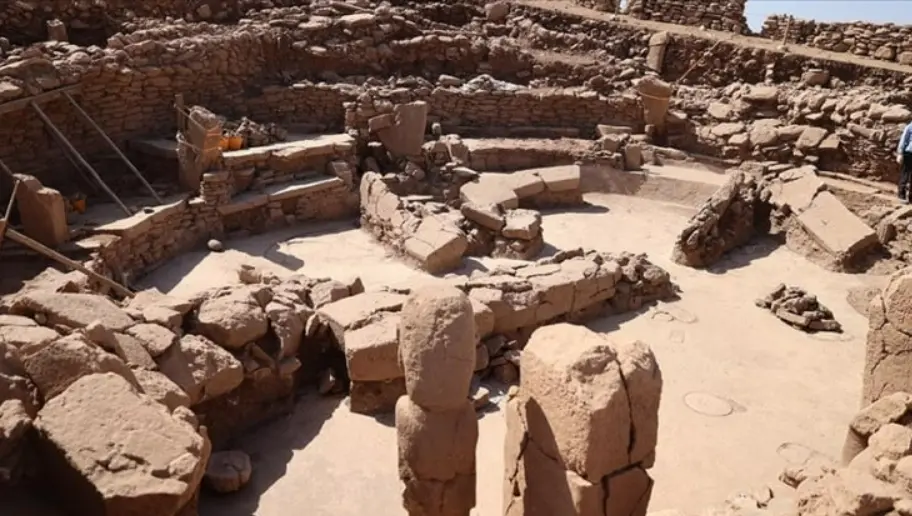
The latest Karahantepe discovery centers on a circular architectural feature measuring approximately 17 meters in diameter. The structure has drawn attention for its resemblance to later amphitheaters and odeons, although it predates such buildings by thousands of years. According to excavation head Professor Necmi Karul, the design suggests intentional planning for group gatherings rather than simply domestic or functional use.
Karul explains that the excavation team has reached the bedrock surface throughout the structure, revealing stepped seating areas carved with precision. “We see three wide, carefully arranged steps facing a distinct focal point inside the building,” he said. “The configuration strongly suggests that groups of people were meant to sit, observe, or participate in ritual or communal activities.”
The presence of seating platforms is exceptionally rare for the Neolithic period, triggering discussions among researchers about how this space might have been used. While the word “amphitheater” describes it visually, the structure has no known counterpart of its age, making it a significant breakthrough in understanding early architectural innovation.
Three Distinct Settlement Phases Unearthed
Another important aspect of the Karahantepe discovery involves the identification of three separate architectural phases at the site. Each phase reflects clear changes in design preferences and construction methods, suggesting a long, evolving occupation.
- First phase: round-plan structures
- Second phase: rectangular buildings with rounded corners
- Final phase: sharply angled rectangular structures
These changes are thought to reflect shifts in social organization, technological skill, and community needs. Across all three phases, both public and private buildings have been identified, reinforcing the idea that Karahantepe was a significant settlement rather than a temporary ritual site.
Karul highlights that the architecture reflects the growing sophistication of the people who inhabited the area. “The evolution of these designs shows both continuity and innovation,” he said. “Over centuries, these communities adapted their space to match changing social dynamics.”
Human Sculptures Signal Symbolic Transformation
One of the most remarkable aspects of the Karahantepe discovery is the number of human sculptures found within the structure. Previous excavations revealed a 2.3-meter-tall human figure, and the latest work continues to uncover carefully placed stone heads and seated human statues embedded into the structure’s walls and floors.
According to Karul, this marks a key symbolic transition in prehistoric art. Earlier Neolithic sites emphasized animal symbolism, but Karahantepe’s later layers highlight a shift toward portraying humans more prominently.
“These finds are extraordinarily unique,” Karul noted. “They demonstrate that, by this stage, human representation had become central to symbolic expression. This is evidence of a broader cultural transformation that unfolded over centuries.”
Some of the human figures were found intact, while others were discovered in fragmented or ritualistically placed positions. Their deliberate inclusion in building walls suggests they held ceremonial or communal significance.
A Space Built for Gathering, Not Worship Alone
Despite early speculation that the newly discovered structure might be a temple, researchers now suggest a broader purpose. The amphitheater-like seating and human depictions point to a space designed primarily for bringing people together—possibly for rituals, decision-making, social gatherings, or community events.
Karul emphasizes this distinction. “If these were solely temples, their function would be much more limited. Instead, the architecture indicates these were gathering places with broader social roles,” he explained. “People likely met here to reinforce communal bonds, perform ceremonies, and participate in shared activities.”
This interpretation aligns with a larger theory: that early settlers required spaces encouraging unity, cooperation, and collective identity. As populations grew and settled life replaced nomadic living, structures that supported group cohesion became essential.
Possible Predecessor to Amphitheaters and Odeons
The Karahantepe discovery may reshape the timeline of architectural evolution. While amphitheaters and odeons are mainly associated with Classical Greek and Roman civilizations, the existence of a similar structural concept in the Neolithic era raises fascinating questions.
Karul suggests that the basic idea of communal seating arranged around a focal point may have originated in these early settlements. “What we see here is the earliest example of a design that, in later civilizations, becomes formalized as the amphitheater or the odeon,” he said.
Although the functions differed across eras, the conceptual similarities are striking. The stepped seating, focal sculpture, and orientation toward a central space hint at deeply rooted cultural practices centered around gathering and shared experiences.
Restoration Efforts Will Reveal More
Restoration and conservation of the excavated structure are ongoing. Once the process is completed and several standing stones are re-erected, the site will offer a clearer view of its original appearance.
Karul notes that as more details emerge, the interpretation of the building’s function may evolve further. “We believe that once restoration is complete, the architectural elements will be much easier to read,” he said. “This will help both specialists and visitors understand how the structure served its community.”
A Window into Early Human Society
The Karahantepe discovery underscores a growing recognition that early settled communities were far more complex than once assumed. They built large public spaces, created symbolic art, performed rituals, and gathered in structured social environments.
The newly revealed amphitheater-like building highlights the importance of social cohesion and the emergence of shared cultural practices. Scholars now argue that the motivation to gather and participate collectively may have been one of the driving forces behind permanent settlement.
As excavations continue, Karahantepe promises to remain a critical source of knowledge about humanity’s earliest attempts at communal living, symbolic expression, and architectural experimentation.
