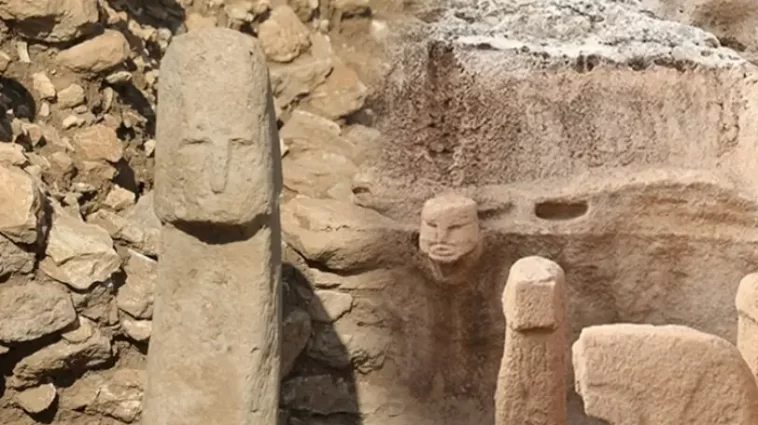
Karahantepe world’s most important discovery has drawn global attention after being selected as the most significant archaeological discovery of 2025. Located in Şanlıurfa, southeastern Türkiye, Karahantepe is changing what we know about the Neolithic Age and the earliest symbolic expressions of humanity. With its mysterious stone pillars, three-dimensional human faces, and carefully placed animal figures, this ancient site raises one powerful question: What were these early people trying to tell us?
A Discovery That Changed Archaeology
Karahantepe is part of the Taş Tepeler (Stone Hills) Project, which also includes Göbeklitepe, one of the most famous archaeological sites in the world. However, Karahantepe is now stepping into the spotlight on its own.
In its 2025 issue, Archaeology Magazine ranked Karahantepe as the world’s most important discovery, highlighting how ongoing excavations continue to rewrite the story of early human civilization. According to the magazine, findings at Karahantepe offer rare and rich evidence of symbolic thinking during the Pre-Pottery Neolithic period, roughly 12,000 to 10,200 years ago.
This recognition is not just a title. It reflects how deeply this site reshapes our understanding of early human identity, belief systems, and artistic expression.
Where Is Karahantepe and Why Does It Matter?
Karahantepe is located near Şanlıurfa, a region often described as the cradle of civilization. This area was home to some of the earliest farming communities and monumental architecture in human history.
What makes Karahantepe special is not only its age, but also the nature of its discoveries. Unlike many Neolithic sites that focus on tools or daily life, Karahantepe reveals how early humans saw themselves and the world around them.
The Mysterious T-Shaped Pillars
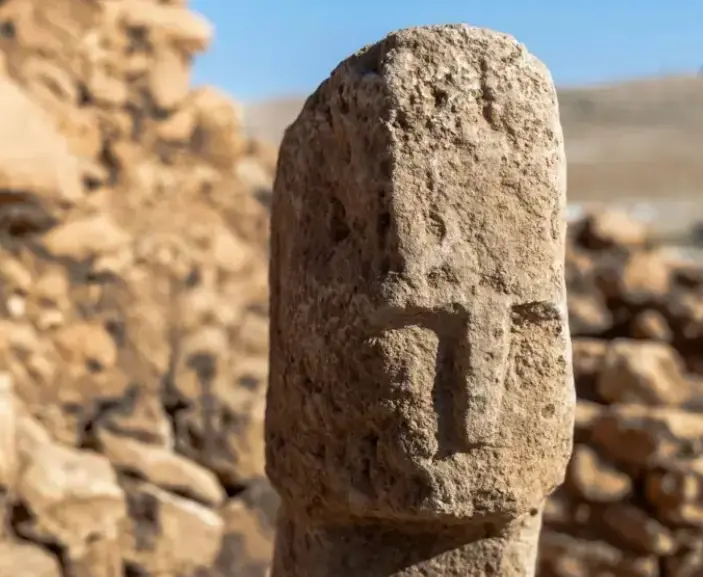
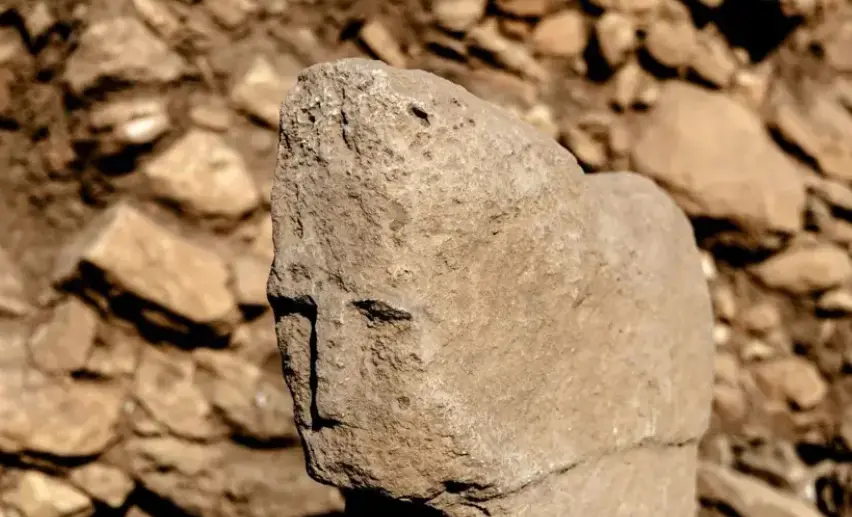
One of the most remarkable discoveries at Karahantepe is a T-shaped stone pillar with a carved human face. While T-shaped pillars were already known from Göbeklitepe and surrounding areas, this is the first time a fully three-dimensional human face has been found carved onto one.
The pillar stands 1.4 meters tall and was carved directly from the bedrock. Archaeologists date it to the 9th millennium BCE, placing it among the earliest known monumental human representations.
Professor Necmi Karul from Istanbul University, who leads the excavations, explains that this finding strongly supports the idea that these pillars represent human figures, not abstract forms.
“The presence of a face at the top of the pillar supports the interpretation that these monuments symbolize humans,” Karul states.
This discovery marks a turning point in Neolithic studies.
The World’s Oldest 3D Narrative?
Another groundbreaking find is a collection of artifacts that Professor Karul believes may represent the world’s oldest three-dimensional narrative.
In a deliberately buried and abandoned structure, archaeologists uncovered:
- A stone slab
- Stone rods
- A bottomless stone bowl
- Small stone figurines representing a wild boar, vulture, and fox
Each figurine is about 3.3 cm high and surrounded by a limestone ring around its head. According to Karul, these objects were placed in a symbolic order, suggesting storytelling, ritual, or myth.
This level of intentional design points to complex belief systems and abstract thinking far earlier than previously assumed.
What Do the Animal Figures Mean?
Animals appear frequently in Neolithic art, but at Karahantepe, their placement and grouping seem especially meaningful.
The wild boar, vulture, and fox likely played important roles in Neolithic stories, possibly representing:
- Life and death
- Protection or danger
- The spiritual world
The discovery of these figures inside a purposefully sealed building suggests ritual use rather than daily life.
A New View of Neolithic People
For many years, early Neolithic humans were seen mainly as practical survivors focused on hunting and farming. Karahantepe challenges this idea.
The discoveries show that these people:
- Had advanced stone-carving skills
- Created symbolic and artistic representations
- Thought deeply about identity and existence
- Expressed themselves through abstract and figurative art
The carved faces, animal figures, and structured layouts reveal a strong sense of meaning and imagination.
Excavations Continue at 10 Different Sites
As of 2025, excavation work under the Taş Tepeler Project continues at 10 different locations in the region.
Each new season brings fresh discoveries, but Karahantepe remains one of the most promising sites. Archaeologists believe many more structures and artworks are still hidden underground.
The human-faced T-pillar alone has opened new research paths, encouraging scholars to rethink early monumental art and human self-representation.
Why Karahantepe Matters to the World
Karahantepe is not just important for Türkiye — it matters to all humanity.
It helps answer fundamental questions:
- When did humans begin to see themselves symbolically?
- How early did storytelling and ritual begin?
- What role did art play in shaping society?
By pushing the timeline of symbolic thought further back, Karahantepe changes our understanding of human development.
A Silent Message from 12,000 Years Ago
The stone faces of Karahantepe do not speak, yet they communicate powerfully across time.
They tell us that even at the dawn of civilization, humans were not only builders and survivors — they were thinkers, artists, and storytellers.
As excavations continue, Karahantepe will likely reveal even more secrets. For now, it stands as a reminder that humanity’s roots are deeper, richer, and more imaginative than we ever imagined.
