OCTOBER 12, 1997 – Singer/songwriter/musician/actor JOHN DENVER (b. December 31, 1943 as Henry John Deutschendorf, Jr. in Roswell, New Mexico) was killed when his experimental Rutan Long-EZ plane, aircraft registration number N555JD, crashed into Monterey Bay near Pacific Grove, California, while making a series of touch-and-go landings at the nearby Monterey Peninsula Airport. The National Transportation Safety Board’s (NTSB) accident ID is LAX98FA008. Denver was the only occupant of the aircraft. The crash badly disfigured Denver’s head and body, making identification impossible by dental records, so records of his fingerprints were used to confirm that the fallen pilot was indeed the singer.

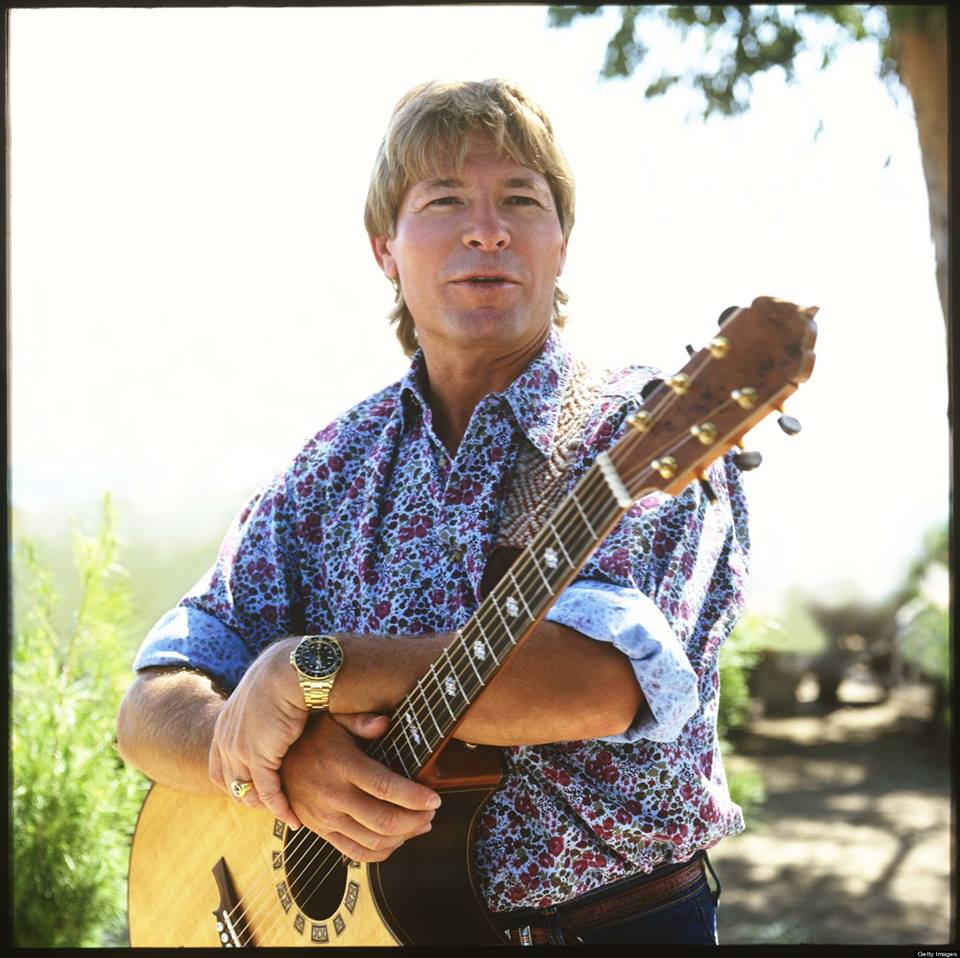
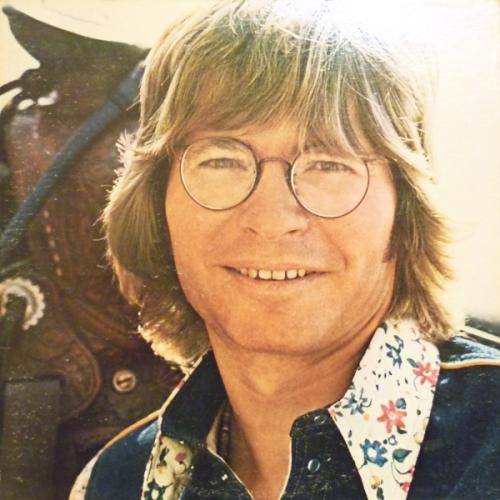
A pilot with over 2,700 hours of experience, Denver had pilot license ratings for single-engine land and sea, multi-engine land, glider, and instrument. He also held a type rating in his Learjet. He had recently purchased the Long-EZ aircraft and had taken a half-hour checkout flight with the aircraft the day before the accident.Denver was not legally permitted to fly at the time of the accident. In years prior he’d had a number of drunk driving arrests. In 1996, nearly a year before the accident, the Federal Aviation Administration had learned that Denver had failed to maintain sobriety by failing to abstain entirely from alcohol, and thus the FAA was compelled to revoke his medical certification. The accident, however, was not influenced by alcohol use, as there was no trace of alcohol or other drugs in Denver’s body at autopsy.Post-accident investigation by the NTSB showed that the leading cause of the accident was Denver’s inability to switch fuel tanks during flight. The quantity of fuel had been depleted during the plane’s transfer to Monterey and in several brief practice takeoffs and landings performed by Denver at the airport immediately prior to the final flight. His newly purchased experimental Rutan had an unusual fuel selector valve handle configuration. Intended by the plane’s designer to be located between the pilot’s legs, the fuel selector had instead been placed by the plane’s builder behind the left shoulder of the pilot, with the fuel gauge also behind the pilot’s seat and thus not visible to the person at the controls. An NTSB interview with the aircraft mechanic servicing Denver’s plane revealed that he and Denver had discussed the inaccessibility of the cockpit fuel selector valve handle and its resistance to being turned.Before the flight, Denver and the mechanic had attempted to extend the reach of the handle, using a pair of Vise-Grip pliers. However, this did not solve the problem, as the pilot could still not reach the handle while strapped into his seat. NTSB investigators’ post-accident investigation showed that given the positioning of the fuel selector valves, switching the craft’s fuel tanks required a pilot to turn his body 90 degrees to reach the valve. This created a natural tendency to extend one’s right foot against the right rudder pedal to support oneself while turning in the seat, causing the aircraft to yaw (move off course) and pitch up.According to the mechanic, after he had noted to Denver that the fuel sight gauges were visible only to the rear cockpit occupant, Denver asked him about the quantity of fuel shown. The mechanic told Denver that he had “less than half in the right tank and less than a quarter in the left tank”. The mechanic then provided Denver with an inspection mirror so that he could look over his shoulder at the fuel sight gauges; the mirror was later recovered in the wreckage. Denver told the mechanic that he would use the autopilot inflight, if necessary, to hold the airplane level while he turned the fuel selector valve. Denver declined an offer to take on additional fuel, telling the mechanic that he would only be flying for about one hour.The NTSB interviewed 20 witnesses of Denver’s last flight; six of them had observed the plane’s crash into the ocean near Point Pinos. Four of the witnesses indicated that the airplane was originally heading west; five of them observed the airplane in a steep bank, with four of those five reporting the bank was to the right (north). Twelve witnesses saw the airplane in a steep nose-down descent. Witnesses estimated the plane’s height at 350 to 500 feet while heading toward the shoreline. Eight of the witnesses said that they heard a “pop” or “backfire”, along with a reduction in the engine noise level just before the airplane descended into the water.In addition to Denver’s failure to refuel the plane prior to takeoff and his subsequent loss of control while attempting to switch fuel tanks, the NTSB determined there were several other key factors that led to the accident. Primary among these was the inadequate transition training on this type of aircraft by the pilot, and the builder’s decision to locate the unmarked fuel selector handle in a difficult-to-access location. Following its investigation the board issued recommendations regarding the requirement and enforcement of mandatory training standards for pilots engaged in operating experimental aircraft. The board also emphasized the importance of mandatory ease of access to all controls, including fuel selectors and fuel gauges, in all aircraft.As the son of an Air Force officer, Denver was constantly moved from state to state and country to country. It was in Tucson, Arizona, that his grandmother gave him his first acoustic guitar, a gift that would prove an icebreaker when meeting other students at the many new schools in which he was placed. After settling with his family in Fort Worth, Texas, Denver ran away to California for a short time. He returned to Texas and graduated from high school, but soon returned to California on a more permanent basis. He began performing at Leadbetter’s night club in West Los Angeles but had a major career breakthrough when he was selected to replace the departing Chad Mitchell of The Chad Mitchell Trio. He remained with that organization until 1968 when he struck out on his own. From 1969 through 1975, Denver was the top-selling recording artist, appearing on both country and pop charts alike. His peak year was 1975, during which he was awarded the Country Music Association’s Entertainer of the Year in addition to being selected as the American Guild of Variety Artists’ Singing Star of the Year. During this period, he tried his hand at acting, appearing as Deputy Dewey Cobb in a 1973 episode of “McCloud” (1970) and hosting “Day of the Bighorn” (1974), an ecologically-minded television special. His most memorable role came in 1977 when he starred opposite George Burns in the hit comedy, “Oh, God!” (1977). Following this, his record sales began to decline, and he made fewer movies and television specials. He became something of a political activist, with his main focus being on environmental issues.

READ MORE:http://johndenver.com/http://www.imdb.com/name/nm0000135/https://www.allmusic.com/artist/john-denver-mn0000811622/biographyhttps://www.notablebiographies.com/supp/Supplement-Ca-Fi/Denver-John.htmlhttps://www.facebook.com/JohnDenverhttps://en.wikipedia.org/wiki/John_Denver
[wp_ad_camp_4]
