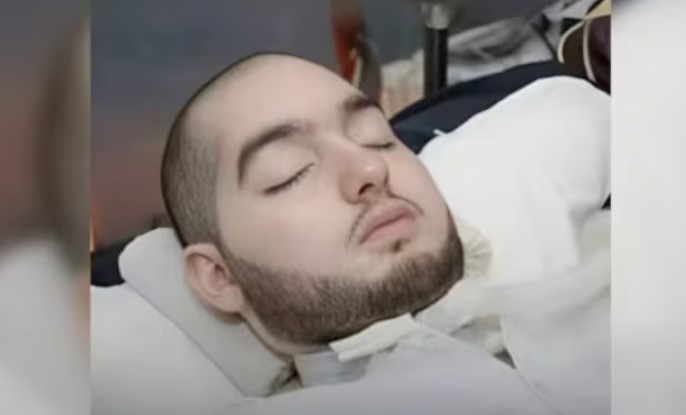
In a world where medical miracles and tragic fates often collide, few stories are as heartbreaking, mysterious, and awe-inspiring as that of Prince Al-Waleed bin Khaled bin Talal Al Saud, famously known as the “Sleeping Prince.” For over two decades, this young Saudi royal has been at the center of a deeply emotional and spiritual vigil that has captivated millions not only in the Middle East but across the globe.
Who Is Prince Al-Waleed bin Khaled?
Prince Al-Waleed bin Khaled bin Talal Al Saud was born into the powerful and vast royal family of Saudi Arabia. He is the son of Prince Khaled bin Talal, a prominent Saudi royal and businessman, and the nephew of Prince Al-Waleed bin Talal, one of the most well-known billionaires in the Arab world and a global investor.
The young prince came from a family known for its influence in both politics and global economics, with strong ties to humanitarian causes, religious conservatism, and the inner workings of the Saudi royal court.
The Tragic Accident
In 2005, at the age of just 18, Prince Al-Waleed was involved in a catastrophic car accident while studying at a military college. The crash left him in a persistent vegetative state, a condition where a person is awake but not aware of their surroundings due to severe brain damage.
Doctors in Saudi Arabia and abroad had little hope for his recovery, with many suggesting the family consider withdrawing life support. However, Prince Khaled, his father, refused—firmly believing that life is sacred and only God can decide when it should end.
Life in a Coma: The Long Vigil
Since the accident, Prince Al-Waleed has remained in a coma for nearly 20 years. His condition is monitored daily in a private medical facility, believed to be inside his family’s residence or a royal hospital. Over the years, his family has continued to care for him, releasing occasional photos and video clips to the public.
What makes his case unique is not only the length of time he has been in a vegetative state but also the signs of subtle responsiveness he has occasionally shown. In 2019, a viral video appeared to show the prince moving his fingers in response to his father’s voice. Another video suggested he briefly lifted his hand when asked to do so. Though doctors remain skeptical, the family and many observers took these moments as signs of hope—a potential miracle.
A Symbol of Faith and Family
For many in the Arab world, Prince Al-Waleed’s story is more than just a medical anomaly—it has become a symbol of enduring love, unshakable faith, and the belief in divine will.
Prince Khaled’s decision to keep his son on life support is based on deep religious conviction. Islam views life as a sacred gift, and while euthanasia is a debated issue, most scholars discourage or prohibit ending life support when there’s any chance of recovery.
The prince’s mother and other family members have also remained steadfast, staying by his side and publicly praying for his recovery. Over time, a large number of people across the Muslim world began following his story, offering prayers and support on social media with the hashtag #الامير_النائم (The Sleeping Prince).
Global Curiosity and Media Coverage
Although the mainstream Western media rarely covers Prince Al-Waleed bin Khaled, the story has occasionally resurfaced in international outlets due to its uniqueness. His case raises questions about:
- The limits of modern medicine
- Religious vs. scientific perspectives on coma care
- Ethics of long-term life support
- The role of wealth and power in healthcare decisions
While similar patients are often removed from machines after a few years in most countries, the vast resources of the Saudi royal family have allowed for uninterrupted care spanning decades, pushing the boundaries of what is medically and logistically possible.
Rumors and Misinformation
Given the length of time and the secrecy surrounding Saudi royal affairs, many rumors have emerged over the years—some claiming he has died, others alleging cover-ups or alternative explanations. However, his family occasionally debunks these by posting short videos or updates to prove he is still alive and cared for.
Saudi Arabia’s ‘Sleeping Prince’ Al-Waleed bin Khalid dies after 20 years in a coma
Prince Al-Waleed bin Khalid bin Talal Al Saud, famously known as Saudi Arabia’s “Sleeping Prince,” has died at the age of 36 after spending nearly 20 years in a coma. His passing was announced by his father, Prince Khaled bin Talal, on Saturday, July 19, 2025.
The prince’s long ordeal began in 2005 when, at the age of 15, he was involved in a devastating car accident while studying at a military college in London. The crash resulted in severe brain injuries and internal bleeding, leaving him in a persistent vegetative state.
Following the accident, he was transferred to King Abdulaziz Medical City in Riyadh, where he remained on a ventilator and received continuous medical care. Despite the advice of doctors, his father, Prince Khaled, steadfastly refused to remove him from life support, holding onto the hope of his son’s recovery. The prince’s case became a symbol of faith, patience, and paternal devotion, and his family often shared updates on his condition on social media.
Over the years, there were occasional reports of minor movements, such as him lifting his fingers or hand, which offered fleeting moments of hope to his family and the public who had followed his story. However, he never regained full consciousness.
Prince Al-Waleed’s funeral prayers were scheduled to be held at the Imam Turki bin Abdullah Mosque in Riyadh. The news of his death has led to an outpouring of condolences and tributes on social media, with many remembering the “Sleeping Prince” and his family’s unwavering dedication
