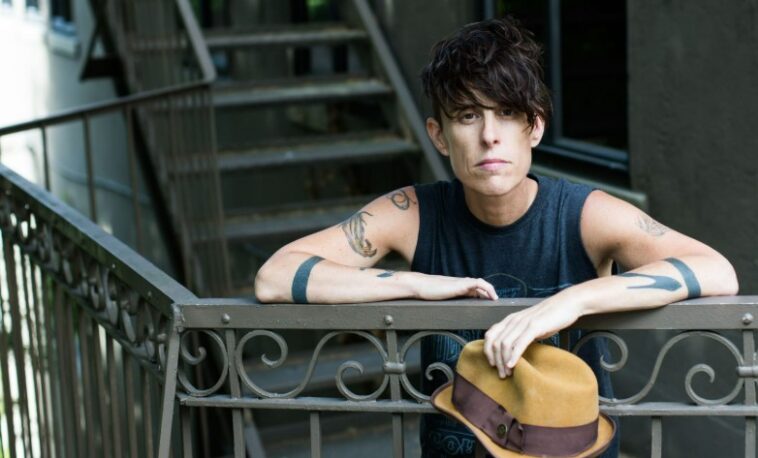
Andrea Gibson isn’t just a poet—they’re a force of nature. With raw vulnerability and lyrical precision, Gibson has redefined what poetry can be. Their work explores themes of love, gender, activism, grief, mental health, and identity with an honesty that leaves audiences breathless.
Whether you’ve heard their poems in a crowded venue or through headphones in the middle of a sleepless night, Andrea Gibson’s voice stays with you.
Here are 20 facts about Andrea Gibson that highlight their remarkable journey and powerful impact on the world of poetry and beyond.
1. Andrea Gibson uses they/them pronouns.
Gibson identifies as nonbinary and queer, and their pronouns reflect their gender identity. They have been a fierce advocate for LGBTQ+ rights and gender inclusivity through both their art and activism.
2. They were born in Calais, Maine.
Andrea was raised in a small town, which heavily influenced their early views on gender, belonging, and the need to question norms.
3. They started writing poetry in college.
Although Gibson had always loved writing, they began performing poetry seriously after moving to Boulder, Colorado.
4. They’re one of the most acclaimed spoken word poets in the U.S.
Andrea won the 2008 Women of the World Poetry Slam and has placed in the top five multiple times at national competitions.
5. Gibson’s first full-length book was published in 2009.
Titled Pole Dancing to Gospel Hymns, it’s an electrifying mix of political and personal, grief and joy.
6. Their poem “The Nutritionist” is a viral classic.
This poem, which tackles mental health, trauma, and resilience, has been widely shared online and performed in classrooms and workshops worldwide.
7. Music heavily influences their work.
Gibson often performs their poetry with live musicians, and their rhythmic cadence borrows heavily from musical phrasing.
8. They’ve released multiple poetry albums.
Albums like Yellowbird and Hey Galaxy blend spoken word with music, giving their poetry another emotional dimension.
9. Gibson has published several bestselling poetry books.
Including The Madness Vase, Take Me With You, Lord of the Butterflies, and You Better Be Lightning—all widely praised for their rawness and lyrical mastery.
10. They’re deeply committed to activism.
Their poetry addresses social justice issues such as gun violence, white privilege, environmentalism, and LGBTQ+ rights.
11. Mental health is a recurring theme in their poetry.
Gibson speaks candidly about depression, anxiety, PTSD, and therapy, often blending personal stories with calls for compassion and understanding.
12. They’ve written one of the most famous queer love poems.
The poem “To the Girl Who Works at Starbucks” is a fan favorite—playful, romantic, and deeply relatable to many queer readers.
13. They’re a cancer survivor.
In 2021, Andrea publicly shared their diagnosis with ovarian cancer. Throughout their treatment, they continued to write, reflect, and share openly with fans, demonstrating resilience and vulnerability.
14. They practice Buddhism and mindfulness.
Spirituality, presence, and healing are recurring undercurrents in their later works, especially following their cancer journey.
15. Their poetry is widely taught in schools.
Andrea’s work has found its way into classrooms around the world, often used to spark discussion on gender identity, mental health, and poetry as activism.
16. They’ve spoken out against toxic masculinity.
Gibson has written and performed poems that deconstruct traditional gender roles, masculinity, and the harm of societal expectations.
17. They have a massive online following.
Andrea’s Instagram, Tumblr, and YouTube presence have helped bring spoken word poetry to younger generations and global audiences.
18. They’ve performed in every U.S. state.
Andrea has toured extensively, often performing to sold-out crowds at poetry slams, theaters, and festivals.
19. Humor is part of their poetic voice.
Though known for intense and emotional poetry, Gibson often uses humor to balance their performances and highlight the absurdity of life.
20. They believe poetry can save lives.
Andrea has said, “Poetry gave me a voice when I didn’t feel I had one. I want to do the same for others.” Their poetry often serves as a lifeline for readers navigating trauma, grief, and identity.
Final Thoughts
Andrea Gibson’s poetry is more than just words—it’s a lifeline, a call to arms, and a mirror reflecting both the pain and beauty of being alive. In every performance and every page, Gibson reminds us that vulnerability is not weakness—it’s power.
If you’ve never read or listened to Andrea Gibson’s work, now is the time.
What’s your favorite Andrea Gibson poem or quote? Share it in the comments or tag a friend who needs to read their work today.
