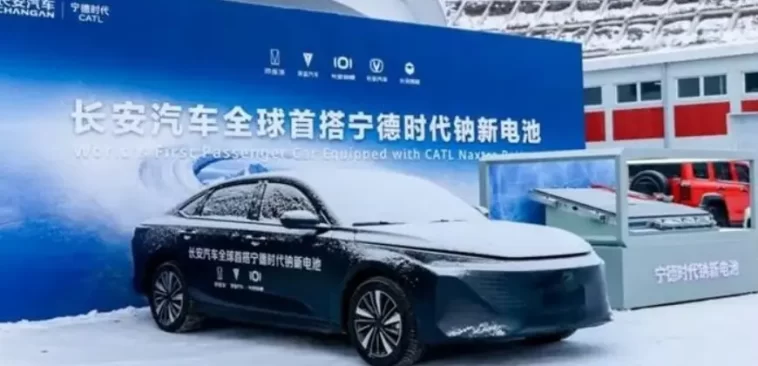
CATL Sodium-Ion Batteries 2026 is quickly becoming one of the most important developments in the electric vehicle industry. The world’s largest battery manufacturer, CATL, has announced that it will begin mass production of its next-generation sodium-ion batteries by the end of 2026. This move could significantly reshape the future of affordable and efficient electric mobility.
Unlike traditional lithium-based batteries, sodium-ion technology promises lower costs, improved performance in extreme conditions, and greater supply security. With a target driving range of up to 600 kilometers, these batteries are no longer just experimental—they are becoming a real alternative for everyday vehicles.
Major Technical Barriers Finally Overcome
The progress behind CATL Sodium-Ion Batteries 2026 did not happen overnight. The company revealed that it successfully solved four critical technical challenges that had previously slowed down production.
These challenges included moisture control during manufacturing, gas formation in hard carbon structures, bonding issues with aluminum foil, and the complexity of mass-producing self-forming anodes. According to company engineers, more than 100 engineering problems were addressed to make large-scale production possible.
This breakthrough means that sodium-ion batteries are now ready to move from the lab into real-world applications.
Why Sodium-Ion Batteries Matter
One of the biggest advantages of CATL Sodium-Ion Batteries 2026 is their ability to perform in extremely cold temperatures. Even at -40°C, these batteries can retain around 90% of their capacity. This makes them especially useful in regions where traditional batteries struggle.
Another major benefit is cost. Since sodium is more abundant and does not rely on rare materials like lithium, production costs are expected to be about 30% lower compared to LFP batteries. This could make electric vehicles more accessible to a wider audience.
However, there is still a trade-off. Sodium-ion batteries currently have lower energy density—around 175 Wh/kg—which means they store less energy compared to some lithium-based alternatives. For this reason, they are expected to be used first in smaller and more affordable electric vehicles.
600 KM Range هدف for the Future
Despite current limitations, CATL Sodium-Ion Batteries 2026 are expected to improve rapidly. As the supply chain matures and technology evolves, CATL believes that fully electric vehicles could achieve up to 600 km of range using sodium-ion batteries.
For hybrid vehicles with range extenders, the expected electric-only range is between 300 and 400 km. These figures are considered more than sufficient for a large portion of the global market.
Partnerships and First Vehicles on the Way
The commercialization of CATL Sodium-Ion Batteries 2026 is already underway. CATL has partnered with major automotive companies such as Changan Automobile and GAC Group to bring this technology into real vehicles.
The first mass-produced passenger car powered by sodium-ion batteries was introduced earlier in 2026, with a market launch expected soon. Additionally, models like the Aion UT Super, developed in collaboration with JD.com, are planned to enter production in the near future.
CATL has also expanded its efforts into commercial vehicles and energy storage systems, showing that sodium-ion technology could have applications far beyond passenger cars.
A Multi-Billion Investment in the Future
To bring CATL Sodium-Ion Batteries 2026 to life, the company invested nearly 10 billion yuan in research and development by 2025. This massive investment highlights how seriously CATL is taking the transition to next-generation battery technologies.
Company chairman Robin Zeng believes that sodium-ion batteries could eventually capture 30% to 40% of the global battery market. If this prediction holds true, it would mark one of the biggest shifts in the energy and automotive industries in decades.
What This Means for the EV Industry
The launch of CATL Sodium-Ion Batteries 2026 could be a turning point for electric vehicles. Lower costs, better cold-weather performance, and reduced reliance on scarce resources make this technology highly attractive.
While lithium batteries will likely remain dominant in the short term, sodium-ion batteries are emerging as a powerful alternative. As production scales up and performance improves, they could redefine what consumers expect from electric vehicles.
