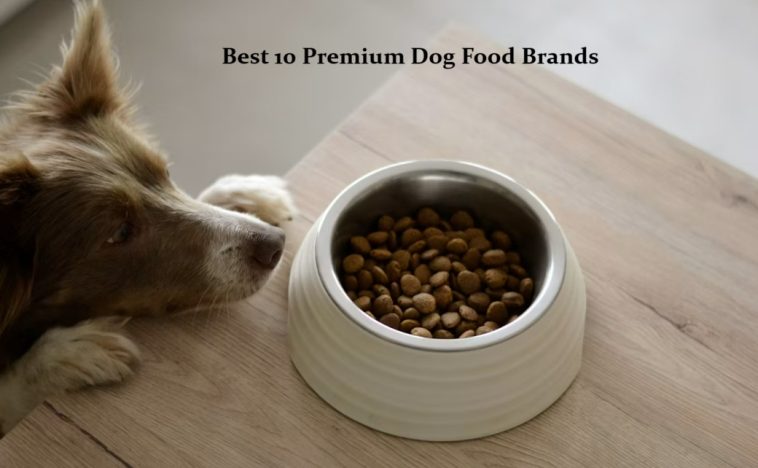
Premium dog food brands for active breeds aren’t just a marketing category — they’re a genuinely different class of nutrition designed to match the energy output, muscle demands, and joint stress that high-activity dogs deal with every single day.
I’ve had an Australian Shepherd for six years. Anyone who owns a herding breed, a working dog, or a high-drive sporting breed knows the look: that 7 a.m. stare that says I’m ready, are you ready, why aren’t we moving? When I first started paying serious attention to what went into my dog’s bowl, I was overwhelmed. The shelves are packed with bags that all claim to be “premium,” “high-protein,” or “performance-grade” — and most of them are not the same thing.
The truth is, feeding an active breed is different from feeding a couch-friendly dog. It took me a while to understand what the labels actually mean, which brands back up their claims with real nutrition science, and which ones are mostly marketing. This guide is the result of that research — along with input from vets, nutritionists, and plenty of real dog owners who’ve tested these brands in the field.
Why Active Breeds Need Different Nutrition
Before you start comparing bags, you need to understand what “active breed” actually means from a nutritional standpoint.
An active or working dog burns significantly more calories per day than a sedentary pet. They also put more strain on their muscles, joints, and cardiovascular system — which means their food needs to do more than just keep them alive.
Here’s what the science says active breeds need:
- Higher protein (28–38%+) — to maintain and rebuild muscle tissue after exercise
- Higher fat (18–22%) — fat is a slower-burning, sustained energy source better suited to endurance than carbohydrates
- Omega-3 fatty acids (EPA and DHA) — for joint health, inflammation control, and coat quality
- Glucosamine and chondroitin — for long-term joint protection, especially in large active breeds
- Antioxidants — to support immune function under physical stress
- AAFCO-certified complete nutrition — meaning the formula meets established standards for all life stages or the one that applies to your dog
A bag that says “high protein” on the front doesn’t automatically check all these boxes. That’s why choosing the right brand matters.
How to Read a Dog Food Label for Active Breeds
You don’t need a nutrition degree to evaluate a dog food label. Here’s a practical checklist:
- First ingredient should be a named meat — “chicken,” “beef,” or “salmon,” not “meat meal” or “animal by-product” as the lead ingredient
- Protein percentage should be 28% or higher for moderately active dogs; 30%+ for highly active or working dogs
- Fat content 14–20% for sustained energy — too low and your active dog will fatigue faster
- Look for named fish oils or flaxseed as an Omega-3 source
- Avoid excessive fillers like corn syrup, artificial colors, or unnamed “animal digest”
- Check for AAFCO statement — it should say “formulated to meet AAFCO nutritional levels” for adult maintenance or all life stages
Now, let’s get into the brands that actually deliver on these requirements.
1. Orijen — Best Overall for Active Breeds
Best for: High-performance dogs, working breeds, and owners who want the closest thing to a biologically natural diet
Orijen is consistently at the top of every credible “best dog food” list, and for active breeds specifically, it’s hard to argue against. The Canadian brand follows a “Biologically Appropriate” philosophy: their recipes contain 85–90% animal ingredients, including fresh meat, organs, and cartilage using whole-prey ratios that mirror what dogs evolved to eat.
The flagship Orijen Original formula delivers around 38% crude protein from free-run chicken and turkey, wild-caught fish, and cage-free eggs. Every batch uses ingredients sourced from regional farms and fisheries, and the brand has maintained a zero-recall record throughout its history — which matters more than most people realize.
The only real downside is price. You’re looking at roughly $3.50–$4.00 per pound, which adds up fast for large breeds. But if you want the highest-quality nutrition without compromise, Orijen is the benchmark.
Key specs:
- Protein: ~38% | Fat: ~18%
- 85–90% animal ingredients
- WholePrey ratios: muscle, organ, cartilage
- Zero recalls on record
2. Purina Pro Plan Sport — Best Value Performance Food
Best for: Active dogs whose owners want science-backed nutrition without the premium price tag
Purina Pro Plan Sport is the quiet overachiever of the active dog food world. It’s not as flashy as Orijen, and you won’t find it in boutique pet stores — but it’s consistently recommended by veterinarians and competitive dog handlers alike, and its nutritional profile is genuinely built for athletic performance.
The Sport Performance 30/20 formula is designed specifically for highly active dogs. The name tells you what you need to know: 30% protein and 20% fat, calibrated to optimize oxygen metabolism (VO2 Max) for endurance and fuel lean muscle retention. It includes EPA for joint health, glucosamine for hip and joint support, and antioxidants to protect the immune system under physical stress.
Performance dog owners on forums and Reddit threads have praised it repeatedly for producing shiny coats and solid muscle conditioning at a fraction of Orijen’s cost. For a large active breed, this is a genuinely smart choice.
Key specs:
- Protein: 30% | Fat: 20%
- Real chicken as first ingredient
- Includes EPA, glucosamine, antioxidants
- Vet-recommended; manufactured in USA Purina-owned facilities
3. Acana — Best Premium Alternative to Orijen
Best for: Active dogs who need high protein but may be sensitive to very rich formulas
Acana is made by the same Canadian company as Orijen (Champion Petfoods) but sits at a slightly lower protein density — which, counterintuitively, is sometimes better for dogs that find Orijen too rich. The Highest Protein formulas contain around 70% animal ingredients and 35% crude protein, with the balance made up of wholesome fruits and vegetables rather than cheap grains or fillers.
The Wild Atlantic recipe — built around wild-caught fish — is particularly good for active breeds that need joint support and coat health alongside muscle fuel. Acana is also an excellent choice if you want to rotate proteins seasonally, as the brand makes a wide variety of distinct recipes using different meat sources.
Pricing sits between Orijen and Pro Plan, making it accessible without the full premium cost.
Key specs:
- Protein: 35% | Fat: 19%
- 70% animal ingredients
- Wide variety of protein sources for rotation feeding
- Grain-free and limited-ingredient options available
4. Hill’s Science Diet — Best Vet-Recommended Brand
Best for: Active dogs with health conditions or owners who want veterinary-grade research behind every formula
Hill’s Science Diet doesn’t shout “performance” on its packaging, but behind the scenes, this brand invests more in nutrition research than almost anyone else. Their Global Pet Nutrition Center employs around 200 scientists who study how food affects dogs at a clinical level — and that research shows in the formulas.
Hill’s is particularly strong for active breeds that also have specific health challenges: joint issues, digestive sensitivity, skin problems, or weight management needs. Every formula is developed with veterinary nutritionists, and the AAFCO compliance is meticulous.
Their Active Longevity and Adult Vitality formulas address the needs of working dogs who are aging into the middle years — because a 7-year-old Border Collie still needs performance nutrition, just with a bit more joint and organ support built in.
Key specs:
- Multiple life-stage and health-specific formulas
- Developed by 200+ veterinary scientists
- Consistently recommended by veterinarians
- Research-backed digestibility and ingredient traceability
5. Taste of the Wild — Best Budget Premium Option
Best for: Active breed owners who want grain-free, ancestral-inspired nutrition at an accessible price
Taste of the Wild punches well above its price bracket. The brand uses novel proteins — bison, venison, wild boar, salmon, roasted duck — that are less common in mainstream dog food, which also makes it an excellent choice for dogs with sensitivities to chicken or beef.
The High Prairie formula (bison and roasted venison) delivers around 32% protein and 18% fat, with a grain-free formulation that mimics an ancestral canine diet without the ultra-premium price of Orijen or Acana. A dry matter analysis shows approximately 36% protein, 20% fat, and 36% estimated carbohydrates — solid numbers for an active breed.
One caveat worth knowing: the FDA investigated a possible link between grain-free diets high in legumes and dilated cardiomyopathy (DCM) in dogs. No direct causal link was established, but if your dog is a breed with known cardiac risk, consult your vet before committing to a fully grain-free diet.
Key specs:
- Protein: 32%+ | Fat: 18%+
- Novel proteins: bison, venison, wild boar, salmon
- Grain-free; made by Diamond Pet Foods (US-manufactured)
- Significantly more affordable than top-tier premium brands
6. Wellness CORE — Best Grain-Free High-Protein Option
Best for: Active dogs on a grain-free diet who need dense protein without exotic ingredients
Wellness CORE earns its reputation through straightforward, high-quality formulation. The grain-free original recipe leads with real turkey and chicken, delivering around 34% protein — well above the threshold for active breeds — with a clean ingredient list that avoids the common fillers found in mid-range foods.
What sets Wellness CORE apart for active breeds is the consistency of quality across formulas. Whether you choose the original, the reduced-fat version, or the ocean-based recipe, the protein and fat ratios remain genuinely calibrated for performance rather than just labeled that way.
The brand also includes added taurine in most formulas, which is notable given the ongoing conversation around grain-free diets and heart health. That’s a thoughtful addition that shows awareness of the current science.
Key specs:
- Protein: 34% | Fat: 16%
- Real turkey and chicken as primary ingredients
- Added taurine for heart health support
- Grain-free without excessive legume reliance
7. Merrick Grain-Free — Best for Large Active Breeds
Best for: Large active breeds like German Shepherds, Labradors, and Retrievers
Merrick’s grain-free line is built around real deboned meat as the first ingredient — beef, bison, chicken, or salmon depending on the recipe — and consistently delivers 38% protein in its top formulas. For large, active breeds that put significant strain on their joints and need serious muscle fuel, this is a standout choice.
The Backcountry line (a raw-infused kibble) is particularly popular among owners of herding and sporting breeds. It combines high-protein dry food with freeze-dried raw pieces, giving you the digestibility benefits of a raw diet with the convenience of kibble.
Merrick is also owned by Purina (since 2015), which means it benefits from serious manufacturing standards and quality control infrastructure — a reassuring factor for a brand in the premium tier.
Key specs:
- Protein: 38% | Fat: 17%
- Deboned real meat as first ingredient
- Raw-infused Backcountry line available
- Strong formula for large, high-energy breeds
8. Royal Canin — Best for Breed-Specific Active Dogs
Best for: Purebred active dogs whose owners want species and breed-tailored nutrition
No other brand goes as deep on breed-specific formulation as Royal Canin. If you have a Labrador Retriever, a Border Collie, a German Shepherd, or a Golden Retriever — the chances are Royal Canin has a formula engineered specifically for that breed’s body structure, jaw shape, metabolic tendencies, and common health vulnerabilities.
For active breeds, this specificity matters. A German Shepherd’s digestive system is genuinely different from a Labrador’s. Their joint stress patterns differ, their protein utilization rates differ, and their coat maintenance needs differ. Royal Canin’s breed formulas account for all of this in a way that generalist premium brands simply don’t.
The protein percentages are typically lower than Orijen or Merrick (around 25–30%), but the overall nutritional profile is calibrated for that specific breed’s requirements — not a generic “active dog” standard.
Key specs:
- Breed-specific formulas for dozens of breeds
- Digestive health, coat, and joint support per breed
- Developed by veterinary and nutrition specialists
- Widely recommended by breed-specific vets and breeders
9. Open Farm — Best for Ethically Minded Dog Owners
Best for: Active breed owners who care as much about how food is made as what’s in it
Open Farm is the brand for dog owners who want to know exactly where their pet’s food comes from. The company offers full ingredient traceability — you can scan the bag and see the specific farm or fishery where each ingredient originated. Every protein source is humanely certified and sustainably sourced.
Nutritionally, Open Farm holds its own: the Grain-Free recipes deliver around 36% protein and 18% fat, with high-quality animal ingredients that rival the top premium brands. The brand also makes air-dried and raw options for owners who want to step up from kibble without going full raw.
For active breeds, the Grass-Fed Beef recipe is a standout — high in protein, rich in naturally occurring omega-3s from pasture-raised cattle, and free from any artificial preservatives.
Key specs:
- Protein: 36% | Fat: 18%
- Full ingredient traceability and ethical sourcing certifications
- Grass-fed, wild-caught, and humanely raised proteins
- Available in dry, air-dried, and raw formats
10. Blue Buffalo Wilderness — Best Widely Available Premium Brand
Best for: Active breed owners who need a solid premium option from mainstream pet stores
Blue Buffalo Wilderness is the most accessible premium option on this list — available in virtually every pet store and many supermarkets. For active breeds, the Wilderness line (not the standard Life Protection formula) is the right choice: it’s inspired by the diet of wolves, uses real meat as the first ingredient, and hits around 34% protein with a grain-free formulation.
The “LifeSource Bits” in Blue Buffalo — small dark kibble pieces mixed into the bag — contain a concentrated blend of vitamins, minerals, and antioxidants. It’s a clever system for ensuring nutritional completeness without processing sensitive micronutrients alongside the main kibble.
Blue Buffalo has had recalls in the past, which is worth acknowledging. The company has significantly improved its quality control in recent years, and for owners who need a reliable premium brand they can grab locally, Wilderness remains a solid, trusted choice.
Key specs:
- Protein: 34% | Fat: 15%
- Real chicken, salmon, or turkey as first ingredient
- Grain-free Wilderness line formulated for active dogs
- Available nationwide; widely accessible
How to Transition Your Active Dog to a New Food
Switching dog food abruptly is one of the most common mistakes active breed owners make, especially when upgrading to a higher-protein formula. A sudden change in protein density or fat content can cause digestive upset, loose stools, or temporary fatigue while the gut microbiome adjusts.
Here’s the right way to do it:
- Days 1–3: 75% old food, 25% new food
- Days 4–6: 50% old food, 50% new food
- Days 7–9: 25% old food, 75% new food
- Day 10+: 100% new food
For high-protein premium foods like Orijen or Merrick, give yourself the full 14-day transition rather than 7–10. The richer the food, the more time the gut needs to adapt.
Watch for signs of intolerance: loose stools, vomiting, gas, or unusual lethargy. If symptoms persist after two weeks, the food may not suit your dog’s digestive system — even if it’s nutritionally excellent.
FAQ: Premium Dog Food for Active Breeds
How much protein does an active dog really need?
Most active adult dogs do well with 28–35% crude protein. Working dogs or those in serious athletic training (agility, hunting, herding) can benefit from 35–40%. More protein isn’t always better — if your dog isn’t burning it, excess protein gets converted to fat or excreted.
Is grain-free food better for active breeds?
Not automatically. Grain-free formulas can be beneficial for dogs with genuine grain sensitivities, and they tend to use fat and protein as primary energy sources (better suited to endurance). However, if your dog doesn’t have a grain sensitivity, high-quality whole grains like brown rice and oats are fine and may support digestive health. Talk to your vet if you’re unsure.
How often should I feed a highly active dog?
Most active breeds do best with two meals per day. Very high-output dogs (working dogs, agility competitors) sometimes benefit from three smaller meals. Avoid feeding a large meal immediately before or after intense exercise — allow at least an hour on either side.
What ingredients should I avoid in dog food for active breeds?
Watch for these red flags:
- Corn syrup or sugar as an ingredient
- Generic “meat meal” or “animal by-product” as the primary protein
- Artificial preservatives (BHA, BHT, ethoxyquin)
- Excessive filler carbohydrates with no nutritional value
- No AAFCO nutritional adequacy statement
Can I mix premium kibble with wet food for an active dog?
Yes, and it’s often a good idea. Adding a quality wet food or a fresh food topper increases palatability, boosts moisture intake, and can improve overall nutrient density. Just adjust portion sizes to account for the additional calories — active dogs can maintain healthy weight on mixed feeding more easily than sedentary breeds.
Does my active dog need supplements on top of premium food?
If you’re feeding a complete, AAFCO-certified premium food, additional supplements are generally not necessary. However, working dogs and senior active breeds often benefit from added joint support (glucosamine and chondroitin) and omega-3 fish oil if the base food doesn’t include it in meaningful quantities. Always consult your vet before adding supplements.
Final Thoughts
Choosing the right food for an active breed isn’t about finding the bag with the best marketing. It’s about matching the nutrition to your specific dog’s output, size, age, and health.
If budget isn’t a constraint, Orijen is the gold standard. If you want science-backed performance nutrition at a reasonable price, Purina Pro Plan Sport delivers real results. And if ethical sourcing matters as much as nutrition quality to you, Open Farm is the brand to know.
Whatever you choose, the most important step is making the switch deliberately — transition slowly, watch your dog’s response, and give it at least 30 days before drawing conclusions. Active breeds are resilient and responsive to good nutrition. Get the food right, and you’ll see the difference in their coat, muscle tone, energy levels, and longevity.
Your dog gives you everything. The least you can do is give them a bowl worth eating.
