European cruises cancelled due to Gulf port disruptions have created major challenges for cruise companies and thousands of passengers after ships became stranded in ports across the Arabian Gulf. The ongoing regional tensions in the Middle East have forced several cruise lines to suspend operations, cancel sailings, and arrange emergency travel plans for travelers unable to continue their voyages.
Cruise operators have been working continuously to manage the situation as vessels remain docked in major ports such as Dubai, Doha, and Abu Dhabi. According to international maritime authorities, roughly 15,000 cruise passengers have been affected by the disruption, prompting large-scale repatriation efforts and schedule changes across the industry.
Several major cruise companies—including MSC Cruises, TUI Cruises, Celestyal Cruises, and Saudi-backed AROYA Cruises—have all been forced to adjust their plans due to the situation.
European Cruises Cancelled Due to Gulf Port Disruptions Affect Multiple Operators
The European cruises cancelled due to Gulf port disruptions involve multiple cruise lines that had ships operating in the Gulf region during the winter season.
The United Nations’ International Maritime Organization (IMO) reported that approximately 15,000 passengers were left unable to travel as planned when ships were prevented from leaving regional ports.
Cruise vessels from several companies remain docked in key Gulf cities, including:
- Dubai (United Arab Emirates)
- Doha (Qatar)
- Abu Dhabi (United Arab Emirates)
These ports typically serve as important departure points for cruise itineraries connecting the Middle East with Europe and the Mediterranean. When ships were unable to depart due to security concerns and operational restrictions, cruise lines had to quickly respond to ensure passenger safety and make alternative arrangements.
Celestyal Cruises Cancels Upcoming Greek Island Sailings
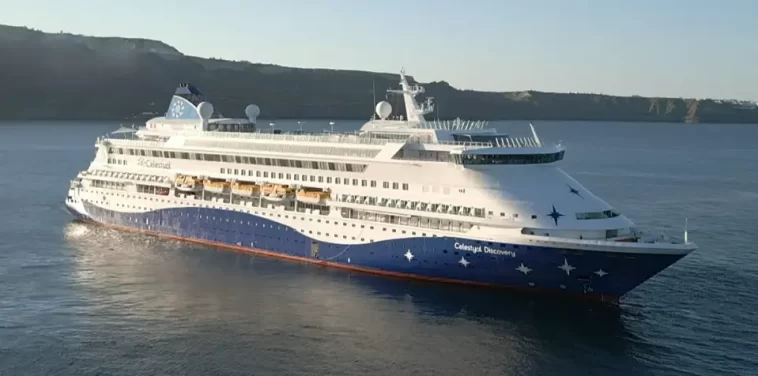
Among the operators affected, Celestyal Cruises confirmed that two of its vessels remain in the Gulf region.
The Celestyal Discovery is currently docked in Dubai, while the Celestyal Journey has been stationed in Doha. The company reported that passengers aboard the ships were safely disembarked as part of precautionary measures.
According to a company statement, guests remaining aboard Celestyal Journey were expected to leave the ship in Qatar shortly as authorities coordinated travel arrangements.
Although the ships remain fully operational, Celestyal confirmed that two upcoming Mediterranean cruises scheduled for later this month will no longer take place.
The cancelled voyages include:
- A three-night “Iconic Aegean” cruise departing March 20
- A four-night sailing departing March 23
Both trips were scheduled to be operated by the Celestyal Discovery. The cancellations were necessary because the vessel must now be repositioned from the Gulf to the Mediterranean ahead of the summer cruise season.
Passengers affected by the cancellations will receive either full refunds or future cruise credits.
Cruise Companies Begin Large-Scale Passenger Repatriation
The European cruises cancelled due to Gulf port disruptions have also triggered large-scale repatriation efforts by cruise companies.
Geneva-based MSC Cruises reported that it has been arranging flights for passengers traveling aboard the MSC Euribia, which had been docked in Dubai.
According to the company, more than 1,500 passengers required assistance returning home after the cruise itinerary was interrupted.
MSC confirmed that several charter and commercial flights have already departed the region, transporting travelers to destinations around the world.
Passengers have been flown back to countries including:
- United Kingdom
- Italy
- Germany
- Spain
- United States
- Brazil
Company executives praised crew members and staff who worked continuously to manage the crisis and support guests during the disruption.
MSC officials stated that teams across multiple countries coordinated transportation and travel arrangements to ensure passengers returned home safely.
AROYA Cruises Cancels Entire Winter Season
Saudi-backed AROYA Cruises has taken an even more drastic step in response to the situation.
The cruise line announced that it is cancelling the remainder of its Arabian Gulf winter cruise season entirely.
The decision was made after assessing the ongoing regional tensions and consulting with maritime authorities.
All passengers aboard the company’s ship were safely disembarked in Dubai on March 7, according to the operator. The company stated that the move was necessary due to “ongoing regional operational considerations.”
By ending its seasonal operations early, AROYA aims to prioritise passenger safety and avoid further disruptions in the region.
TUI Cruises Cancels Sailings as Ships Remain Docked
German cruise operator TUI Cruises has also cancelled several scheduled voyages as part of the broader disruption.
The company announced that sailings aboard Mein Schiff 4 have been cancelled through the start of the voyage scheduled for March 23.
Mein Schiff 4 is currently docked in Abu Dhabi, where passengers have been gradually transported home over recent days.
TUI confirmed that return travel arrangements have already been organised for both guests and crew members.
Meanwhile, Mein Schiff 5 remains docked in Doha. Although passengers are still aboard the vessel, the company says onboard operations are continuing normally given the circumstances.
Travel arrangements for guests on Mein Schiff 5 are currently being organised through charter flights and partnerships with commercial airlines, including Qatar Airways.
Cruise Industry Faces Operational Challenges
The European cruises cancelled due to Gulf port disruptions highlight the challenges faced by the global cruise industry when geopolitical tensions affect key travel routes.
Cruise companies rely heavily on predictable itineraries and access to international ports. When political instability or security concerns emerge, operators must quickly adjust plans to ensure passenger safety.
Unlike airlines, cruise ships cannot easily change routes or schedules once they are operating within a specific region. As a result, disruptions can have cascading effects on future sailings.
Ships stranded in one region may miss scheduled repositioning voyages, which in turn forces cruise lines to cancel upcoming itineraries elsewhere.
This appears to be the case with several Mediterranean cruises that were scheduled to depart later this spring.
What Happens Next for Cruise Passengers
Despite the difficulties created by the situation, cruise operators say their priority remains the safety and well-being of passengers and crew members.
Most travelers affected by the European cruises cancelled due to Gulf port disruptions are now being transported home via organised flights.
Cruise companies have stated that passengers will receive refunds, travel credits, or rebooking options depending on the specific itinerary affected.
Meanwhile, cruise lines are waiting for guidance from maritime authorities before allowing ships to leave Gulf ports and resume normal operations.
Once vessels are cleared to depart, many will begin repositioning voyages toward Europe and the Mediterranean to prepare for the upcoming summer cruise season.
Industry Monitoring Situation Closely
For now, cruise companies continue to monitor developments in the region.
The European cruises cancelled due to Gulf port disruptions demonstrate how international travel industries can be affected by global geopolitical tensions. While cruise operators hope to resume normal schedules soon, the situation remains uncertain.
Until ships are able to safely leave the region, cruise lines will continue focusing on passenger assistance, travel arrangements, and operational planning for the months ahead.
