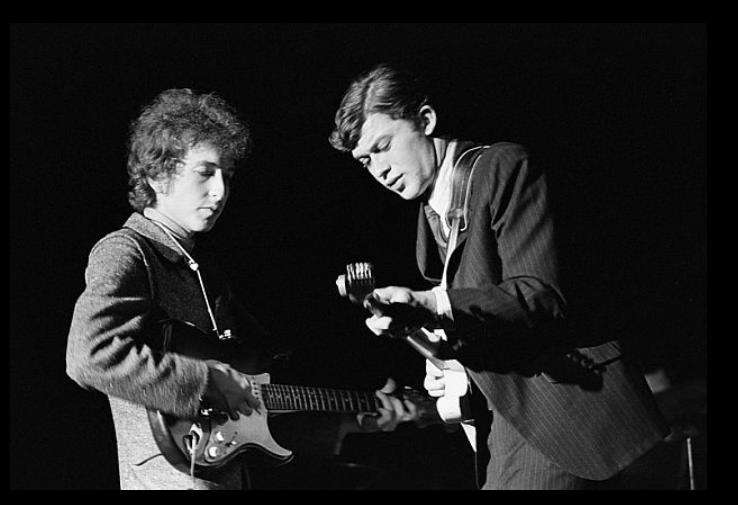
Musician, singer, songwriter, and author Robbie Robertson, renowned since the late 1960s and early ’70s as the frontman of The Band, passed away on Wednesday, August 9, 2023 in Los Angeles at the age of 80. He had been suffering from prostate cancer for a year. According to his manager Jared Levine, Robertson’s family has requested donations be made to the Six Nations of the Grand River in Ontario, Canada for a new cultural center in his memory. Of the five members of The Band, Robertson was the last remaining besides keyboardist Garth Hudson, all of whom were born in Canada except for drummer Levon Helm, who passed away in 2012. Bassist Rick Danko died in 1999, and pianist
Richard Manuel passed away in 1986. Levine’s statement also revealed that Robertson was surrounded by his family when he died, including his wife Janet, his ex-wife Dominique, her partner Nicholas, and his children Alexandra, Sebastian, Delphine, and Delphine’s partner Kenny. He is also survived by his grandchildren Angelica, Donovan, Dominic, Gabriel, and Seraphina. Robertson was born Jaime Royal Robertson on July 5, 1943 as the only child of Rosemarie Dolly Chrysler, of Cayuga and Mohawk descent, and was raised on the Six Nations Reserve southwest of Toronto, Ontario, Canada. His mother worked at the Coro jewelry plating factory, where she met and married his father, James Patrick Robertson.
Rosemarie and James Robertson continued their employment at the place they had first met. Robbie was raised in various domestic residences situated in Toronto’s different neighbourhoods. His mother frequently took him to the Six Nations Reserve to visit her relatives, where he received guitar-playing instruction from his elder cousin Herb Myke. Robertson was exposed to rock ‘n’ roll and R&B; music through George “Hound Dog” Lorenz’s broadcast on WKBW, Buffalo and John R.’s all-night blues show on WLAC, a Nashville based clear-channel station. After his parents separated, Robertson found out from his mother that his true father was Alexander David Klegerman, a man from the Coro factory. Klegerman was Jewish and he earned a living gambling, but passed away in a hit-and-run incident on the Queen Elizabeth Way. Prior to her marriage to James Robertson, Rosemarie had a relationship with Klegerman while James was posted in Newfoundland with the Canadian Arm. Subsequently, she organized for Robbie to meet his paternal uncles Morris (Morrie) and Nathan (Natie) Klegerman.
t age 14, Robertson gained experience in the travelling carnival circuit, first for a few days in a Toronto suburb, and then for three weeks as an assistant in a freak show during the Canadian National Exhibition. This experience inspired his song “Life is a Carnival” (with the Band) and the movie “Carny” (1980), which he produced and starred in. That same year, he joined Little Caesar and the Consuls, a group that played popular songs of the day at teen dances. In 1957, he and friend Pete “Thumper” Traynor formed Robbie and the Rhythm Chords and later changed the name to Robbie and the Robots, after seeing the film Forbidden Planet and taking a liking to the character Robby the Robot. Traynor customized Robertson’s guitar with antennae and wires to give it a futuristic look. They later joined with pianist Scott Cushnie and became The Suedes. At a Suedes show on October 5, 1959, Ronnie Hawkins heard them and was enthused enough to join them for a few numbers.
After the Suedes opened for Ronnie Hawkins and the Hawks at Dixie Arena, Hawkins recruited Robertson to the road crew and later into the Hawks as their bass player. Robertson then switched to lead guitar and honed his skills, taking influence from Roy Buchanan, who was a member of the Hawks. During that time, Robertson was also invited to the Brill Building in New York City to help Hawkins choose songs for his album Mr. Dynamo (1959) and two of the tracks were co-credited to Robertson, “Hey Baba Lou” and “Someone Like You”. Robertson’s time with the Hawks transformed him into a guitar virtuoso as he became familiar with techniques such as volume speed dial, sweep picking and bending past the root and fifth notes during solos.
Drummer/singer Levon Helm was already a member of the Hawks and soon became close friends with Robertson. The Hawks continued to tour the United States and Canada, adding Rick Danko, Richard Manuel, and Garth Hudson to the Hawks lineup in 1961.
This lineup, which later became the Band, toured with Hawkins throughout 1962 and into 1963. They also hired the saxophone player Jerry Penfound and later Bruce Bruno, who were both with the group in their intermediary period as Levon and the Hawks.
Ronnie Hawkins and the Hawks cut sessions for Roulette Records throughout 1961–1963, all of which Robertson appeared on. The sessions included three singles: “Come Love” b/w “I Feel Good”; “Who Do You Love” b/w “Bo Diddley”; and “There’s A Screw Loose” b/w “High Blood Pressure.”
The Hawks left Ronnie Hawkins at the beginning of 1964 to go on their own. The members of the Hawks were losing interest in playing in the rockabilly style and favored blues and soul music. In early 1964, the group approached agent Harold Kudlets about representing them, which he agreed to do, booking them a year’s worth of shows in the same circuits as they had been in before with Ronnie Hawkins. Originally dubbed The Levon Helm Sextet, the group included all of the future members of the Band, plus Jerry Penfound on saxophone and Bob Bruno on vocals.
After Bruno left in May 1964, the group changed their name to Levon and the Hawks. Penfound stayed with the group until 1965. Kudlets kept the group busy performing throughout 1964 and into 1965, finally booking them into two lengthy summer engagements at the popular nightclub Tony Mart’s in Somers Point, New Jersey, at the Shore. They played six nights a week alongside Conway Twitty and other acts.
The members of Levon and the Hawks befriended blues artist John P. Hammond while he was performing in Toronto in 1964. Later in the year, the group agreed to work on Hammond’s album So Many Roads (released in 1965) at the same time that they were playing the Peppermint Lounge in New York City. Robertson played guitar throughout the album, and was billed “Jaime R. Robertson” in the album’s credits.
Levon and the Hawks cut a single “Uh Uh Uh” b/w “Leave Me Alone” under the name the Canadian Squires in March 1965. Both songs were written by Robertson. The single was recorded in New York and released on Apex Records in the United States and on Ware Records in Canada. As Levon and the Hawks, the group cut an afternoon session for Atco Records later in 1965, which yielded two singles, “The Stones I Throw” b/w “He Don’t Love You” and “Go, Go, Liza Jane” b/w “He Don’t Love You” Robertson also wrote all three of the tracks on Levon and the Hawks’ Atco singles.
Toward the end of Levon and the Hawks’ second engagement at Tony Mart’s in New Jersey, in August 1965, Robertson received a call from Albert Grossman Management requesting a meeting with singer Bob Dylan.The group had been recommended to both Grossman and to Dylan by Mary Martin, one of Grossman’s employees; she was originally from Toronto and was a friend of the band. Dylan was also aware of the group through his friend John Hammond, whose album So Many Roads members of the Hawks had performed on.
Robertson agreed to meet with Dylan. Initially, Dylan intended simply to hire Robertson as the guitarist for his backing group. Robertson refused the offer, but did agree to play two shows with Dylan, one at the Forest Hills Tennis Stadium in Forest Hills, New York on August 28th, and one at the Hollywood Bowl in Los Angeles on September 3rd. Robertson suggested they use Levon Helm on drums for the shows.
Robertson and Helm performed in Dylan’s backing band, along with Harvey Brooks and Al Kooper for both shows. The first at Forest Hills received a predominantly hostile response, but the second in Los Angeles was received slightly more favourably. Dylan flew up to Toronto and rehearsed with Levon and the Hawks September, as Levon and the Hawks finished an engagement there, and hired the full band for his upcoming tour.
Bob Dylan and the Hawks toured the United States throughout October–December 1965, with each show consisting of two sets: an acoustic show featuring only Dylan on guitar and harmonica, and an electric set featuring Dylan backed by the Hawks. The tours were largely met with a hostile reaction from fans who knew Dylan as a prominent figure in the American folk music revival, and thought his move into rock music a betrayal. Helm left the group after their November 28th performance in Washington, D.C. Session drummer Bobby Gregg replaced Helm for the December dates, and Sandy Konikoff was brought in to replace Gregg in January 1966.
Dylan and the Hawks played more dates in the continental United States in February–March 1966 of the 1966 world tour. From April 9-May 27, they played Hawaii, Australia, Europe, and the UK and Ireland. Drummer Sandy Konikoff left after the Pacific Northwest dates in March, and Mickey Jones replaced him, staying with the group for the remainder of the tour. The Australian and European legs of the tour received a particularly harsh response from disgruntled folk fans. The May 17th Manchester Free Trade Hall show is best known for an angry audience member audibly yelling “Judas!” at Dylan; it became a frequently-bootlegged live show from the tour, was eventually released officially as The Bootleg Series Vol. 4: Bob Dylan Live 1966, The “Royal Albert Hall” Concert.
The European leg of the tour was filmed by documentary filmmaker D. A. Pennebaker, but completion of a planned film was delayed. After recovering from an accident, Dylan decided to edit it himself. ABC television rejected it, and it was never commercially released. It was screened as “Eat the Document” in 1972 at the Whitney Museum in New York.
But it wasn’t until 1968, when Roberston and his bandmates released their debut album, “Music from Big Pink,” that The Band began calling itself The Band. They went on the perform at Woodstock and, in 1994, it was inducted into the Rock & Roll Hall of Fame.
Robertson made his solo album debut in 1987 with a self-titled album that featured guest artists Peter Gabriel and U2 and the track “Somewhere Down The Crazy River.” He went on to release five more solo albums and was working on a follow-up to “Testimony” when he died, according to his manager.
In 1989, the Band was inducted into the Canadian Juno Hall of Fame. In 1994, the Band was inducted into the Rock and Roll Hall of Fame. In 1997, Robertson received a Lifetime Achievement Award from the National Academy of Songwriters. At the 2003 commencement ceremonies at Queen’s University in Kingston, Ontario, Robertson delivered an address to the graduating class and was awarded an honorary degree by the university. In 2003, Robertson received the Indspire Aboriginal Lifetime Achievement Award.
In 2005, Robertson received an honorary doctorate from York University. In 2006, he received the Governor General’s Performing Arts Award for Lifetime Artistic Achievement, Canada’s highest honour in the performing arts. In 2008, Robertson and the Band received the Grammy Lifetime Achievement Award. In 2011, Robertson was inducted into the Canadian Songwriters Hall of Fame. On May 27, 2011, Robertson was made an Officer of the Order of Canada by Governor General David Johnston.
In 2014, the Band was inducted into Canada’s Walk of Fame.
On October 14, 2017, Robbie Robertson received the Lifetime Achievement Award at the Native American Music Awards.
In 2019, Robertson was given a key to the city of Toronto by Mayor John Tory during a TIFF press conference for “Once Were Brothers: Robbie Robertson and The Band,” a documentary about Robertson.
In 2019, Robbie Robertson was the recipient of the Lifetime Achievement Award in the Canadian Music Industry Hall of Fame from Canadian Music Week (CMW).
Robertson co-authored Legends, Icons and Rebels: Music That Changed the World with his son, Sebastian Robertson, and colleagues Jim Guerinot and Jared Levine. He also wrote Hiawatha and the Peacemaker, illustrated by David Shannon. His autobiography, Testimony, written over the course of five years, was published by Crown Archetype in November 2016.
