
Tomodachi Life: Living the Dream is finally here — and if you’ve been waiting nearly 13 years for a proper sequel to the beloved 3DS life sim, the wait is officially over. Released on April 16, 2026 for the Nintendo Switch, this is one of those games that reminds you why you fell in love with Nintendo in the first place. It’s weird, it’s warm, and it’s absolutely packed with personality.
Whether you’re a longtime fan who played the original Tomodachi Life on 3DS back in 2014, or someone who’s only heard about it through memes and TikToks — this guide covers everything: what the game is, how it plays, what’s new, and whether it’s worth your time in 2026.
What Is Tomodachi Life: Living the Dream?
At its core, Tomodachi Life: Living the Dream is a social simulation game developed by Nintendo EPD and published by Nintendo. It’s the third entry in the Tomodachi series, following the original Tomodachi Collection (2009, Japan only) and Tomodachi Life (2013 Japan / 2014 worldwide on 3DS).
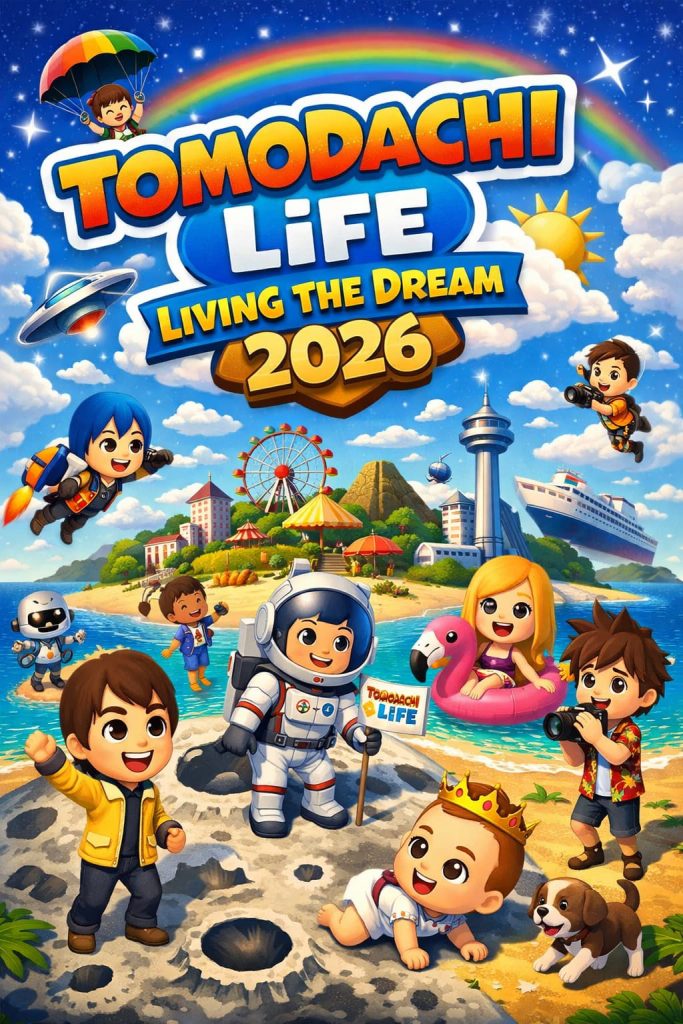
The premise is simple but strangely compelling: you become the caretaker of an island full of Mii characters — little cartoon avatars that you create based on yourself, your friends, celebrities, or whoever you can dream up. You watch them eat food, fall in love, argue, dream, perform concerts, and generally live out their ridiculous little lives. You don’t control them directly. You guide them, nudge them, feed them, and sometimes just sit back and watch the chaos unfold.
There’s no real “winning” condition here. You’re not building towards some big finale. You’re just living, day by day, watching your island grow and your Miis become increasingly attached to each other (or not). It’s the kind of game you play for twenty minutes before bed and suddenly realize an hour has passed.
Development and Announcement
The game was announced during the Nintendo Direct on March 27, 2025, and was revealed as the surprise final announcement of the show — which, honestly, sent the internet into a frenzy. Fans had been asking for a Tomodachi Life sequel for over a decade at that point.
The development was led by director Ryutaro Takahashi and producer Yoshio Sakamoto, with music composed by a team including Toru Minegishi and Shinobu Nagata. The game was developed by Nintendo EPD — the same internal team behind some of Nintendo’s biggest titles.
A free demo called the “Welcome Version” was released on March 25, 2026, just three weeks before launch. It lets you set up your island, create Miis, and experience the first stages of gameplay. Any progress you make carries over to the full game, and you even get a bonus hamster costume for your Miis if you complete it.
Platform and Compatibility
Living the Dream is a Nintendo Switch title, but it’s also backward compatible with the Nintendo Switch 2. So if you’ve already upgraded to the new hardware, you’re covered. The game plays smoothly on both systems, and the improved visuals on Switch 2 hardware are a nice bonus if you have access to it.
Gameplay: How Does It Actually Work?
The moment you start the game, you’ll be asked to set up your island. You start by creating Miis and moving them into their apartment complex. As more Miis move in, the island grows — you can eventually house up to 100 Mii characters, with the complex expanding as your population increases.
From there, it’s all about managing their day-to-day happiness.
Feeding and Item Management
Your Miis get hungry, and they all have different food preferences. Some love ramen, some are obsessed with sushi, some will make the most dramatic face you’ve ever seen over a piece of toast. Finding out each Mii’s favorite food (and least favorite) is part of the fun. Feeding them well boosts their mood, and happy Miis generate “Warm Fuzzies” — the in-game currency that lets you fulfill your Miis’ wishes.
You can also give Miis clothing, interior items for their apartments, and accessories. These all affect how they feel and how they interact with others.
The Relationship System
This is where the game really gets interesting. Miis build friendships and romantic relationships with each other over time. You can watch them meet, become friends, develop crushes, confess feelings, get rejected (ouch), or fall head over heels and eventually get married and even have children.
In Living the Dream, Nintendo has overhauled this system in a major and meaningful way. More on that in a moment.
The Hand Cursor
One of the freshest mechanics in this sequel is the Hand Cursor. You can now physically pick up a Mii and place them near another character to spark an interaction. It’s a small thing, but it makes you feel much more involved in shaping your island’s social dynamics. That said, Miis still have their own will — you can try to push two characters together, but if they’re not feeling it, they’ll let you know.
Strange Dreams and Mini-Games
Every night, your Miis go to sleep, and they sometimes have strange dreams — bizarre little sequences you get to watch. These are some of the most memorable moments in the game. Living the Dream adds new dream types to the mix, including a “VR Glitch” dream and the fan-favorite “Sentient Sourdough” nightmare, which is exactly as unsettling as it sounds.
There are also mini-games, concerts, travel events, and spontaneous moments that keep every day feeling a little different from the last.
The Palette House
New to this entry is the Palette House, a creative facility where you can design custom clothing, food items, pets, and interior decorations. If you like personalizing every inch of your island, this is going to be your favorite place to spend time.
Island Customization
Unlike the original 3DS game, you can now manually arrange your island’s layout. Buildings, spaces, and zones can be positioned the way you want, and the island expands as more Miis arrive. It’s not a full city-builder by any means, but it gives you a satisfying sense of ownership over your little world.
The Inclusivity Update: A Long Time Coming
This is probably the most talked-about change in Living the Dream, and rightly so.
Back in 2014, the original Tomodachi Life drew heavy criticism for not allowing same-sex relationships. At the time, Nintendo addressed the controversy and made a direct promise: if they ever made a sequel, they would design it to be more inclusive from the ground up.
They kept that promise.
In Living the Dream, when creating a Mii, you can choose from three gender options: Male, Female, and Non-binary. You can also customize your Mii’s romantic preferences — selecting which genders (if any) your Mii is interested in dating. This means the game now naturally supports gay, lesbian, bisexual, pansexual, aromantic, asexual, and all kinds of relationship configurations.
This isn’t a workaround or a hidden feature. It’s built directly into the creation process. Critics and fans alike praised this as a massive step forward for the series, and honestly, it makes the game feel much more reflective of the real world your Miis are supposed to represent.
Mii Design: A Cartoonier Look
The Miis in Living the Dream have been redesigned to look more cartoonish than before, while still keeping their signature robotic, synthesized voices from the earlier games. The result is a visual style that feels fresh and modern without losing the charm that made the originals so memorable. You can also now customize Mii ears — a feature fans had been requesting for years.
Unnatural skin tones are also available, which opens up a ton of creative possibilities for players who want to build a truly unique island population.
Sales and Reception
The numbers speak for themselves. Tomodachi Life: Living the Dream sold 3.8 million copies in just three weeks after launch. By May 2026, it had already become the best-selling game in the US for April, generating over $41 million in physical and projected digital spending. It’s currently sitting comfortably in the top ten best-selling games of 2026 overall.
Critics praised the game’s art style, humor, and customization depth. The inclusivity updates were widely applauded. The main criticism? Some reviewers noted that the gameplay can feel repetitive over long sessions, and the lack of online Mii sharing — a feature that helped the 3DS version build community — was a notable missing piece for many fans.
Still, the response has been overwhelmingly positive, and Nintendo has committed to post-launch updates. The demo has already received multiple patches (Version 1.0.1 and 1.0.2), addressing bugs and improving the experience.
Should You Play It?
If you like chill, low-pressure games that reward curiosity and patience — yes, absolutely. Tomodachi Life: Living the Dream isn’t a game that demands your full attention 24/7. It’s the kind of game you check in on, smile at, and put down. Then pick back up again twenty minutes later because you need to know if your Mii finally confessed to their crush.
It’s sweet without being saccharine. It’s strange without being alienating. And for the first time in the series, it actually represents all kinds of people and relationships — which makes the whole experience feel a little more real, even when a Mii is dramatically screaming about a bowl of soup.
Thirteen years is a long time to wait for a sequel. But after spending time on this island, it’s clear the wait was worth it.
