“A person only truly dies when the last person who remembers them dies.”
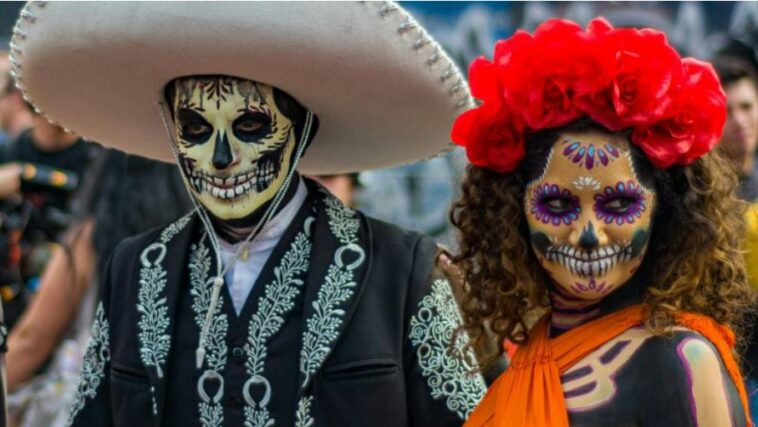
If you’ve seen the Pixar film Coco, this powerful idea resonates throughout the story. The movie’s core theme is centered around a fascinating Mexican holiday: Día de los Muertos, or the Day of the Dead. Far from a day of mourning, this vibrant two-day festival celebrates life and remembers those who have passed away, believing their spirits return to the living world to visit their families.
Día de los Muertos, traditionally celebrated on November 1st and 2nd, is a profound cultural tradition that goes beyond religious or folkloric custom. It’s a rich tapestry woven with deep meaning, exploring the cycles of life and death, the importance of memory, and the unbreakable bonds of family and identity.
A Journey Through Time: The Ancient Roots of the Day of the Dead
The origins of Día de los Muertos can be traced back thousands of years to the Mesoamerican cultures of the Aztec and Maya. In Aztec mythology, it was believed that when people died, their souls journeyed to Mictlán, the underworld. This journey was overseen by the goddess Mictecacihuatl, known as the “Lady of the Dead,” who ruled Mictlán alongside her husband. She was not a figure to be feared, but rather a deity associated with both death and rebirth, as she was believed to watch over the bones of past lives which were used to create new ones in the living world.
To appease the goddess and honor the deceased, the Aztecs developed elaborate rituals. They would bury their dead with food and valuables and hold celebrations dedicated to Mictecacihuatl, often involving incense, hymns, and dancing. These festivals were held during the ninth month of the Aztec calendar, which is thought to have aligned with late July and early August.
A New Chapter: The Blending of Cultures
The arrival of the Spanish conquistador Hernán Cortés in the 16th century marked a significant turning point. As the Spanish subjugated the Aztec Empire, they introduced Catholicism, which led to a fascinating syncretism of traditions. The Aztec festival was blended with the Catholic holidays of All Saints’ Day and All Souls’ Day.
The Spanish Catholic tradition of honoring the dead involved families decorating graves, bringing food to cemeteries, and lighting candles to illuminate the path for their loved ones’ souls to return. By combining these practices with the existing Aztec rituals, the modern Día de los Muertos was born. The celebration’s date was shifted to coincide with the Catholic holidays in late October and early November.
The Heart of the Celebration: Ofrendas and Cempasúchil
Today, the most central element of the celebration is the ofrenda, or altar. Families build these beautiful, multi-tiered altars in their homes to welcome the spirits of the deceased. The ofrenda is a deeply personal tribute, decorated with:
- Photographs of the departed.
- The deceased’s favorite foods and drinks.
- Papel picado, intricate tissue paper banners that represent the element of wind and the fragility of life.
- Calaveras, or sugar skulls, often inscribed with the names of the deceased, a joyful way to represent death.
- And, most notably, the vibrant orange petals of the cempasúchil, or marigold flower.
Known as the “flower of many petals,” the cempasúchil is a crucial symbol. Its brilliant color and strong fragrance are believed to guide the spirits on their journey back from the land of the dead, creating a bright path to their family’s ofrenda.
Día de los Muertos is more than a holiday; it’s a profound cultural practice that teaches us about embracing mortality and cherishing our connections to the past. Coco masterfully captures this spirit, reminding us that true death is not a physical end but the moment we are forgotten. As long as we continue to remember and celebrate our loved ones, they will always be a part of our lives.
