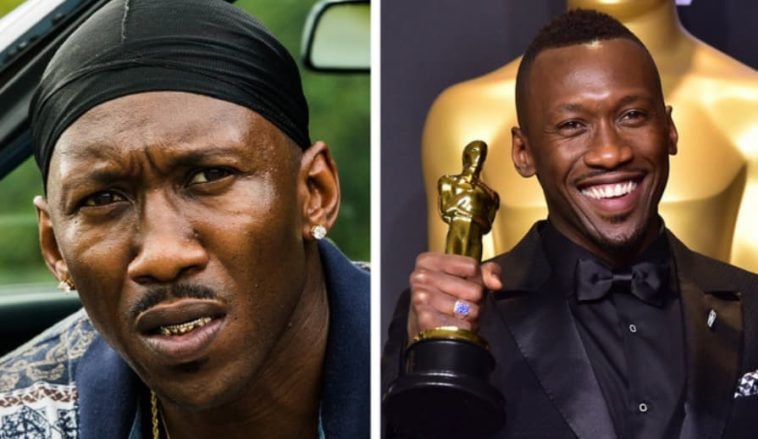
It is a common belief that to win an Academy Award, an actor needs to dominate the screen for the entire duration of a movie. However, many legendary stars have won an Oscar with minimal screen time, proving that you do not need hours of footage to leave an unforgettable impression on the Academy and audiences alike.
Since the inception of the Oscars in 1929, actors have occasionally walked away with the prestigious gold statuette after appearing in only a few scenes. Here are 10 incredible actors who turned tiny roles into historic, Oscar-winning performances.
1. Anne Hathaway – Les Misérables (2012)
- Screen Time: ~15 minutes
- Category: Best Supporting Actress
In the 2012 musical adaptation of Les Misérables, Anne Hathaway played Fantine, a struggling mother forced into prostitution. Despite appearing for only about 15 minutes of the film’s nearly three-hour runtime, her raw, live performance of the song “I Dreamed a Dream” was so emotionally powerful that it immediately locked in her victory for Best Supporting Actress.
2. Anthony Hopkins – The Silence of the Lambs (1991)
- Screen Time: ~17 minutes
- Category: Best Actor
What makes Anthony Hopkins’ win so spectacular is that he did not win for Supporting Actor—he won the Best Actor (lead role) Oscar. Playing the brilliant, terrifying cannibal Dr. Hannibal Lecter, Hopkins was on screen for just 17 minutes. His chilling gaze and calm voice made Lecter feel like a constant threat throughout the entire movie, even when he wasn’t on screen.
3. Anthony Quinn — Lust for Life (1956)
- Screen Time: ~8 minutes
- Category: Best Supporting Actor
Anthony Quinn took home the Best Supporting Actor Oscar for his brief portrayal of the famous painter Paul Gauguin in Lust for Life. Clocking in at just under eight minutes of screen time, Quinn managed to bring a massive blast of charisma and tension to the film, holding his own against the lead actor Kirk Douglas.
4. Alan Arkin – Little Miss Sunshine (2006)
- Screen Time: ~14 minutes
- Category: Best Supporting Actor
Alan Arkin played Edwin Hoover, the foul-mouthed, heroin-snorting, yet deeply loving grandfather who helps his granddaughter prepare for a beauty pageant. Even though his character passes away mid-movie and his total screen time is under 15 minutes, his comedic timing and heart provided the anchor for the entire family dynamic, earning him the Best Supporting Actor trophy.
5. Jared Leto – Dallas Buyers Club (2013)
- Screen Time: ~21 minutes
- Category: Best Supporting Actor
Jared Leto played Rayon, a transgender woman living with HIV in the mid-1980s. Leto was on screen for only about one-fifth of the total movie, but his physical transformation and deeply emotional portrayal of a vulnerable, dying woman stole the spotlight and secured him the Best Supporting Actor award.
6. Mahershala Ali – Moonlight (2016)
- Screen Time: ~20 minutes
- Category: Best Supporting Actor
Moonlight tells the story of a young African-American boy growing up in three distinct stages of his life. Mahershala Ali appears only in the first chapter of the film as Juan, a drug dealer who becomes a crucial father figure to the young protagonist. Ali’s warm and nuanced performance lasted only 20 minutes but set the emotional tone for the entire film, winning him his first Oscar.
7. Ingrid Bergman — Murder on the Orient Express (1974)
- Screen Time: ~14 minutes
- Category: Best Supporting Actress
Ingrid Bergman was already a Hollywood legend by 1974, but her performance as Greta Ohlsson in this Agatha Christie adaptation was a masterclass in efficiency. Most of her 14-minute screen time is spent in a single, continuous interrogation scene. Her emotional delivery and physical acting in that scene were so compelling that she took home the Best Supporting Actress award.
8. Beatrice Straight – Network (1976)
- Screen Time: 5 minutes and 2 seconds
- Category: Best Supporting Actress
Beatrice Straight holds the ultimate record in Academy history. Playing Louise Schumacher, a wife who discovers her husband of 25 years is having an affair, Straight appeared in just three scenes. Her main scene—a devastating, five-minute monologue about heartbreak and betrayal—was so incredibly raw that it earned her the Oscar for Best Supporting Actress.
9. Judi Dench – Shakespeare in Love (1998)
- Screen Time: ~8 minutes
- Category: Best Supporting Actress
Dame Judi Dench played Queen Elizabeth I in Shakespeare in Love. She only appeared on screen for a total of four scenes, amounting to roughly eight minutes of footage. However, her powerful, commanding presence dominated the film, and the Academy rewarded her brief but regal performance with a Best Supporting Actress win.
10. Heath Ledger – The Dark Knight (2008)
- Screen Time: ~33 minutes
- Category: Best Supporting Actor
Heath Ledger’s legendary, posthumous win for playing the Joker is one of the most famous Oscar victories in history. Although The Dark Knight is a massive 152-minute film, Ledger’s chaotic, mesmerizing Joker is only on screen for 33 minutes. Every second of his performance is iconic, proving that screen time has nothing to do with making a historic impact.
Summary
These ten performances show that acting is about quality, not quantity. By making every second count, these actors proved that you don’t need to be in every frame of a movie to walk away with cinema’s highest honor.
