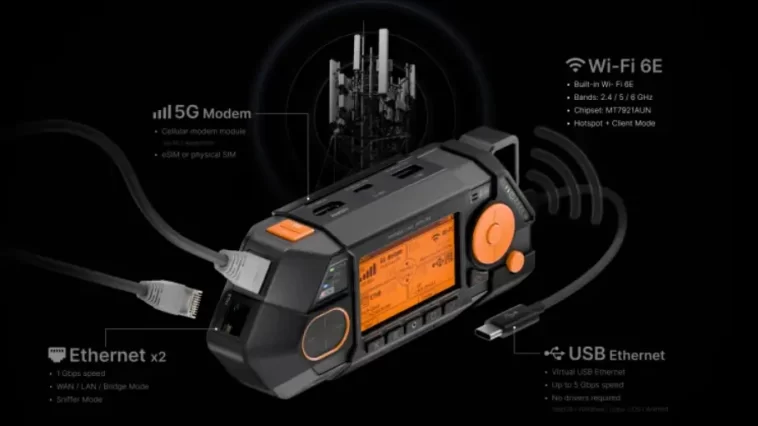
The Flipper One has officially been announced by Flipper Devices, introducing a completely new category of portable open-source hardware. Known worldwide for the success of Flipper Zero, the company is now preparing to launch a powerful pocket-sized Linux computer designed for developers, cybersecurity researchers, and hardware enthusiasts.
Unlike the original Flipper Zero, which mainly focused on wireless communication testing and penetration tools, the new Flipper One goes far beyond simple radio signal analysis. The device is a fully featured ARM-based Linux computer that combines portability with surprisingly powerful hardware.
With its dual-processor architecture, AI capabilities, modular expansion support, and open-source philosophy, Flipper One is already generating massive excitement in the tech community ahead of its planned Kickstarter launch later this year.
Flipper One Is More Than a Flipper Zero Successor
Although many users initially assumed the device would replace the Flipper Zero, the company clarified that Flipper One targets an entirely different audience and use case.
Instead of functioning as a compact hacking gadget, the device acts as a complete Linux platform capable of handling advanced networking tasks, local AI processing, software development, and hardware experimentation.
The compact form factor allows the device to fit comfortably in a pocket while still delivering desktop-class performance for many Linux-based tasks.
Powerful Hardware Inside a Tiny Device
One of the most impressive aspects of the Flipper One is its hardware configuration. The system is powered by the octa-core Rockchip RK3576 ARM processor, designed to handle demanding Linux workloads and intensive data processing tasks.
The main chipset is paired with 8 GB of RAM, allowing multiple applications and services to run smoothly at the same time.
The device also includes a dedicated AI accelerator capable of delivering up to 6 TOPS of computing performance. This enables users to run local large language models and AI applications directly on the hardware without relying on cloud services or an internet connection.
That feature alone could make Flipper One extremely attractive for developers experimenting with offline AI tools and edge computing systems.
Innovative Dual-Processor Architecture
Flipper Devices engineers designed the system using a dual-chip architecture that separates core Linux operations from low-level hardware management.
While the Rockchip processor handles the main Linux environment, a secondary dual-core Raspberry Pi RP2350 microcontroller manages essential functions such as:
- Display controls
- Physical buttons
- LED systems
- Power management
- Low-energy background tasks
This setup allows the device to remain highly power efficient. Even when the main Linux operating system is turned off, the microcontroller can continue handling lightweight functions with minimal battery consumption.
The system runs Debian Linux by default, giving users access to the huge ecosystem of open-source Linux software and developer tools.
Massive Connectivity and Expansion Options
Despite its compact size, Flipper One offers an impressive range of connectivity features that rival many desktop systems.
The motherboard includes:
- PCIe support
- SATA connectivity
- USB 3.0 ports
- Dual Ethernet ports
The dual Ethernet configuration is especially interesting for cybersecurity professionals and advanced networking users who may want to use the device as a portable router, firewall, VPN gateway, or network bridge.
Perhaps the most exciting feature is the built-in M.2 expansion slot.
This allows users to install additional hardware modules such as:
The modular design makes the device highly customizable depending on the user’s needs.
Familiar Physical Controls Return
Fans of the original Flipper Zero will also recognize some familiar hardware elements. The device keeps the physical directional pad (D-pad) and customizable hardware buttons that made the original device easy to control without external peripherals.
This means users can navigate menus and interact with the system without needing a separate keyboard or mouse.
The physical-first design philosophy continues to be one of the company’s biggest strengths.
A Fully Open-Source Philosophy
One of the most important parts of the announcement is the company’s continued commitment to open-source development.
According to Flipper Devices, the hardware and software development process will remain transparent and community-driven. The company is also launching a new public developer portal where enthusiasts can follow progress and contribute ideas.
The team says it wants to avoid proprietary locked-down software and closed-source drivers whenever possible. Instead, the goal is to create hardware that developers and researchers can fully understand, modify, and customize.
This approach has already helped Flipper Devices build a loyal global community around its previous products.
Kickstarter Launch Expected Later This Year
At the moment, Flipper One is not yet available for direct purchase. The company plans to launch the project through Kickstarter later in 2026.
Early industry estimates suggest the device could launch at a price around $350, although official pricing has not yet been confirmed.
Given the massive popularity of Flipper Zero, many technology fans believe the crowdfunding campaign could become one of the biggest hardware launches in the cybersecurity and maker community this year.
Whether the device can match the enormous cultural impact and sales success of its predecessor remains to be seen, but the early response from the tech world has already been overwhelmingly positive.
