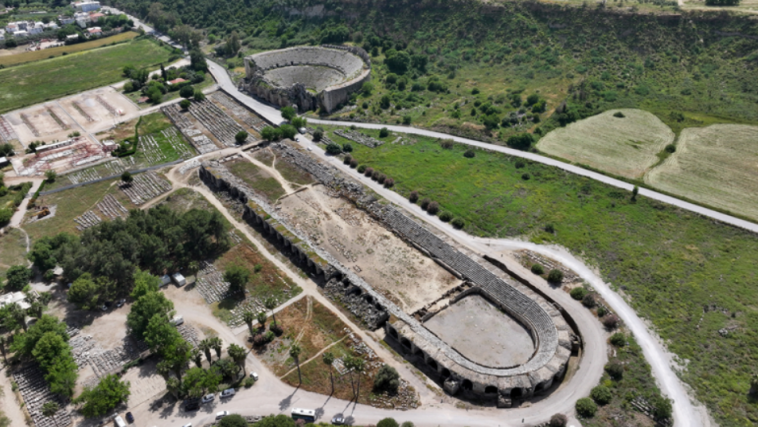
The Perge Ancient City in southern Türkiye has revealed one of the most shocking archaeological discoveries in recent years. Excavations carried out in the ancient Roman stadium uncovered evidence that the massive sports venue was later transformed into a brutal execution arena where prisoners were thrown to wild animals in front of crowds.
Archaeologists working at the UNESCO-listed site discovered a unique “guillotine gate” mechanism designed to suddenly release lions and other dangerous animals directly into the arena. The discovery offers a rare and disturbing look into Roman entertainment and punishment culture in ancient Anatolia.
Ancient Stadium Turned Into a Roman Arena
Located near Antalya, Perge Ancient City is one of the most important archaeological sites from the ancient Pamphylia region. The city is currently included on the UNESCO World Heritage Tentative List and continues to reveal remarkable discoveries through ongoing excavations.
Researchers say the enormous stadium, originally constructed during the 1st century AD, was first designed for athletic competitions and public sporting events. Stretching roughly 250 meters long, it remains one of the most monumental structures of the region.
However, new findings show the structure dramatically changed during the Roman period.
According to excavation teams, the northern section of the stadium was enclosed with walls and transformed into a Roman-style amphitheater used for violent spectacles, gladiator fights, and public executions.
The Discovery of the “Guillotine Gate”
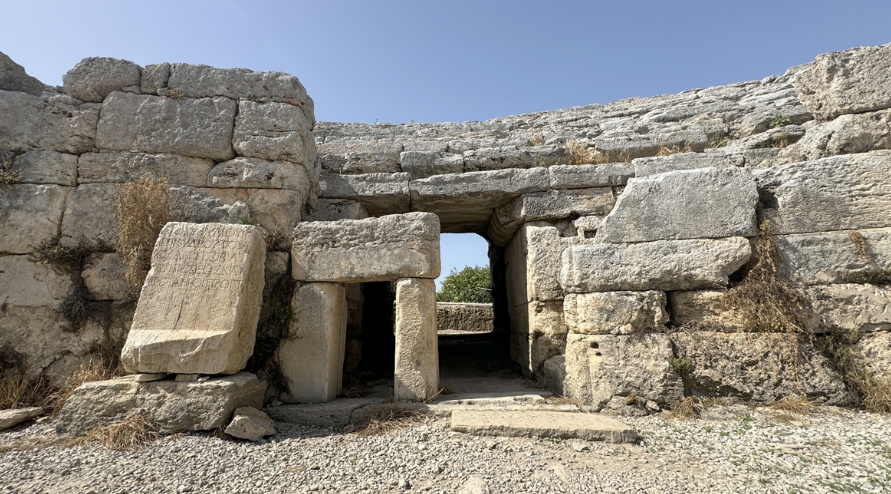
One of the most fascinating discoveries is a special animal release system archaeologists describe as a “guillotine gate” mechanism.
Unlike Rome’s famous Colosseum, where animals were often lifted vertically from underground chambers, Perge used a horizontal release system. Wild animals were reportedly transported into the arena inside cages and then suddenly released through rapidly opening gates.
Researchers believe the dramatic system was specifically designed to shock audiences and increase the spectacle of executions and arena performances.
The mechanism appears to have been part of the Roman punishment known as Damnatio ad Bestias, a brutal execution method where prisoners were condemned to death by wild animals.
Archaeologists Found Evidence of Roman Executions
Excavation officials stated that they discovered several stone platforms and architectural foundations believed to have been used during public executions.
Aytaç Dönmez, Deputy Head of the Perge excavation team, explained that the structures likely supported platforms or crucifixion setups connected to Roman execution ceremonies.
The discoveries were not limited to architecture alone.
Archaeologists also uncovered ceramic artifacts featuring scenes that appear to depict prisoners being attacked by wild animals inside arenas. These artistic depictions strongly support the theory that the stadium hosted deadly public spectacles during the Roman era.
The visual evidence gives historians a much clearer understanding of how entertainment and punishment became closely connected in Roman society.
A Unique Roman Entertainment System
Experts say the Perge system may be unique within the Pamphylia region.
While similar gladiator and animal-based spectacles existed throughout the Roman Empire, the horizontal guillotine-style release mechanism appears to represent a local adaptation designed specifically for dramatic effect.
Researchers also observed similar gate structures in several nearby theaters that were later converted into arenas, suggesting this style of entertainment may have become widespread across the region.
The discovery highlights how Roman culture deeply influenced ancient cities in Anatolia, transforming sports venues into places of public violence and spectacle.
Could Chariot Races Also Have Taken Place?
The excavation team is also investigating another intriguing possibility.
Researchers noticed a structural division running through the middle of the track area, leading some experts to believe the stadium may have also hosted short-distance chariot races during the Roman period.
Chariot racing was one of the most popular forms of entertainment across the Roman Empire, and archaeologists believe Perge could have adapted its stadium for multiple forms of public entertainment over time.
If confirmed, the site would provide even more evidence of how flexible and multifunctional Roman public venues could become.
Perge Continues to Reveal New Secrets
Excavation work at Perge is still ongoing as part of Türkiye’s “Heritage for the Future” archaeological initiative.
Experts believe the newly discovered structures and artifacts offer valuable insight into Roman social life, punishment systems, and entertainment traditions in ancient Anatolia.
The findings also remind modern audiences that many ancient stadiums and arenas were not simply places for sports, but locations where violence, politics, and public spectacle often intersected.
As researchers continue uncovering new evidence, Perge Ancient City may become one of the most important archaeological sites for understanding Roman arena culture outside Italy.
