Trump Iran Statements have taken center stage in global politics, blending sharp military warnings, uncertain diplomacy, and even a symbolic cultural visit into a sequence of events that has left both allies and critics trying to understand Washington’s true strategy.
A Rapid Shift from De-escalation to Threats
Over the course of just a few days, Donald Trump delivered dramatically different messages regarding tensions with Iran.
On Friday, the US president suggested that the ongoing conflict could soon be coming to an end, signaling what appeared to be a potential turning point after weeks of escalating hostilities. This statement raised cautious optimism across international circles, particularly among European leaders who have long pushed for a diplomatic solution.
However, that sense of calm did not last long.
By Saturday night, Trump issued a strong and unmistakable ultimatum. Iran was given 48 hours to fully reopen the strategically vital Strait of Hormuz, a key maritime route through which a significant portion of the world’s oil supply passes.
Failure to comply, Trump warned, would trigger large-scale US airstrikes targeting Iran’s energy infrastructure. The language was direct, forceful, and left little room for misinterpretation.
A Region on the Brink
The stakes surrounding the Strait of Hormuz cannot be overstated. Even partial disruptions in this narrow waterway can send shockwaves through global energy markets. With shipping already limited due to rising tensions, fears of a broader economic fallout began to grow.
At the same time, military activity in the region continued unabated. The United States and Israel intensified coordinated strikes on Iranian-linked targets, aiming to weaken Tehran’s regional capabilities.
Iran, for its part, responded with missile and drone attacks against US positions and allied forces across the Middle East. These retaliatory actions underscored how close the situation was to spiraling into a much larger and potentially uncontrollable conflict.
A Sudden Pause and Confusion
Then came another unexpected turn.
By Monday morning, Trump announced a temporary halt to US military operations, stating that strikes would be paused for five days. According to him, this decision was based on what he described as “constructive” communications with Iranian representatives.
The announcement caught many observers off guard. Just hours earlier, the threat of escalation had seemed imminent. Now, the focus had shifted back toward diplomacy—at least on the surface.
However, Iranian officials quickly rejected Trump’s claims, denying that any meaningful talks had taken place. This contradiction added a layer of uncertainty, leaving analysts questioning whether backchannel negotiations were actually underway or whether the pause was a strategic move by Washington.
Markets Respond to Hints of Diplomacy
Despite the confusion, global financial markets reacted positively to the possibility of de-escalation.
Stock markets, which had been under pressure due to fears of prolonged conflict, showed signs of recovery. Meanwhile, oil prices declined as investors reassessed the likelihood of major supply disruptions.
For many, even the smallest indication of dialogue between the US and Iran was enough to restore a degree of confidence. After weeks of instability, the idea of a negotiated solution—even a distant one—offered a glimmer of hope.
From War Room to Graceland
In a move that seemed almost surreal given the circumstances, Trump shifted his attention from geopolitical tensions to a high-profile visit in Memphis, Tennessee.
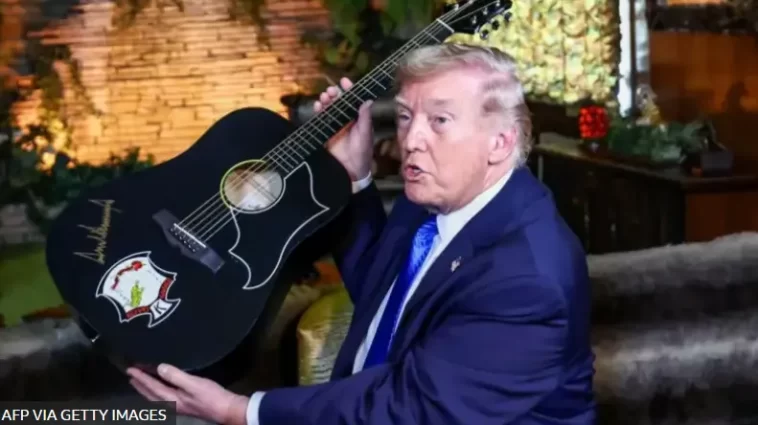
After addressing National Guard troops, he visited Graceland, the iconic residence of Elvis Presley.
The visit drew widespread attention, not only because of its timing but also because of the contrast it presented. While military operations and diplomatic uncertainties continued in the Middle East, the US president was touring one of America’s most famous cultural landmarks.
During his remarks, Trump expressed admiration for Presley and noted that the song “Hurt” was among his favorites. The symbolism of the visit was not lost on observers, many of whom saw it as an attempt to project normalcy amid a highly volatile international situation.
Ongoing Talks or Strategic Messaging?
Behind the scenes, reports continued to emerge about communication between Trump and Benjamin Netanyahu, as well as the possibility of direct US-Iran talks in the near future.
Trump himself hinted at progress, stating that both sides were interested in reaching an agreement. He even referenced a potential “15-point deal,” though he provided few details about what such an agreement might include.
Iranian officials, however, remained firm in their denial of any significant negotiations. State media in Tehran portrayed Trump’s statements as a sign of retreat rather than progress, suggesting that the US president was attempting to buy time.
This divergence in narratives has made it difficult for analysts to determine what is actually happening behind closed doors.
A Critical Countdown Begins
As Trump returned to Washington, attention shifted to the newly announced five-day pause in military operations. This period is now seen as a crucial window for diplomacy.
If meaningful talks emerge, it could mark the beginning of a broader effort to de-escalate tensions and potentially reach a lasting agreement. If not, the risk of renewed military action remains high.
The situation is further complicated by the fact that both sides appear to be balancing domestic and international pressures. For Trump, projecting strength while avoiding a prolonged conflict is a delicate task. For Iran, maintaining regional influence while managing economic and military challenges presents its own set of difficulties.
“Now or Never” Moment
The coming days may prove निर्णसीve in shaping the future of US-Iran relations.
After a sequence of ultimatums, pauses, mixed messages, and symbolic gestures, the situation has reached a point where decisive action—whether diplomatic or military—seems inevitable.
Interestingly, while Trump highlighted “Hurt” as a favorite song during his Graceland visit, some observers have pointed out that another Elvis classic, “It’s Now or Never,” might better capture the urgency of the current moment.
For now, the world watches and waits.
Whether these Trump Iran Statements signal a genuine shift toward diplomacy or simply another phase in a prolonged confrontation remains to be seen.
