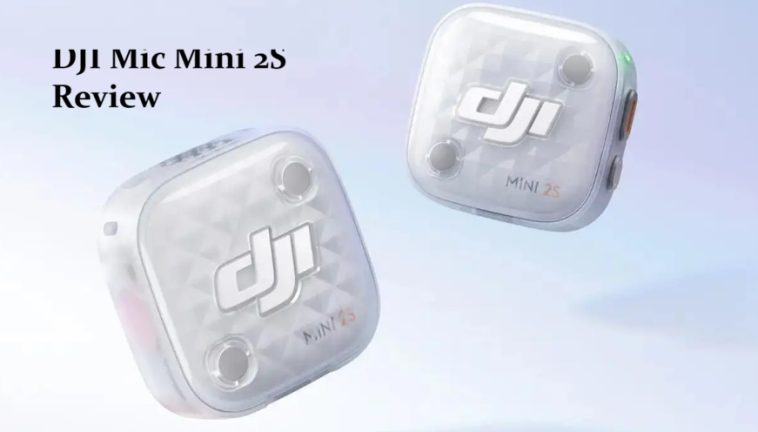
The DJI Mic Mini 2S is the newest addition to DJI’s budget wireless microphone lineup, and after digging through everything DJI has revealed about it, I wanted to break down exactly what changed, what didn’t, and whether it’s actually worth your money. This isn’t the flashy flagship Mic 3. It’s the small, clip-on mic that a lot of solo creators, wedding videographers, and vloggers have been waiting on since DJI first teased it back in April.
If you already own the Mic Mini 2, you’re probably wondering if this “S” version is a real upgrade or just a marketing refresh. Short answer: it’s a real upgrade, and it fixes one of the biggest complaints creators had about the entire Mini lineup.
What Is the DJI Mic Mini 2S?
The Mic Mini 2S is a compact, clip-on wireless microphone system built for content creators who need reliable audio without lugging around a full production kit. It launched in China on July 2, 2026, with a global rollout expected to follow in the coming weeks.
The headline feature is right there in the name. The “S” stands for Storage. Each transmitter now packs 14.5GB of internal memory, which means it can record audio directly onto itself instead of relying only on a wireless connection to the receiver.
That one change closes the biggest gap between the entry-level Mini line and DJI’s more expensive Mic 3.
Key Specs at a Glance
Here’s a quick rundown of what you’re getting with the Mic Mini 2S:
- Transmitter weight: approximately 12 grams
- Internal storage: 14.5GB per transmitter
- Recording formats: 24-bit and 32-bit float
- Loop recording: up to 28 hours at default 24-bit quality
- Max transmitters per receiver: 4 (quad-channel support)
- Wireless range: up to 400 meters, line-of-sight
- Transmitter battery life: up to 11 hours
- Receiver battery life: up to 10 hours
- Total runtime with charging case: up to 40 hours
- Fast charging: 5 minutes of charge for roughly 1 hour of use
- Bluetooth: DJI OsmoAudio support for direct pairing with Osmo devices
Design and Build Quality
Physically, the Mic Mini 2S looks almost identical to the Mic Mini 2. It keeps the same clip-on form factor, the same swappable magnetic front covers, and the same lightweight body that barely registers when clipped to a shirt collar.
The only real difference is weight. At 12 grams, the transmitter is one gram heavier than the standard Mic Mini 2. That extra gram comes from the storage chip and the processor needed to handle higher bit-depth recording internally.
DJI kept the detachable, rotatable magnetic clip too, so you still get flexible placement options whether you’re mounting it on clothing, a lapel, or a strap.
Color Options
The swappable magnetic faceplate system carries over from the previous model, with multiple color options available. This lets crews color-code talent during multi-camera shoots, which is a small but genuinely useful touch if you’re managing more than one speaker at once.
Recording Quality and Onboard Features
This is where the Mic Mini 2S actually earns the “S” in its name. Instead of just streaming audio to the receiver, each transmitter can now record independently in 24-bit or 32-bit float.
That matters more than it sounds. If the wireless connection drops mid-shoot, which happens more often than any of us would like, the audio keeps recording locally on the transmitter. You just pull the file later instead of losing the take entirely.
Quad-Channel Support
The receiver now supports up to four transmitters at once, outputting four independent audio tracks simultaneously. This used to be a Mic 3 exclusive feature, and now it’s trickled down to the budget line.
For anyone shooting roundtable discussions, panel interviews, or multi-subject vlogs, this is a genuine time-saver in post-production. You’re not fighting with a single mixed track anymore.
AI Noise Reduction
The Mic Mini 2S includes a two-tier AI noise reduction system:
- Weak Noise Reduction – handles indoor background noise like fans and HVAC hum
- Strong Noise Reduction – targets heavier outdoor noise like traffic and wind
There’s also automatic gain adjustment with two modes: Anti-Pop, which smooths out sudden volume spikes, and Loudness Equalization, which keeps vocal levels consistent even when someone moves closer or further from the mic.
Three tonal presets carry over from the Mic Mini 2 as well: Regular, Rich, and Bright, all adjustable through the DJI Mimo app.
Battery Life and Charging
Battery life takes a small hit compared to the standard Mic Mini 2, which makes sense given the extra processing power needed for onboard recording.
The transmitter runs for about 11 hours per charge, and the receiver lasts around 10 hours. With the charging case, total system runtime stretches to 40 hours, which is still plenty for a multi-day shoot as long as you’re tossing everything back in the case between sessions.
Fast charging remains one of the strong points here. Five minutes on the charger gets you roughly an hour of recording time, which is genuinely useful when you’re rushing between setups.
Setup Experience
What Actually Worked For Me
I’ll be honest, my first instinct when reading through the setup process was to skip the DJI Mimo app entirely and just clip the mics on, figuring plug-and-play would be enough like it was with the older Mic Mini. That worked fine for basic stereo recording, but I completely missed out on the quad-channel output and the AI noise reduction presets, since those only surface once you actually open the app and configure the receiver properly.
Once I went back and set the receiver to quad mode through the Mimo app, everything clicked. If you’re planning to use more than two transmitters, don’t skip the app setup step. It’s not optional the way it feels like it should be.
DJI Mic Mini 2S vs Mic Mini 2 vs Mic 3
Here’s how the Mic Mini 2S stacks up against its closest siblings in the DJI lineup:
| Feature | Mic Mini 2 | Mic Mini 2S | Mic 3 |
|---|---|---|---|
| Transmitter weight | 11g | 12g | Heavier, larger body |
| Internal recording | No | Yes (24-bit / 32-bit float) | Yes (32-bit float) |
| Internal storage | None | 14.5GB | 32GB |
| Max transmitters | 2 | 4 | 4 |
| Wireless range | 400m | 400m | 400m |
| Price positioning | Budget | Mid-tier | Flagship |
The takeaway is simple. The Mic Mini 2S sits right in between the two, giving you most of the Mic 3’s professional features in a body that’s still small, light, and affordable.
Price and Availability
DJI has confirmed China pricing, with the single-transmitter kit starting at 399 yuan and bundle options going up to 1199 yuan for a two-transmitter, one-receiver charging case setup. Special collaboration covers add extra cost on top of that.
Global pricing has not been officially announced yet. Based on how the Mic Mini 2 was priced internationally, expect the Mic Mini 2S to land somewhere above that but still well below the Mic 3.
One thing worth flagging: the Mic Mini 2 wasn’t initially certified by the FCC for US sale at launch. DJI is expected to pursue certification for the 2S as well, but if you’re in the US, it’s worth double-checking availability before you order anything.
Who Should Buy the DJI Mic Mini 2S?
This mic makes the most sense for:
- Solo creators who need a safety backup if their wireless connection drops
- Small crews filming interviews or panels with three or four speakers
- Anyone already inside the DJI Osmo ecosystem who wants Mic 3-level features without the Mic 3 price
- Wedding and event videographers who need reliable audio redundancy
It’s probably not necessary if:
- You already own a Mic Mini 2 and rarely lose your wireless connection
- You only ever record one speaker at a time
- You need the absolute highest storage capacity, in which case the Mic 3’s 32GB still wins
Frequently Asked Questions
What does the “S” in DJI Mic Mini 2S stand for?
The “S” stands for Storage. It refers to the 14.5GB of internal memory built into each transmitter, which allows for onboard loop recording independent of the receiver.
Can the DJI Mic Mini 2S record without a receiver connected?
Yes. Each transmitter can record locally onto its internal storage even if the receiver signal drops or isn’t connected at all, for up to 28 hours at default 24-bit quality.
How many transmitters can connect to one receiver?
Up to four transmitters can connect to a single receiver simultaneously, allowing for quad-channel audio output.
Is the DJI Mic Mini 2S compatible with older Mic Mini transmitters?
Yes. The new receiver is backward compatible and pairs with older Mic Mini and Mic Mini 2 transmitters.
How much does the DJI Mic Mini 2S cost?
Pricing in China starts at 399 yuan for a single transmitter, with bundles going up to 1199 yuan. Global pricing has not been announced yet.
Is the DJI Mic Mini 2S available in the United States?
Not confirmed yet. The previous Mic Mini 2 launched without FCC certification for US sale, and DJI has not confirmed a US release timeline for the 2S.
Editor’s Opinion
honestly this mic looks like the update the mini line shoulda had from day one. onboard recording on something this small and cheap is kinda wild ngl, and the 4 transmitter thing will save alot of ppl in post production. only real downside is we still dont no the us price or if its even coming here which is annoying since dji keeps doing that lately. if ur already deep in the dji ecosystem this ones a no brainer imo, just wait for official global pricing before u pull the trigger.
