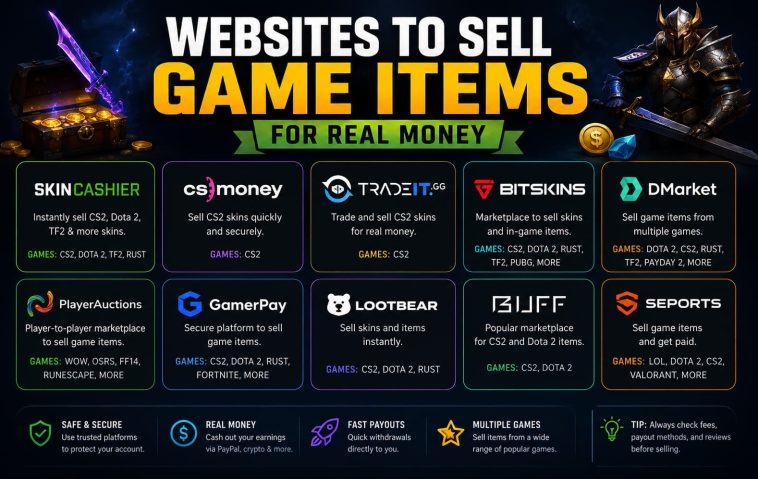
Lost about $40 worth of CS2 skins to a fake “trade verification” bot back when I first started selling, before I knew what to look for. So this list isn’t theoretical — it’s built around what’s actually held up, what fee structures actually mean once you do the math, and what red flags I wish someone had pointed out to me earlier.
Quick Answer
- For CS2/Steam-based skins specifically: Skinport for the highest real cash return via peer-to-peer escrow, DMarket for low fees with PayPal support, CSFloat for high-value knives and rare patterns
- For general game items, accounts, and in-game currency across many titles: PlayerAuctions, Eldorado.gg, and Gameflip are the most established with dispute-handling systems
- Avoid any site that asks for your Steam password directly instead of redirecting through Steam’s official login
- A mandatory holding period (often around 7 days) before payout is now standard practice across most reputable platforms — that’s a security feature, not a scam sign
- If a deal seems unusually generous, or a “buyer” wants to move the conversation off-platform fast, that’s the scam, not a lucky break
That’s the short version. So let’s get into what actually separates a trustworthy platform from one that’s going to eat your inventory.
What Makes a Platform Actually Trustworthy
A lot of “best sites” lists online are written by the platforms themselves or their affiliates — which isn’t automatically a red flag, but it does mean the rankings sometimes reflect referral deals more than genuine user outcomes. Worth keeping that in mind while you’re comparing.
Steam-linked authentication, not direct password entry. Any legitimate skin-trading site routes your login through Steam’s official OpenID system. You never type your Steam password into a third-party site directly. If a platform asks for that, close the tab.
Escrow or bot-held custody during the transaction. Whether it’s a peer-to-peer marketplace holding the item until a buyer’s payment clears, or a bot taking custody of the item the moment you accept an offer, the point is the same — neither side can vanish mid-transaction with both the item and the money.
A real Trustpilot or review history with detailed, recent feedback. Not just a high star rating, but actual specifics in the reviews about speed, support responsiveness, and whether payouts arrived as promised. A 4.9 rating with thirty reviews tells you less than a 4.3 rating with fifteen thousand.
Clear, upfront fee structure. This is where a lot of platforms get sneaky — and not 100% sure why this is still common, but a site can advertise “0% fees” while quietly undervaluing your item by 15% in their buy price, which functions as a hidden fee anyway. Always compare the actual cash-in-hand number, not the advertised commission rate.
Mandatory holding periods. Since mid-2025, most reputable platforms apply some form of holding period (commonly around a week) before an item can be resold or cashed out. This isn’t the platform being slow on purpose — it’s a fraud-prevention measure that came out of widespread chargeback abuse, and a platform that skips it entirely is arguably the riskier choice, not the more convenient one.
Technical Comparison Table
| Platform | Best For | Typical Fee | Payout Speed |
|---|---|---|---|
| Skinport | Highest real cash return on CS2/Steam items | ~6–12% | Hours to a few days (P2P) |
| DMarket | Low fees, PayPal support, multi-game | ~2–7% | Near-instant on crypto, 1–3 days other methods |
| CSFloat | High-value knives, rare float/pattern items | ~2% | Varies, P2P listing-dependent |
| PlayerAuctions | General accounts, currency, cross-game items | ~7–10% | Varies by seller verification level |
| Gameflip | Wide range of transferable game items | Platform + payment fee | Funds available after buyer confirms |
Don’t treat this table as exhaustive — it’s a starting point, not the whole market. Fee percentages shift periodically and vary by seller tier on some platforms, so double-check current numbers before listing anything valuable.
Platform Breakdown
Steam Community Market (official, but limited)
Worth mentioning first because it’s the baseline everyone compares against. Steam’s own market charges around 15% in combined fees (Steam’s cut plus the game publisher’s cut), and critically, the money you earn locks into your Steam Wallet — it can buy other Steam products, but it can’t be withdrawn as actual cash. If your goal is real money in your bank account, this isn’t the platform for that goal, full stop.
Skinport (P2P marketplace, strongest for cash-out)
Skinport works as a consignment-style marketplace — you list an item, it sits in secure custody, and a buyer purchases it with real money. It’s slower than an instant bot sale, sometimes taking hours to a couple of days depending on demand for that specific item, but it tends to return a higher percentage of true market value since you’re not selling into a bot’s discounted buy price. For someone trying to cash out a genuinely valuable item rather than just refresh their inventory, this is usually the better trade-off despite the wait.
DMarket (multi-game, low fees)
DMarket covers CS2, Dota 2, Rust, and a few others, with fees that run lower than many competitors and actual PayPal support, which not every platform offers. It blends both instant-style selling and peer-to-peer listings depending on what you’re moving.
CSFloat (best for high-value, pattern-specific items)
If you’re sitting on something like a low-float knife or a rare pattern skin where the specific stats matter to buyers, CSFloat’s inspection tools and pricing data built around float values make it the platform most suited to actually capturing that premium rather than getting a flat generic offer.
PlayerAuctions and Eldorado.gg (accounts, currency, cross-game items)
These two cover ground that pure skin-trading sites don’t touch — full game accounts, in-game currency, items from MMORPGs and other titles that don’t have a dedicated skin economy. Both use identity verification and insured transaction protection for sellers, which matters more here since account sales carry their own separate risk profile (some of which involves the publisher’s own terms of service, not just the marketplace).
Gameflip (broadest item-type support)
Gameflip’s pitch is breadth — if it’s a transferable in-game item across a wide range of titles, there’s a decent chance it’s sellable here, with funds released to your wallet once the buyer confirms receipt and rates the transaction.
Step-by-Step: Selling Safely on Any Platform
Step 1: Verify the platform through outside sources first
Check Trustpilot, Reddit threads, and any gaming forum dedicated to the specific game before creating an account anywhere. Look specifically for recent complaints about withdrawal delays or support going silent — that pattern matters more than the overall star rating.
Step 2: Set up two-factor authentication immediately
Do this before you connect any inventory, not after. Most of the worst stories involve an account compromise that happened in the gap between signing up and actually securing the account.
Step 3: Connect via official login, never manual credentials
Steam-based platforms should redirect you to Steam’s actual login page. If a site has its own login form asking for your existing gaming account password, that’s not how legitimate Steam-linked platforms operate.
Step 4: Get a quote before committing to anything
Most platforms show you an instant valuation. Compare that number against at least one other platform before accepting — prices for the same item can vary more than people expect, and a quick second check costs nothing.
Step 5: Understand the holding period before you list
If there’s a mandatory wait before funds clear, plan around it. Don’t list something expecting same-day cash if the platform’s terms say otherwise — that mismatch is usually where impatience leads people toward sketchier, faster-sounding alternatives.
Step 6: Choose your payout method deliberately
Crypto withdrawals tend to be fastest and cheapest in fees but require you to actually have a wallet set up correctly. Bank transfers are slower and sometimes carry currency conversion costs. PayPal sits in the middle. Pick based on what you’re actually equipped to receive, not just whichever option is listed first.
What Actually Worked For Me
That $40 loss I mentioned came from a fake bot account in a Discord server pretending to be a known trading site’s official support, asking me to “verify” my trade through a link that wasn’t actually the platform’s domain — just close enough to look right at a glance. Lesson learned the expensive way: official trade verification never happens through a DM, it happens on the platform itself.
After that I got pretty rigid about it — I started bookmarking the actual platform URLs directly instead of clicking through search results or links from chat, and I stopped engaging with anyone who messaged me first about a trade. That’s not a perfect system, but it’s cut my exposure to scam attempts down to basically zero since.
Advanced Tips and Edge Cases
Watch for “hidden spread” pricing. A platform advertising low or zero fees can still undervalue your item in their buy price by a meaningful margin. Always compare the actual cash offer across two or three platforms rather than trusting the advertised fee percentage alone.
KYC requirements are a trust signal, not a red flag. Identity verification for larger withdrawals is now standard on legitimate platforms because of financial regulation, not because the platform is being invasive. A site that lets you cash out large amounts with zero verification is more suspicious, not less.
Timing matters for in-demand items. Skin and item values shift around game updates, tournament events, or seasonal content drops. If you’re not in a rush, watching price trends for a week before listing a high-value item can mean a noticeably better return.
Revoke old API keys when switching platforms. If you’ve connected your account to a trading site you no longer use, go back and revoke that access rather than just abandoning the account. Old, forgotten API connections are a quiet but real security gap.
Prevention Tips
- Never enter your platform credentials anywhere except the platform’s actual, bookmarked domain
- Treat unsolicited trade offers and DMs as scam attempts by default, even if they reference a platform you recognize
- Keep two-factor authentication active on both your gaming account and any marketplace account tied to it
- Don’t rush a sale just because a holding period feels inconvenient — that impatience is exactly what scam alternatives are designed to exploit
FAQ
Is it actually safe to sell game items for real money on third-party sites? Generally yes, provided you stick to platforms with established review histories, Steam-linked authentication where applicable, and clear escrow or bot-custody systems — the risk comes from skipping verification, not from third-party selling itself.
Why do all the reputable sites have a waiting period now? A wave of chargeback fraud across the industry around mid-2025 led most major platforms to adopt mandatory holding periods as a standard fraud-prevention measure — it’s now close to universal rather than platform-specific.
Can I sell items from any game on these platforms? No — Steam-linked sites like Skinport and DMarket focus heavily on CS2, Dota 2, and Rust-style tradable items. For other games, broader marketplaces like PlayerAuctions or Gameflip are more likely to support what you’re selling.
Should I trust a platform just because a streamer promotes it? Not on its own — sponsorship and affiliate deals are common in this space, and a creator’s endorsement doesn’t replace checking independent reviews and the platform’s actual track record.
What’s the biggest single mistake new sellers make? Chasing the fastest possible payout instead of comparing actual value across platforms — instant isn’t always wrong, but it’s almost always worth less than a slightly slower P2P sale.
Editor’s Opinion
most of these “best site” lists online are written by the platforms themselves so take the rankings with a grain of salt, including some of what i found while researching this. skinport and dmarket have the most consistent independent track record from what ive seen, and the mandatory hold periods that everyone complains about are honestly the thing protecting you, not the thing slowing you down. just never trust a dm, ever, thats where the real losses happen.
