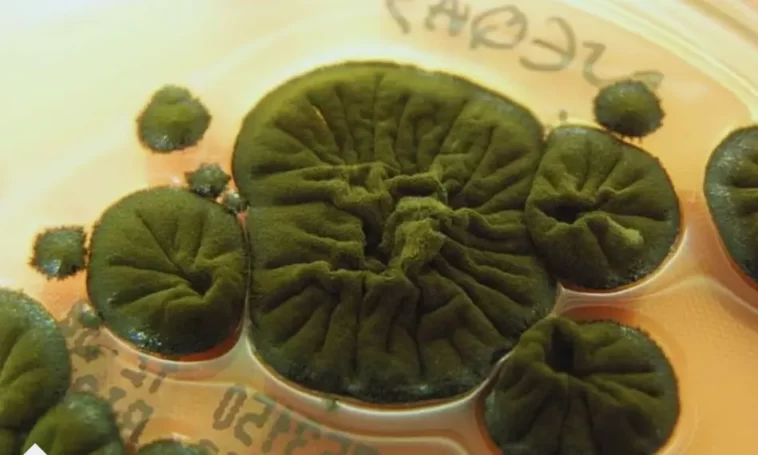
Chernobyl fungus is not a phrase anyone expected to hear in a hopeful scientific context. Yet deep inside the shattered remains of the Chernobyl nuclear reactor, scientists discovered a black fungus that appears not only to survive intense radiation, but to thrive in it. This remarkable organism, found in one of the most contaminated environments on Earth, is reshaping how researchers think about life, adaptation, and even future technologies.
Nearly four decades after the 1986 disaster at Chernobyl Nuclear Power Plant, the exclusion zone remains a symbol of devastation. Human access is strictly limited, radiation levels are still dangerous in many areas, and the landscape bears the scars of one of history’s worst nuclear accidents. Yet life, especially microbial life, has quietly reclaimed the ruins. Among the most fascinating discoveries is a radiation-tolerant fungus with abilities that continue to puzzle scientists.
Life in a place meant to be lifeless
When Reactor Unit Four exploded in April 1986, it released massive amounts of radioactive material into the atmosphere. The immediate aftermath made survival nearly impossible for most organisms. High-energy ionizing radiation damages DNA, disrupts cellular processes, and can kill living tissue rapidly.
For years, scientists assumed that only the simplest forms of life could persist in such conditions. That assumption began to change in the late 1990s, when a research team led by microbiologist Nelli Zhdanova conducted a survey inside the reactor’s damaged shelter.
What they found was unexpected.
Inside the reactor building, researchers identified 37 different species of fungi. Many of them were darkly pigmented, rich in melanin. One species, in particular, dominated the samples: Cladosporium sphaerospermum.
This fungus wasn’t just present. It was abundant, growing directly on radioactive surfaces where radiation levels remained extremely high.
Why melanin matters
Melanin is best known as the pigment that gives color to human skin, hair, and eyes. In fungi, however, melanin plays a different and crucial role. It forms a protective shield around cells, absorbing harmful radiation and reducing cellular damage.
In the Chernobyl reactor, most of the fungi discovered were heavily melanized. This immediately caught the attention of scientists. The darker the fungus, the more radiation it seemed to tolerate.
But Cladosporium sphaerospermum appeared to go one step further.
Not only did it survive radiation exposure, it showed signs of enhanced growth in radioactive environments. This observation challenged long-held beliefs about how radiation affects complex organisms.
Experiments that changed the conversation
To understand what was happening, researchers Ekaterina Dadachova and Arturo Casadevall from the Albert Einstein College of Medicine conducted laboratory experiments on melanized fungi, including Cladosporium sphaerospermum.
Their findings, published in the scientific journal PLOS One, revealed something astonishing. When exposed to ionizing radiation, the fungus did not slow down or die. Instead, its growth rate increased.
Further analysis showed that radiation altered the electronic properties of melanin within the fungal cells. This led the researchers to propose a bold idea: melanin might allow fungi to harvest energy from radiation, somewhat similar to how plants use chlorophyll to harvest energy from sunlight.
They called this proposed process radiosynthesis.
Radiosynthesis: science fiction or future science?
The idea of radiosynthesis sounds like something straight out of science fiction. Radiation powering life? It challenges everything we associate with nuclear exposure.
According to the hypothesis, melanin absorbs ionizing radiation and converts it into chemical energy that the fungus can use for growth. At the same time, melanin protects the organism from radiation damage.
While the concept is fascinating, scientists are careful not to overstate the findings. As of now, radiosynthesis has not been fully proven.
No one has yet demonstrated that radiation drives carbon fixation or energy storage in the same way photosynthesis does. Engineer Nils Averesch and colleagues have pointed out that a clear metabolic pathway has not been identified.
In simple terms: the fungus clearly reacts positively to radiation, but how it benefits remains an open question.
Not all fungi react the same way
An important detail often overlooked is that not all melanized fungi behave identically under radiation.
Some species, like the black yeast Wangiella dermatitidis, show increased growth when exposed to ionizing radiation. Others, such as Cladosporium cladosporioides, respond by producing more melanin but do not grow faster.
This suggests that radiation tolerance and potential energy use vary between species. The Chernobyl fungus is special, but it is not alone. Nature appears to have experimented with multiple strategies for survival in extreme environments.
Why the Chernobyl fungus matters
The discovery of a fungus that thrives in radiation is not just a biological curiosity. It has serious implications for science and technology.
1. Space exploration
Radiation is one of the biggest challenges for long-term space travel. If fungi like Cladosporium sphaerospermum can absorb or shield radiation, they could inspire new ways to protect astronauts on missions to Mars or beyond.
2. Nuclear cleanup
Radiation-tolerant fungi may one day play a role in bioremediation. Understanding how they survive could help scientists design biological systems to stabilize or clean radioactive waste.
3. Evolutionary insight
The Chernobyl fungus offers a rare glimpse into how life adapts to extreme stress. It shows that evolution can find solutions in places we least expect.
4. Medical research
Melanin’s interaction with radiation could influence cancer research, radiation therapy, and protective treatments for healthy cells.
A reminder of nature’s resilience
It is easy to think of Chernobyl as a dead zone, frozen in time by disaster. But the presence of thriving fungal communities tells a different story.
Life does not simply endure. It adapts.
In the ruins of a reactor meant to be lethal for centuries, a simple organism found a way to persist and possibly even benefit from the very force that destroyed so much else. The Chernobyl fungus stands as a powerful reminder that biology is far more flexible than we once believed.
Scientists continue to study these organisms, carefully separating proven results from speculation. Whether radiosynthesis turns out to be real or not, one thing is certain: the discovery has already expanded our understanding of what life can do.
And sometimes, the most important lessons come from the darkest places.
