Starting a dropshipping business is still one of the most popular ways to get into e-commerce without needing a warehouse, inventory, or a large upfront investment. In 2026, the model is more competitive than it was five years ago — but it’s also more accessible, with better tools, more reliable suppliers, and a larger global customer base than ever before.
If you’ve been curious about dropshipping but weren’t sure where to begin, this guide walks you through everything: what it actually is, how to set it up, where to find products and suppliers, and how to build a store that actually makes sales.
What Is Dropshipping?
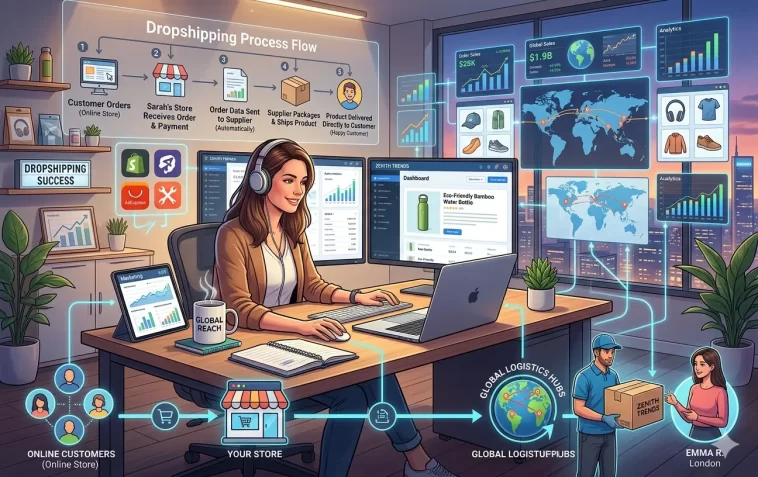
Dropshipping is a retail model where you sell products through an online store without ever holding inventory. When a customer places an order, you purchase the item from a third-party supplier who ships it directly to the customer.
You never touch the product. You handle the storefront, the marketing, and the customer experience — the supplier handles the rest.
Here’s the basic flow:
- Customer visits your store and places an order
- You receive the order and payment
- You forward the order to your supplier
- The supplier packages and ships the product directly to your customer
- You keep the difference between what the customer paid and what the supplier charged you
It sounds simple, and the mechanics are. The challenge is finding the right products, reliable suppliers, and enough customers to make the margins worthwhile.
Is Dropshipping Still Worth It in 2026?
Yes — but the landscape has changed. The days of throwing up a generic Shopify store with random AliExpress products and watching money roll in are largely over. Customers are smarter, competition is fiercer, and ad costs are higher.
What works in 2026 is more focused:
- Niche stores over general stores
- Branded products over generic imports
- Faster shipping suppliers over slow overseas fulfillment
- Strong content and SEO over pure paid advertising
The business model is still sound. Profit margins of 20–50% are achievable. But success now requires more strategy upfront than it did in the early dropshipping boom years.
Step 1: Choose a Niche
Your niche is the foundation of everything. A focused niche makes your marketing easier, your product selection cleaner, and your brand more memorable.
A good dropshipping niche has:
- Consistent demand — people buy it year-round, not just seasonally
- Passionate buyers — hobbyists and enthusiasts spend more and come back
- Reasonable competition — not dominated by Amazon and big-box retailers
- Good margins — ideally products priced between $30 and $200
Strong niche examples for 2026 include:
- Pet accessories (beyond basic collars and leashes — think themed or functional)
- Home office and ergonomic products
- Outdoor and hiking gear
- Sustainable and eco-friendly household items
- Fitness accessories for home workouts
- Car accessories and gadgets
- Baby and toddler products
Avoid anything where Amazon dominates entirely (like USB cables or basic phone cases) and anything with very thin margins (under $15 retail price).
Step 2: Research and Validate Products
Before building a store, make sure people actually want to buy what you’re planning to sell.
Use these tools to validate product demand:
- Google Trends — Check if search interest is stable or growing, not declining
- Amazon Best Sellers — Look at what’s selling well in your niche category
- TikTok and Instagram — Products that go viral on social media often have strong dropshipping potential
- AliExpress / DSers — Check order volumes on potential products; high order counts signal proven demand
- Minea or Pipiads — Paid tools that show you which products are currently being advertised successfully
Look for products that solve a problem, have clear visual appeal (important for social media advertising), aren’t easily found in local stores, and have a wow factor or strong emotional appeal.
Step 3: Find Reliable Suppliers
Your supplier is your most critical business partner. A bad supplier means slow shipping, poor quality, and unhappy customers — all of which destroy your reputation and your margins.
Top Supplier Platforms in 2026
AliExpress Still the most widely used dropshipping source. Massive product selection, low prices, and easy integration with Shopify. The downside is shipping times — unless you use suppliers with warehouses in the U.S. or Europe.
DSers The official AliExpress partner tool for Shopify. It automates order fulfillment, lets you compare suppliers, and manages bulk orders far more efficiently than manual AliExpress orders.
Spocket Focused on U.S. and EU-based suppliers, which means shipping times of 2–7 days instead of 2–4 weeks. Product quality tends to be higher, but prices are also higher, so margins are tighter.
Zendrop A popular all-in-one platform with U.S.-based warehousing, automated fulfillment, and branded packaging options. Strongly recommended if you’re serious about building a brand rather than just flipping generic products.
CJDropshipping Offers product sourcing, warehousing, and shipping with faster options than standard AliExpress. Good for scaling once you’ve validated a product.
Faire and Tundra (for niche/boutique products) If you’re in a lifestyle or home goods niche, these wholesale platforms carry unique products from independent brands that aren’t oversaturated in the dropshipping market.
What to Look for in a Supplier
- Shipping times under 10 days to your target market (ideally under 7)
- Consistent product quality with real reviews and photos
- Responsive communication — test them before committing
- Return/refund policy that doesn’t leave you absorbing all the losses
- Ability to handle volume as your orders scale
Step 4: Build Your Online Store
Shopify remains the go-to platform for dropshipping stores in 2026. It’s purpose-built for e-commerce, integrates directly with the major supplier tools, and has the best ecosystem of apps for marketing and fulfillment.
Other options worth considering:
- WooCommerce (WordPress) — More flexibility, lower ongoing cost, but steeper learning curve
- Wix eCommerce — Good for beginners who want a simpler setup
- BigCommerce — Better for scaling to high volume
Building Your Store: Key Steps
Choose a clean, fast theme Speed matters for conversion rates and SEO. Shopify’s free Dawn theme is fast and minimal — a solid starting point.
Write real product descriptions Don’t copy-paste from the supplier. Write descriptions that focus on benefits, not just features. Speak directly to your target customer’s problem or desire.
Use high-quality images Order a sample of your main products and photograph them properly. Generic supplier photos look cheap and don’t build trust.
Set up essential pages Every store needs: About Us, Contact, Shipping Policy, Return Policy, and Privacy Policy. Missing these signals an untrustworthy store to both customers and payment processors.
Install key apps
- DSers or Zendrop for supplier integration
- Loox or Judge.me for product reviews
- Klaviyo for email marketing
- Vitals for upsells, trust badges, and conversion tools
Step 5: Price Your Products for Profit
Pricing is where many new dropshippers go wrong. They either price too low and make nothing, or too high and get no sales.
A common rule of thumb is the 3x pricing formula: charge at least 3 times your product cost to cover platform fees, ad spend, refunds, and still make a profit.
Here’s a basic breakdown:
| Cost Type | Example |
|---|---|
| Product cost (from supplier) | $12.00 |
| Shipping cost | $3.50 |
| Shopify transaction fee (~2%) | $0.75 |
| Ad spend per sale (average) | $8.00 |
| Total cost | $24.25 |
| Selling price | $39.99 |
| Net profit | ~$15.74 |
Adjust based on your niche and competition, but never price yourself below profitability just to match a competitor.
Step 6: Drive Traffic to Your Store
A beautiful store with no visitors makes zero sales. Traffic generation is the hardest and most important part of running a dropshipping business.
Paid Advertising
Meta Ads (Facebook and Instagram) Still the most effective channel for dropshipping in 2026, especially for visually appealing products. Start with a small daily budget ($10–$20/day), test multiple creatives, and scale what works.
TikTok Ads Increasingly powerful for product discovery, especially in lifestyle, beauty, and novelty niches. Short video ads that feel organic tend to outperform polished commercial-style ads.
Google Shopping Ads Better for products with strong search intent — people who are already looking to buy rather than discover.
Organic Traffic
SEO Write product descriptions and blog content optimized for keywords your customers are searching. Organic traffic takes time but is essentially free once established.
TikTok and Instagram (organic) Short product demo videos, unboxing content, and “problem/solution” style reels can drive significant traffic without ad spend — especially in the early stages when your budget is tight.
Pinterest Underrated for dropshipping. Visual product pins can drive consistent traffic to e-commerce stores in home, fashion, and lifestyle niches.
Step 7: Handle Customer Service Properly
Most dropshipping businesses lose customers not on the first order but on what happens when something goes wrong. Shipping delays, damaged products, and slow refunds are inevitable at scale — how you handle them defines your brand.
Set up a clear process:
- Respond to inquiries within 24 hours — use a helpdesk tool like Gorgias or Tidio
- Set honest shipping expectations upfront — don’t promise 3-day delivery if your supplier ships in 10
- Offer easy refunds on legitimate complaints — the cost of a refund is almost always less than the cost of a bad review
- Track orders proactively — tools like AfterShip let you send automated shipping updates so customers aren’t left wondering
How Much Does It Cost to Start?
You don’t need a lot of capital to start dropshipping, but you do need some. Here’s a realistic starting budget:
| Expense | Monthly Cost |
|---|---|
| Shopify Basic plan | $39 |
| Domain name | ~$1.50 (first year) |
| Essential apps (reviews, email, etc.) | $20 – $50 |
| Product samples | $50 – $100 (one-time) |
| Initial ad budget | $200 – $500 |
| Total to start | ~$300 – $700 |
You can start leaner by relying on organic traffic first and adding paid ads once you’ve made your first few sales.
Common Mistakes to Avoid
- Picking a product you like instead of one the market wants — personal taste is irrelevant; data is everything
- Choosing suppliers based on price alone — slow shipping and poor quality will tank your reviews
- Ignoring profit margins — calculate your true cost per sale before you launch
- Giving up after the first failed product — most successful dropshippers tested 5–10 products before finding a winner
- Not building an email list — customer email addresses are your most valuable long-term asset; start collecting them from day one
FAQ
Do I need a business license to start dropshipping? Requirements vary by country and state. In most places, you’ll need to register as a sole proprietor or LLC before accepting payments at scale. Check your local regulations, and consult a tax professional when you start generating consistent revenue.
How long does it take to make money with dropshipping? Most new dropshippers see their first sale within 2–4 weeks if they’re actively running ads. Consistent profitability typically takes 3–6 months of testing products and refining your marketing. Treat the first few months as a learning investment.
Is dropshipping still profitable in 2026? Yes, but the easy wins are gone. Generic stores with no branding and slow shipping struggle. Niche stores with quality suppliers, strong branding, and smart marketing can still generate solid margins. The fundamentals are sound — the execution bar is just higher now.
What’s the best platform to build a dropshipping store? Shopify is the industry standard for good reason — it integrates with the most supplier tools, has the best app ecosystem, and is designed for e-commerce from the ground up. WooCommerce is a strong alternative if you want more control and lower monthly costs.
Can I dropship without running paid ads? Yes. SEO, organic TikTok, Instagram Reels, and Pinterest can all drive traffic without ad spend. It takes longer to build momentum, but many successful stores were grown entirely through organic content before introducing paid advertising.
What happens if a customer wants to return a product? You’ll need to decide your return policy upfront and coordinate with your supplier. Most dropshippers accept returns and either have the customer ship back to the supplier or offer a replacement or refund without requiring a return for low-cost items. Factor potential refunds into your pricing from the start.
Final Thoughts
Dropshipping in 2026 rewards people who treat it like a real business — not a get-rich-quick shortcut. The mechanics are simple, but the strategy takes work.
Start with a focused niche. Find reliable suppliers who can ship fast. Build a store that looks trustworthy. Test products methodically and learn from what doesn’t work. And invest in building an audience and email list rather than just chasing individual transactions.
The dropshipping model is sound. What you build on top of it is what determines whether it works for you.
