Tiananmen Massacre: Tiananmen is the centre of Beijing, the capital of China. Tiananmen covers approximately 13 times more area than Taksim Square and it is among the largest open areas in the world. One end of the square is connected to the Forbidden City. The Forbidden City build between 1406 and 1420 covers a 720,000 m² area and it has been the administrative centre of the Chinese dynasty with its 8,707 rooms. The Forbidden City is added to the World Heritage List in 1987 and registered as the largest ancient wooden structure by UNESCO.
Forbidden City and Tiananmen Square
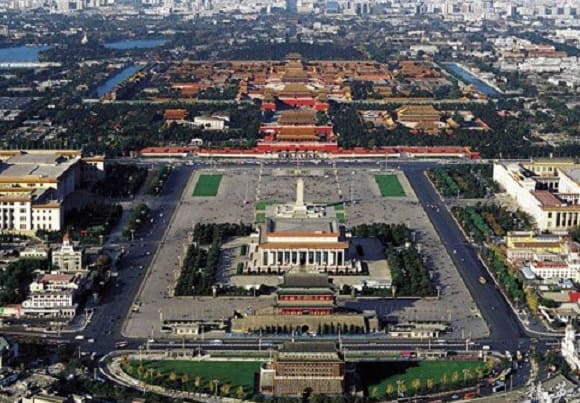
The number of casualties in this bloody fight known as “4-6 events” in China is still unknown. While the Chinese government claims that this number is between 200-300, the students and Red Cross claim that the number is approximately 3.000. Although the centre of the massacre is known as the Tiananmen Square, the historians state that the main massacre happened on the streets leading to the square.
22 April 1989 – 200,000 freedom supporter is against the soldiers
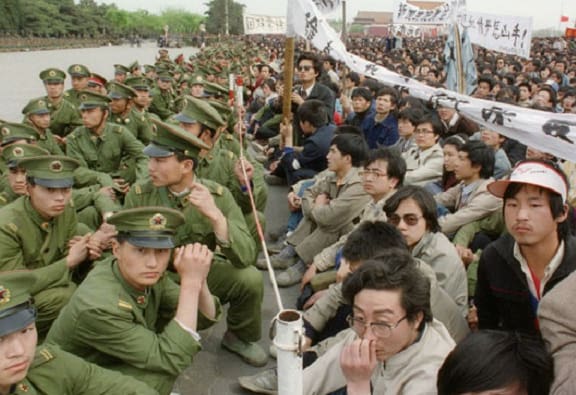
Soviet Union reform process impact on China lead to Tiananmen Square movement. The events started with the reform demands of the students and workers. The workers stated that the system lead to unemployment due to liberal reforms and requested to increase the state control.
The replica of “Freedom Statue” is built as the symbol of resistance
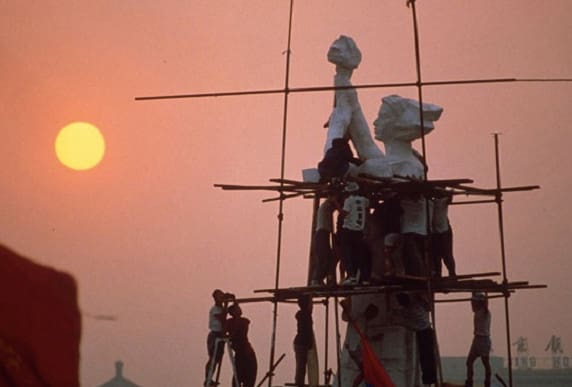
The students requested a liberal socialism. The protestor students were singing the International March even when they faces military intervention.
01 May 1989 – student leader informs the foreign press
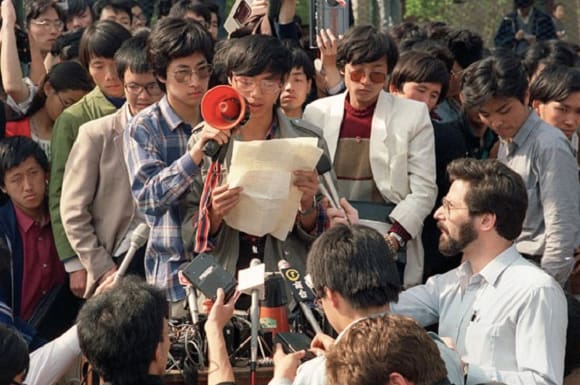
Students occupied the square for seven weeks and there were problems among the Communist Party against the students. Authorities who are against the military intervention were supressed for a long time and intellectuals were arrested. The General Secretary of the Communist Party Zao Ziyang was subjected to house arrest until he died in 2005 because he opposed using violence.
02 June 1989 – Thousands of protestors gathered around the statute of freedom
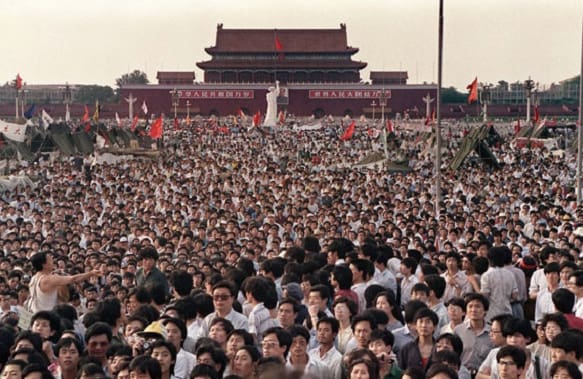
Even the army thought that this was a political uprising. A bloody and vicious massacre takes place despite generals opposing to army intervention against a political uprising.
03 June 1989 – The injured people are carried to hospitals
Although the protests spread across the county, the blood was shed in Tiananmen and the world’s reaction was harsh. While the Chinese Government massacred thousands of young people, the international reaction was interpreted as intervention to domestic affairs.
04 June 1989 – The dead bodies are scattered to the square in the morning of the massacre
Surgent Li Xiaoming who was on duty in the square during the events said he didn’t do anything wrong personally but the intervention of the Chinese Army was a shame.
5 June 1989 – Tank Man (Unknown Rebel)
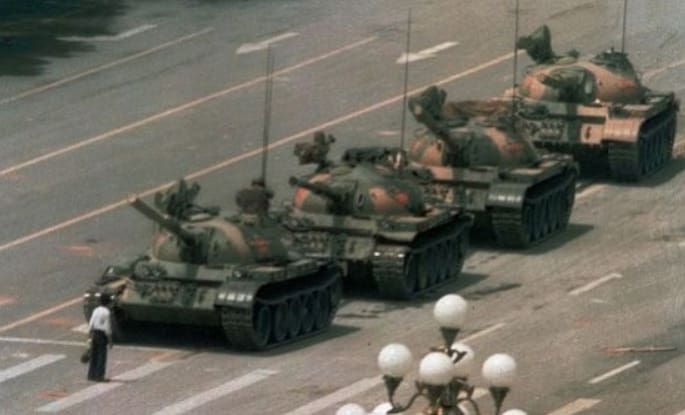
Changan Boulevard was directly connected to Tiananmen Square. The boulevard converted to a 10-line avenue today witnesses an forgettable moment of the massacre. An unknown man in the white shirt becomes the symbol of the freedom movements around the world. Not much is known about the Tank Man but it is believed that he died during or after the events.
Tank Man’s photo from a different angle
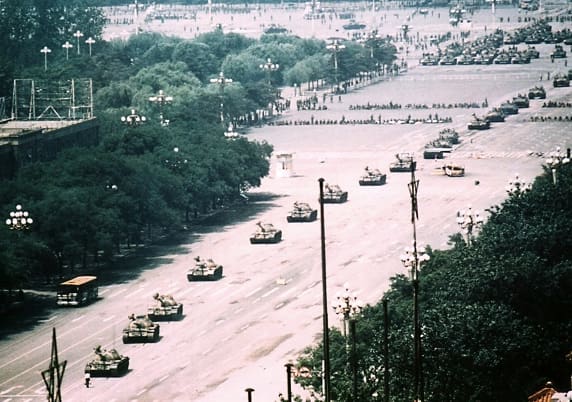
Stuart Franklin took this photo from the fifth floor of the Beijing Hotel. In this photo, the Unknown Rebel is standing not just in front of four tanks but also the Chinese Army. This photo film was taken outside the country in a tea box by a French student.
The Chinese government applies a huge censorship during the anniversary of the massacre. The internet controlled by the Chinese state even forbids “Tiananmen” word. The entrances to the graveyards of the people who died in the square are prevented.
