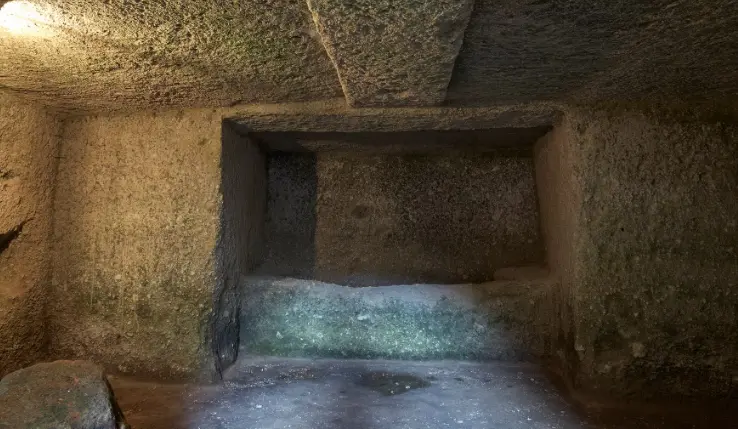
Sealed Etruscan tomb discovery in central Italy has stunned archaeologists after researchers opened a burial chamber that had remained untouched for around 2,600 years. Hidden beneath a stone slab for more than two millennia, the ancient tomb revealed four skeletons lying exactly where mourners placed them in the seventh century B.C., surrounded by more than one hundred remarkably preserved artifacts.
The extraordinary find offers a rare glimpse into the funeral traditions of the Etruscans, a powerful civilization that once dominated much of Italy before the rise of ancient Rome. Because the tomb had never been opened or looted, archaeologists say the burial chamber provides one of the clearest snapshots ever discovered of Etruscan burial customs.
The discovery was made at San Giuliano, an archaeological site located about 70 kilometers northwest of Rome. Researchers involved in the excavation say the sealed tomb is one of the most important discoveries related to Etruscan culture in recent decades.
A Rare Sealed Etruscan Tomb Discovery in Italy
The sealed Etruscan tomb discovery was made by researchers working on the San Giuliano Archaeological Research Project (SGARP), a long-running excavation project focused on understanding the ancient communities that once lived on the San Giuliano plateau.
For years, archaeologists had been excavating tombs carved into the rocky hills surrounding the plateau. Many of these burial chambers were constructed in the shape of small stone houses, complete with carved ceilings that resemble pitched roofs.
However, nearly all of the tombs previously discovered at the site had already been looted, sometimes centuries ago. Some tombs were emptied during the early expansion of the Roman Republic, while others were disturbed by more recent grave robbers.
That is what makes this discovery so remarkable.
When researchers first noticed the stone slab sealing the tomb’s entrance, they suspected it might still be intact. After carefully removing the slab, they confirmed their suspicions: the chamber inside had remained sealed and undisturbed since it was first closed approximately 2,600 years ago.
For archaeologists, such discoveries are incredibly rare.
What Archaeologists Found Inside the Tomb
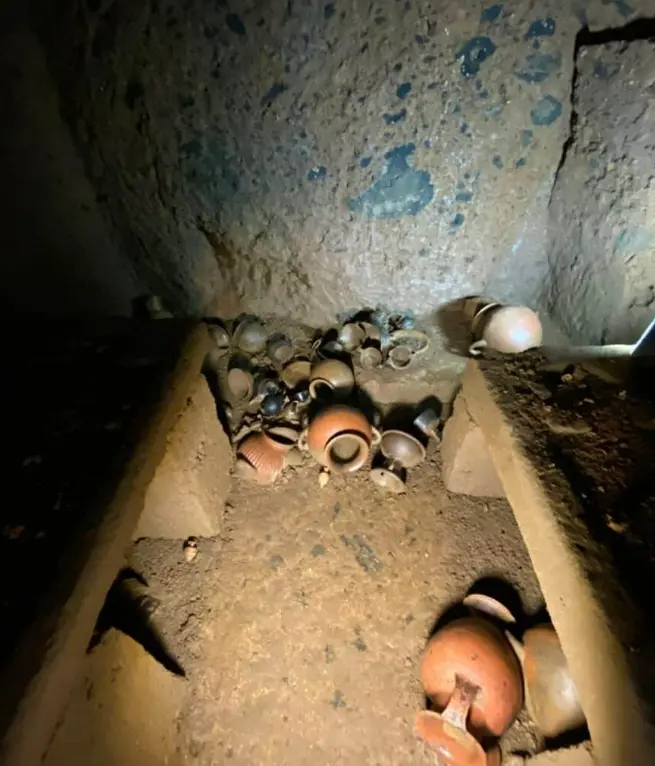
Once the entrance was opened, the team carefully entered the chamber and began documenting what they found. Inside, they discovered four skeletons laid out on stone beds carved directly into the rock.
The remains appeared to be positioned exactly as they had been placed during the burial ceremony more than two millennia ago.
Surrounding the skeletons were over 100 grave goods, including:
- Ceramic vases and pottery
- Iron weapons
- Bronze jewelry and ornaments
- Delicate silver hair accessories
One of the most remarkable finds was a group of 74 ceramic vases, many of which were almost completely intact despite their age.
These objects were placed carefully around the bodies, suggesting they played an important role in Etruscan burial rituals. In many ancient cultures, such items were believed to accompany the dead into the afterlife.
Because the tomb had never been disturbed, the artifacts were found exactly where ancient mourners had placed them.
For archaeologists, this provides an extremely valuable opportunity to study burial customs in their original context.
Who Were the Four People Buried in the Tomb?
One of the biggest questions surrounding the sealed Etruscan tomb discovery is the identity of the four individuals buried inside.
Initial analysis suggests the tomb may contain two pairs of individuals—possibly couples—but researchers say it is too early to confirm this.
Scientists are now conducting several types of analysis, including:
- Anthropological studies of the skeletal remains
- Isotope analysis to understand diet and origin
- Genetic testing to determine possible family relationships
These studies may eventually reveal whether the individuals were related and what their roles might have been in Etruscan society.
The arrangement of the bodies also suggests that the burials may have taken place at different times, although further research will be needed to confirm this.
Why the Sealed Etruscan Tomb Discovery Matters
The sealed Etruscan tomb discovery is particularly important because it allows archaeologists to study a burial site that has remained completely untouched.
Most ancient tombs discovered today have already been looted, often leaving behind only fragments of pottery or small artifacts.
In contrast, this tomb preserved an entire burial scene from the seventh century B.C.
According to researchers involved in the excavation, this provides an unprecedented opportunity to better understand Etruscan culture, including:
- Funeral rituals
- Social hierarchy
- Artistic craftsmanship
- Daily life in ancient Italy
The discovery also helps fill in gaps in the historical record about the Etruscans, a civilization that greatly influenced early Roman culture.
Although the Romans eventually absorbed Etruscan territories, many elements of Roman religion, architecture, and political organization were originally inspired by Etruscan traditions.
The San Giuliano Archaeological Research Project
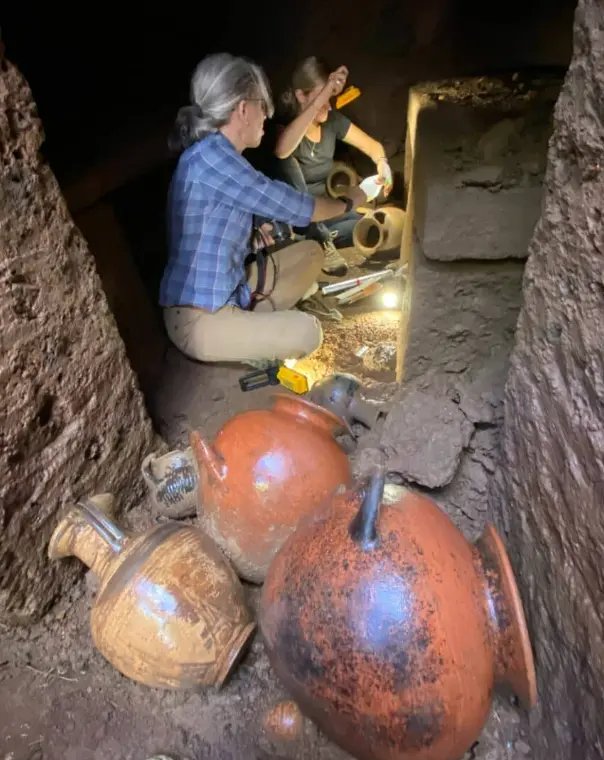
The sealed Etruscan tomb discovery was made as part of a broader research program studying the San Giuliano plateau and the surrounding hills.
The San Giuliano Archaeological Research Project is led by an international team of scholars and students, including researchers from Baylor University and other academic institutions.
Since 2016, the project has documented more than 600 tombs in the region.
Many of these tombs were built during the height of Etruscan civilization, long before the Roman Empire came to dominate the Italian peninsula.
Researchers believe the large necropolis surrounding the plateau was closely connected to an ancient Etruscan settlement located nearby.
Over time, the site experienced several phases of occupation. After the Etruscans, the area was absorbed into the Roman world and later developed into a medieval settlement before being abandoned sometime before the year 1300.
The sealed tomb now provides an important reference point within this long history.
Students and Local Communities Took Part in the Discovery
Another unique aspect of the sealed Etruscan tomb discovery is the involvement of students and local residents in the excavation and research process.
Many of the archaeological team members are university students participating in field research programs. For some of them, discovering an untouched tomb was an unforgettable experience.
One student involved in the project described the moment as surreal, explaining that many archaeologists spend their entire careers hoping to uncover a burial site that has never been looted.
Local residents from the nearby town of Barbarano Romano also visited the research laboratory where artifacts were cleaned and documented.
For the community, the discovery represents a direct connection to the ancient people who once lived in the same landscape thousands of years ago.
What Happens Next
Although the excavation of the tomb has been completed, the scientific research is only beginning.
Experts will continue analyzing the skeletons and artifacts for years to come in order to learn more about the individuals buried in the chamber and the society they belonged to.
Future studies may reveal:
- The exact age and health of the individuals
- Their diet and geographic origins
- Possible family relationships
- Trade connections based on pottery styles and materials
Each of these findings will contribute to a deeper understanding of Etruscan life.
The sealed tomb essentially preserved a single moment from the seventh century B.C., allowing researchers to study it in extraordinary detail.
For archaeologists, discoveries like this are incredibly rare—and incredibly valuable.
