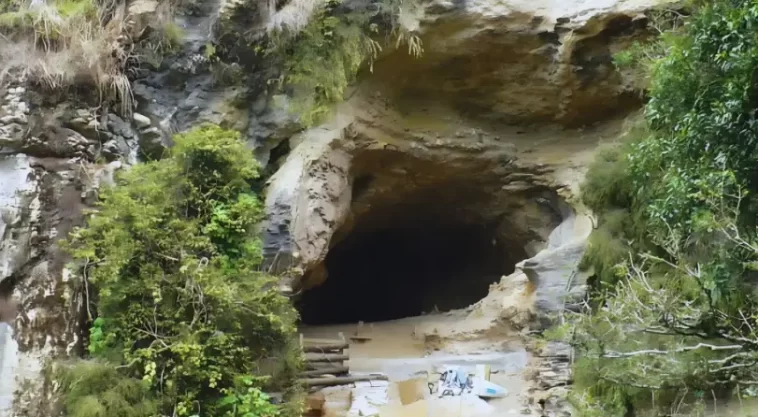
New Zealand ancient fossils uncovered inside a cave sealed by volcanic eruptions for over one million years are rewriting what scientists thought they knew about extinction, evolution, and the islands’ natural history. Hidden beneath layers of volcanic ash, this remarkable fossil site has revealed 16 previously unknown species, offering rare insight into a vanished ecosystem that existed long before humans arrived.
The discovery was made in a cave on New Zealand’s North Island, where fossils lay untouched for more than a million years. According to researchers, the remains capture a forest ecosystem that disappeared naturally, challenging the long-held belief that most extinctions in New Zealand occurred only after human settlement roughly 750 years ago.
The findings were published in Alcheringa: An Australasian Journal of Palaeontology, and they are already being described as one of the most important fossil discoveries in the country’s history.
A Cave Frozen in Time by Volcanoes
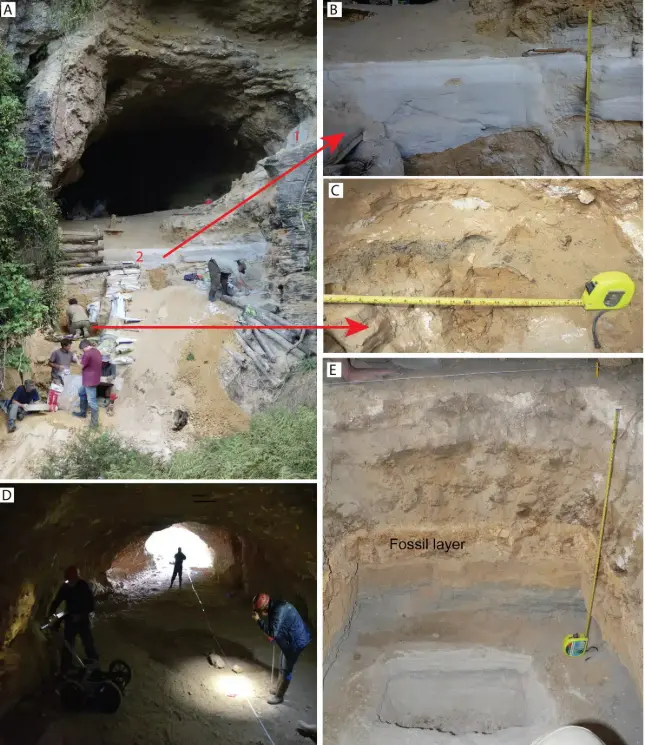
The fossil-rich site, known as Moa Eggshell Cave, was effectively locked away by nature itself. Two massive volcanic eruptions blanketed the cave in ash, sealing its contents and protecting them from erosion, scavengers, and human interference.
The lower ash layer dates back approximately 1.55 million years, while the upper layer formed around 1 million years ago. This natural “time capsule” allowed scientists to pinpoint the age of the fossils with unusual precision.
Because the fossils were trapped between these two volcanic events, researchers could reconstruct an ecosystem that existed during a critical but poorly understood period in New Zealand’s past — a time long after the Miocene era but well before human arrival.
Sixteen Fossils Never Seen Before
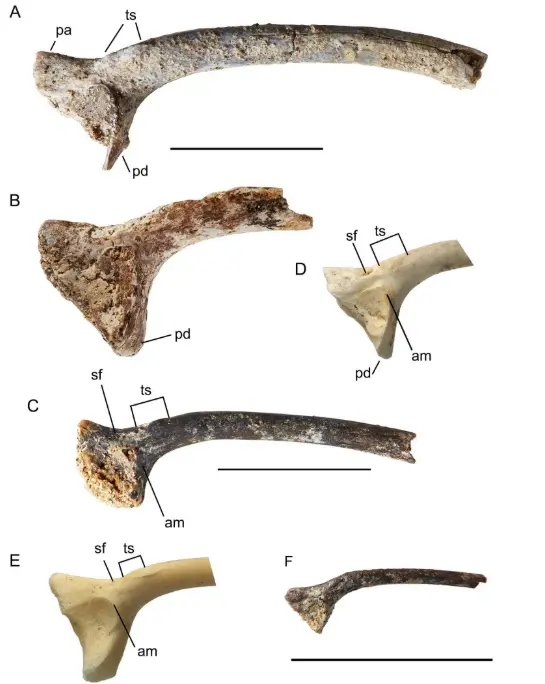
Among the New Zealand ancient fossils discovered were remains from 12 bird species and four frog species. Several of these animals were previously unknown to science, meaning they had never been identified in the fossil record before this excavation.
The birds represent a completely different avian community from the one encountered by early Polynesian settlers. According to the research team, this newly identified group of birds dominated New Zealand’s forests roughly one million years ago, only to vanish long before humans set foot on the islands.
“This is a newly recognized avifauna for New Zealand,” explained Trevor Worthy, associate professor at Flinders University and lead author of the study. “It was replaced by the one humans encountered a million years later.”
A Major Gap in the Fossil Record Filled
Until now, scientists had only fragments of information about New Zealand’s wildlife between 20 million years ago and the period just before human arrival. Earlier fossil sites documented life during the Miocene epoch, while archaeological evidence focused on species that existed when humans arrived.
What was missing was a continuous record of life during the long stretch in between.
The Moa Eggshell Cave fossils fill that gap. They provide the first clear evidence of animal life spanning from roughly 15 million years ago to one million years ago, offering what researchers describe as an entirely missing volume of New Zealand’s evolutionary story.
“This wasn’t a missing chapter,” said Paul Scofield, senior curator of natural history at Canterbury Museum. “It was a missing volume.”
Extinctions Before Humans Ever Arrived
One of the most surprising conclusions from the study is the scale of extinction that occurred long before humans reached New Zealand. By extrapolating from the fossil record, researchers estimate that between 33% and 50% of the island’s species disappeared during the million years before human settlement.
This challenges a long-standing narrative that places most blame for extinction on human hunting, deforestation, and introduced predators. While human activity undoubtedly caused catastrophic losses after settlement, the new evidence shows that natural forces were already reshaping New Zealand’s biodiversity on a massive scale.
Rapid climate fluctuations, shifting habitats, and repeated volcanic eruptions likely drove these earlier extinctions.
Climate Change and Super-Volcanoes as Drivers
During the period captured in Moa Eggshell Cave, New Zealand experienced dramatic environmental changes. Climate cycles altered forest composition, while volcanic eruptions periodically devastated large areas of land.
“These forces caused repeated resets of ecosystems,” Scofield explained. “Bird populations, in particular, were forced to adapt, migrate, or disappear altogether.”
The fossils show that entire groups of animals failed to survive these changes, while others evolved rapidly to fill newly opened ecological niches. This process likely played a key role in shaping the distinctive wildlife New Zealand is known for today.
A Lost Relative of the Takahe
Among the most intriguing finds was an ancient ancestor of the modern takahe, a large, flightless bird that today survives only through intensive conservation efforts. The fossil suggests that the takahe lineage is far older and more complex than previously understood.
Researchers also uncovered fossils of an extinct pigeon species closely related to Australian bronzewing pigeons. This discovery highlights ancient connections between New Zealand and Australia, suggesting that bird populations once moved more freely between the two landmasses.
These connections likely vanished as climates shifted and habitats became more isolated.
Frog Fossils Tell a Rare Story
Frog fossils are exceptionally rare, making the four frog species discovered in the cave particularly valuable. The remains provide critical information about amphibian evolution in New Zealand, a region where frogs today are limited to just a handful of native species.
The fossils reveal that frogs were once more diverse and widespread than they are now, further supporting the idea that major losses occurred long before humans arrived.
Rethinking New Zealand’s Natural History
For decades, extinction in New Zealand has largely been framed as a human-driven event that began around 750 years ago. While human impact remains undeniable, the Moa Eggshell Cave discovery forces scientists to broaden that perspective.
“Natural forces were already sculpting the identity of New Zealand’s wildlife over a million years ago,” Worthy said. “Humans arrived in a landscape that had already undergone profound ecological change.”
This reframing has important implications for conservation. Understanding how species responded to ancient climate shifts and natural disasters can help scientists better predict how modern ecosystems might respond to today’s accelerating environmental changes.
Why This Discovery Matters Now
The New Zealand ancient fossils from Moa Eggshell Cave do more than add new species to the fossil record. They reshape how scientists understand extinction, resilience, and evolution in isolated ecosystems.
They also serve as a reminder that biodiversity loss is not always sudden or singular. In New Zealand’s case, it unfolded over millions of years, driven by both natural forces and, later, human activity.
As researchers continue to study the fossils, they expect even more insights to emerge — not just about New Zealand’s past, but about how ecosystems everywhere respond to extreme environmental pressure.
