Introduction to Neanderthals
The study of human evolution has always been a fascinating subject for scientists and researchers. One of the most captivating chapters in our evolutionary history is the story of the Neanderthals. These ancient beings, who coexisted with early humans, have left behind a rich legacy that continues to astound and intrigue us to this day. In this article, we will delve into the enigma of Neanderthals and uncover 10 astonishing facts about these remarkable hominids.
The discovery of Neanderthals
The first fact that astonishes many is the discovery of Neanderthals themselves. The story begins in the mid-19th century when the remains of an ancient human-like creature were found in the Neander Valley, near Düsseldorf, Germany. These remains were initially thought to belong to a deformed modern human, but subsequent findings revealed that they belonged to an entirely different species. This groundbreaking discovery opened up a new chapter in human evolutionary history and sparked a fascination with Neanderthals that continues to this day.
Neanderthal physical characteristics
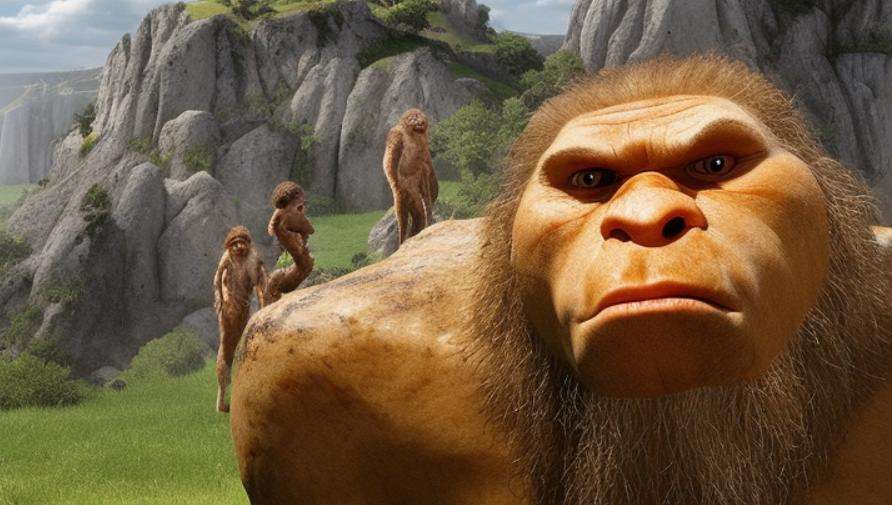
Neanderthals were a robust and physically imposing species. They had a stocky build, with a stronger and more muscular body compared to modern humans. Their average height was similar to that of early humans, but their bone structure was distinct. Neanderthals had a large, elongated skull with a prominent brow ridge, a low forehead, and a projecting face. Their bodies were adapted to survive the harsh environments they inhabited, with shorter limbs and a barrel-shaped chest. These physical characteristics gave Neanderthals a unique appearance that set them apart from both their ancestors and modern humans.
Neanderthal intelligence and culture
Contrary to the popular misconception that Neanderthals were primitive and unintelligent, research has revealed that they were highly intelligent beings. Studies have shown that they possessed a similar brain capacity to early humans, indicating comparable cognitive abilities. Neanderthals also had a complex culture, as evidenced by the tools and artifacts they left behind. They crafted sophisticated stone tools, such as hand axes and scrapers, which were used for various purposes including hunting, butchering, and woodworking. This demonstrates a level of intelligence, planning, and problem-solving skills that were essential for their survival in the challenging environments they inhabited.
Neanderthals’ social structure and communication
Neanderthals were not solitary creatures but lived in small groups or bands. They had a complex social structure and engaged in cooperative activities. Evidence suggests that they had a division of labor, with individuals specializing in different tasks such as hunting, gathering, and childcare. Neanderthals also had a sophisticated system of communication. Research has revealed that they had a vocal range similar to modern humans, indicating the ability to produce a wide range of sounds. This suggests that they may have had a complex language system, allowing them to communicate and share information effectively within their social groups.
Neanderthal tools and technology
One of the most astonishing facts about Neanderthals is their advanced tool-making skills. They were skilled craftsmen, creating a wide array of tools to aid in their daily lives. Neanderthals made use of different materials, including stone, bone, and antler, to fashion their tools. These tools included hand axes, scrapers, spears, and awls, which were used for various purposes such as hunting, butchering, and crafting. The complexity and sophistication of these tools indicate a high level of technical skill and knowledge possessed by Neanderthals.
Neanderthals’ hunting and diet
Neanderthals were formidable hunters and relied on their hunting skills to secure their food supply. They hunted a variety of large game, including mammoths, bison, and deer. They used their weapons, such as spears and thrusting javelins, to take down their prey. Neanderthals also had a varied diet, which included not only meat but also plant foods. Studies of their dental remains and dietary isotopes have shown that they consumed a range of plants, including berries, nuts, and tubers. This suggests a level of adaptability and resourcefulness in their hunting and gathering practices.
Neanderthal art and symbolism
While often overshadowed by their more well-known successors, the early humans, Neanderthals had their own artistic expressions. Recent discoveries have revealed evidence of Neanderthal art and symbolism, challenging the perception of them as solely practical beings. They created intricate cave paintings, engravings, and personal ornaments, such as beads and pendants. These artistic expressions provide insights into their cognitive abilities, symbolic thinking, and capacity for creativity.
Neanderthal extinction theories
The fate of the Neanderthals remains a subject of debate among scientists. Multiple theories have been proposed to explain their extinction. One theory suggests that Neanderthals were outcompeted by early humans, who possessed superior technological and social advancements. Another theory proposes that climate change played a significant role in their demise, as Neanderthals were adapted to colder climates and struggled to survive in the changing environment. Additionally, interbreeding between Neanderthals and early humans is believed to have occurred, leading to genetic assimilation rather than complete extinction. The exact reasons for the disappearance of Neanderthals are still being explored, and it is likely that a combination of factors contributed to their ultimate demise.
Conclusion: The legacy of Neanderthals
The legacy of the Neanderthals continues to captivate us. These astonishing creatures were not the primitive beings they were once believed to be but rather complex and intelligent beings who thrived in challenging environments. Their existence and eventual disappearance provide valuable insights into our own evolutionary journey. By unraveling the enigma of Neanderthals, we gain a deeper understanding of our own roots and the intricate tapestry of human evolution.
