Archaeological Excavations Begin to Reveal Hulagu Khan’s Summer Palace in Van
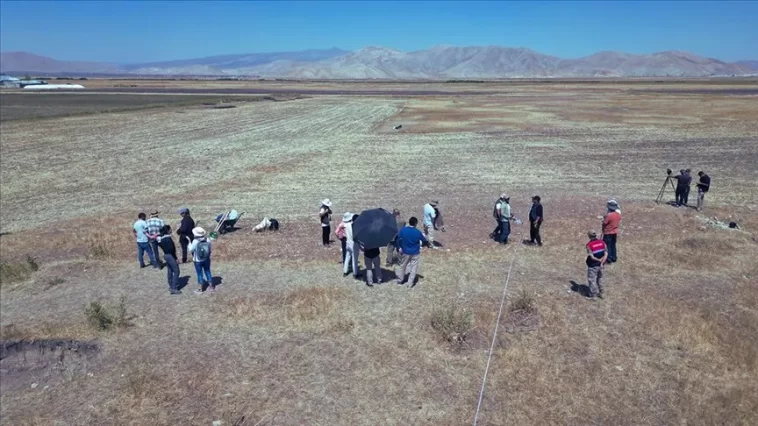
Van, Turkey – A groundbreaking archaeological project has begun in eastern Turkey, where Turkish and Mongolian archaeologists are working together to uncover the remains of a 13th-century summer palace built by Hulagu Khan, the founder of the Ilkhanate dynasty. The palace, located in the fertile plains of Çaldıran in Van province, was constructed around the 1260s and served as a significant cultural, political, and military center for the Mongols during their expansion into Anatolia and the Middle East.
The excavations are being carried out under the joint supervision of İzmir Katip Çelebi University’s Center for Turkic Studies and the Institute of Turkology at the National University of Mongolia. With the approval of Turkey’s Ministry of Culture and Tourism, the project marks the first official archaeological excavation at this historically significant site.
A Discovery Rooted in Historical Sources
Historical texts have long mentioned that Hulagu Khan, the grandson of Genghis Khan, built a palace and a settlement in this region during his campaigns towards Iran and Syria. Until now, however, no concrete evidence had been uncovered. In 2022, surface surveys led by researchers revealed traces of the palace, along with fragments of roof tiles and ceramics believed to be exclusive to Mongolian craftsmanship.
Professor Şaban Doğan, Dean of the Faculty of Social Sciences at İzmir Katip Çelebi University and coordinator of the excavations, emphasized that the discovery is much more than a palace:
“What we have encountered here is not only the remains of a palace but also of a settlement, a city. Hulagu Khan’s palace is accompanied by several other structures, suggesting that this was an important urban and administrative hub for the Ilkhanids in Anatolia.”
Long-Term Excavations and International Collaboration
The excavation team, consisting of 18 specialists, aims to unearth the palace and its surrounding structures over the next decade. Experts estimate that the project could take 8 to 15 years, given the scale of the settlement and the importance of preserving its findings.
The work is being carried out with strong support from both Turkey and Mongolia. The project also reflects the shared cultural heritage between the two nations, strengthening their diplomatic and academic ties.
A Site of Geopolitical and Cultural Significance
The Çaldıran plain was not chosen by chance. According to Ankhbayar Danuu, the Mongolian Consul General in Istanbul, Hulagu Khan had strategic reasons for establishing his base there:
“During the Syrian campaigns of the Ilkhanids, the army gathered here, war councils were held, and decisions were made before moving forward. The landscape reminded the Mongols of their homeland, which gave the site a symbolic meaning as well.”
Danuu also noted that the site has the potential to become an important cultural tourism destination, especially for Mongolian visitors, once excavations and possible reconstructions are completed.
The Only Example of Ilkhanid Architecture in Anatolia
While Anatolia is home to numerous Seljuk monuments, this site represents something unique: a direct example of Ilkhanid steppe architecture in the westernmost region of their empire. Professor Doğan highlighted that this makes the discovery invaluable:
“This is the only surviving Ilkhanid urban structure in Anatolia. Its architectural features mirror those of Mongolian steppe cities we have excavated in Mongolia itself. This parallel makes it a remarkable bridge between Central Asia and Anatolia.”
Broader Impact on Cultural Heritage
Beyond its academic and historical importance, the excavation is expected to contribute to tourism, cultural diplomacy, and heritage preservation. Van, already famous for its Urartian ruins, medieval castles, and Lake Van, could now attract international attention as the location of Hulagu Khan’s summer residence.
Moreover, the discovery symbolizes a renewed cultural bridge between Turkey and Mongolia, strengthening ties through a shared past that dates back centuries.
✅ Summary: The excavation of Hulagu Khan’s summer palace in Van is not only shedding light on the Ilkhanid presence in Anatolia but also reinforcing cultural and diplomatic ties between Turkey and Mongolia. With the potential to become a major heritage site, this discovery highlights the enduring legacy of the Mongols in the Middle East.
