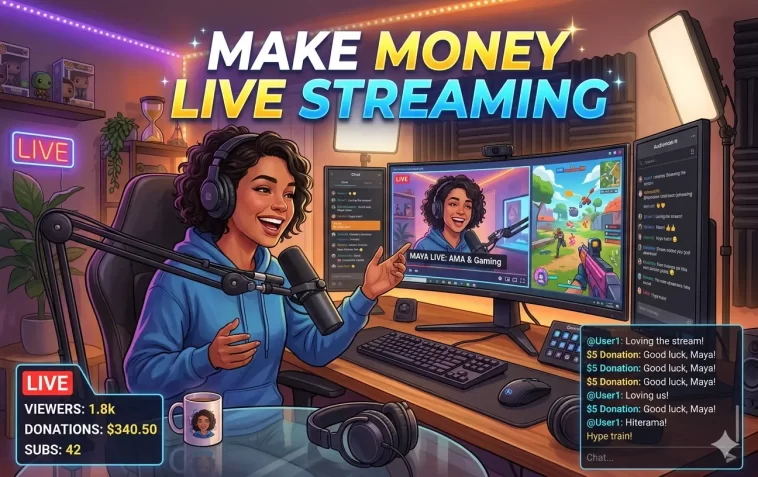
Making money through live streaming is one of the most accessible ways to earn online today. In 2026, the live streaming industry has exploded — and it’s not just gamers cashing in. Cooking, fitness, music, education, travel, and even everyday lifestyle content are generating real income for creators worldwide. If you’ve been thinking about going live, this guide is everything you need to get started.
Why Live Streaming Is a Real Income Source in 2026
Live streaming is no longer a hobby for a handful of internet celebrities. It has become a full creator economy with multiple platforms competing for streamers and offering better and better tools to monetize.
The key shift in 2026 is that you don’t need millions of followers to earn money. Small, engaged audiences convert far better than large, passive ones. A few hundred loyal viewers watching consistently can generate a sustainable monthly income — especially when you stack multiple revenue streams on top of each other.
Best Platforms for Live Streaming Income
Before picking your methods, you need to choose where you stream. Each platform has different audiences and monetization tools.
Twitch
The king of gaming and entertainment streaming. Twitch offers subscriptions, Bits, ads, and channel points. It has the most developed creator monetization system for live content. Best for gaming, esports, creative streams, and talk shows.
YouTube Live
YouTube combines live streaming with a massive existing search audience. You can earn from Super Chats (live tips), channel memberships, and standard ad revenue. It also has the advantage of archived streams showing up in search results for months after you go live.
TikTok Live
TikTok’s live feature has grown rapidly. Viewers send virtual gifts that convert into real money. The platform’s algorithm aggressively promotes live streams to new audiences, making it easier to grow quickly. Best for short, high-energy content.
Facebook Live
Facebook Live is strong for creators who already have an established Facebook following. It supports Stars (Facebook’s virtual tip currency), fan subscriptions, and in-stream ads. Great for lifestyle, cooking, and community-focused content.
Kick
Kick is the newer challenger platform offering a much more favorable revenue split than Twitch — creators keep 95% of subscription revenue. It’s growing fast and worth considering, especially for streamers who want better platform terms from day one.
The 9 Main Ways to Make Money Live Streaming
1. Donations and Tips
This is the most accessible income method for new streamers. Viewers who enjoy your content can tip you directly through tools like Streamlabs, StreamElements, or the platform’s own system (Bits on Twitch, Super Chats on YouTube, Stars on Facebook).
The key to earning consistent tips is making donations feel rewarding. Give shout-outs to donors live, use text-to-speech so their messages play on stream, and create fun donation alerts. New streamers can earn $50 to $200 per month just from occasional donations once they build a small loyal audience.
2. Channel Subscriptions
Subscriptions create recurring monthly income — the most predictable type. Viewers pay a fixed monthly fee in exchange for perks like custom emotes, subscriber-only chat, exclusive streams, or badges next to their name.
Platforms split subscription revenue with you. Twitch typically pays Affiliates a 50% cut. YouTube takes 30% and gives you 70% of membership fees. To grow subscriptions, make the perks feel genuinely valuable and remind viewers during streams why subscribing helps you keep creating.
3. Ad Revenue
Most major platforms insert ads into your stream — pre-roll ads before viewers join, or mid-roll ads you trigger manually. You earn based on CPM (cost per thousand impressions), which varies by platform, niche, and viewer location.
Ad placement timing matters enormously. Run ads during natural breaks — between game rounds, while loading screens are up, or during bio breaks. Never run ads during intense gameplay or a key conversation moment. Doing so drives viewers away, which costs you more in lost long-term income than the ad payout is worth.
4. Sponsorships and Brand Deals
Once you build an audience of even a few hundred consistent viewers, brands will start to take notice. Sponsorships involve a company paying you to mention, demonstrate, or promote their product during your stream.
You don’t need to wait for brands to come to you. Reach out proactively to companies that match your niche. A gaming streamer can pitch to peripheral brands, headset companies, or gaming chair makers. A cooking streamer can approach kitchen tool brands or ingredient subscription boxes.
Sponsored streams, logo overlays, verbal mentions, and dedicated product showcases are all common deal formats. Rates vary widely but even micro-streamers can earn $100–$500 per sponsored segment.
5. Affiliate Marketing
Affiliate marketing means recommending products and earning a commission when your viewers buy through your unique link. You don’t create the product — you just promote it to an audience that already trusts you.
The Amazon Influencer Program is one of the most popular options for streamers. You create a storefront page with curated gear recommendations (your microphone, camera, headset, etc.) and earn 3–10% commission on purchases. Put affiliate links in your stream panels, chat commands, and video descriptions. This is passive income — it earns even when you’re not live.
6. Selling Merchandise
Branded merch is a powerful way to earn and strengthen your community identity at the same time. T-shirts, hoodies, mugs, phone cases, and stickers all work well for streamers with a loyal audience.
Use print-on-demand services like Printful, Printify, or Teespring so you never have to handle inventory, printing, or shipping yourself. You just design the product, list it, and promote it during streams. Every sale earns you a margin with zero upfront cost.
7. Selling Digital Products and Courses
If you have knowledge or a skill, you can package it and sell it directly to your audience. This works especially well in niches like fitness, music production, cooking, graphic design, and gaming.
Sell coaching sessions, eBooks, tutorial packs, stream overlay templates, or full online courses. Live streams make excellent marketing tools for paid products — give a free preview of what you teach on stream, then direct viewers to buy the full course.
8. Live Shopping and Product Sales
Live shopping is exploding in 2026. Platforms like TikTok Shop allow creators to showcase and sell physical products directly within a live stream. Viewers click, purchase, and the creator earns a commission — all without leaving the app.
Even outside of dedicated shopping platforms, you can drive viewers to your own store or a brand partner’s product page while demonstrating items live. The conversion rate from live stream product demos is significantly higher than static product listings.
9. Patreon and Membership Platforms
Patreon lets you build a subscription community outside of any individual streaming platform. Members pay a monthly fee for exclusive perks — early access to VODs, Discord access, behind-the-scenes content, or personalized shout-outs.
The advantage of Patreon is that it’s platform-independent. If your Twitch or YouTube channel ever has issues, your Patreon income continues. Building even 50–100 paying Patreon supporters at $5–$10/month creates a stable base income layer.
How Much Can You Realistically Earn?
Income varies dramatically based on audience size, niche, and how many revenue streams you’re using. Here’s a realistic overview:
| Audience Size | Monthly Earning Potential |
|---|---|
| Under 20 viewers | $0–$100 (tips, small affiliate income) |
| 20–100 viewers | $100–$800 (subs + tips + first sponsors) |
| 100–500 viewers | $800–$5,000 (full monetization stack) |
| 500–2,000 viewers | $5,000–$20,000+ (sponsorships + merch + ads) |
| 2,000+ viewers | $20,000+/month (professional creator level) |
The gap between small and mid-sized streamers closes fast when you stack revenue streams intelligently. A streamer with 150 viewers using subscriptions, affiliate links, merch, and one sponsor deal per month can easily out-earn a larger streamer relying only on ad revenue.
Best Niches for Live Streaming Income in 2026
Not all content earns equally. Some niches attract bigger sponsorship budgets, higher-spending viewers, or more engagement that drives tips. The top-performing categories right now include:
- Gaming – Still the largest live streaming category with massive community monetization
- Finance and investing – High CPM ads and premium sponsorships
- Fitness and health – Strong course and coaching sales potential
- Cooking and food – Brand deals, live shopping, and highly shareable clips
- Music and performance – Tips and platform gift revenue from engaged fans
- Education and tutorials – Strong course sales and Patreon conversions
- Tech and software – Affiliate commissions on high-ticket products
Tips to Grow Your Audience and Income Faster
- Stream on a regular schedule — Consistency builds habit in your viewers
- Multistream across platforms — Go live on Twitch, YouTube, and Facebook simultaneously using tools like Restream or Streamyard to maximize reach
- Clip and repost your best moments — Short clips on TikTok, Instagram Reels, and YouTube Shorts are the best free advertising for your live channel
- Engage relentlessly with chat — Read names out loud, answer questions, react to donations
- Invest in audio quality early — A good microphone is the single most impactful equipment upgrade
- Build a Discord community — Off-platform community keeps viewers connected between streams and drives loyalty
- Be patient for at least 90 days — Almost every successful streamer went through months of small audiences before growth picked up
Common Mistakes That Delay Your Income
- Relying on a single income source — ads alone will never be enough at small scale
- Streaming without promoting anywhere else — discovery inside platforms is hard without an external audience funnel
- Ignoring chat and treating it like a one-way broadcast
- Quitting too early — most streamers who give up do so right before they would have broken through
- Not setting up tip and affiliate links from day one — you’re leaving money on the table
FAQ: Making Money with Live Streaming
Q: Do I need a lot of followers to start making money from live streaming? No. You can start earning from donations and affiliate links with just a small, engaged audience. Platform subscriptions and ad revenue unlock as you meet each platform’s eligibility thresholds, but income starts earlier than most people think.
Q: What is the best platform for live streaming income in 2026? It depends on your niche. Twitch is best for gaming. YouTube Live is ideal if you want long-term discoverability. TikTok Live is great for fast audience growth. Many experienced creators multistream to all three at once.
Q: Can you make money live streaming without showing your face? Yes. Gameplay-only streams, voice commentary, animated avatars (VTubing), and screen-share tutorials all work. Your personality and audio quality matter more than your appearance.
Q: How long does it take to earn a full-time income from live streaming? Most creators who become full-time took between 1 and 3 years of consistent effort. However, part-time supplemental income is achievable much sooner — often within 3 to 6 months of consistent streaming.
Q: What equipment do I need to start live streaming? At a minimum: a decent USB microphone, a stable internet connection, and streaming software like OBS (free). A webcam is helpful but not required. You don’t need an expensive setup to start — upgrade gear as your income grows.
Q: Is live streaming too competitive to make money in 2026? There is competition, but most categories still have room for focused, consistent creators. The streamers who struggle are the ones who try to appeal to everyone. Niche down, serve a specific audience well, and competition becomes much less of a barrier.
Q: What is the easiest way to earn money live streaming as a beginner? Setting up a donation link and promoting affiliate products (like your streaming gear on Amazon) are the fastest ways to start earning with zero audience requirements. From there, focus on building toward platform subscription eligibility.
Q: Do live streamers pay taxes on their income? Yes. In most countries, streaming income — whether from subscriptions, tips, sponsorships, or merchandise — is considered taxable self-employment income. Keep records of all earnings and consult a local accountant as your income grows.
Final Thoughts
Live streaming as an income source is real, accessible, and growing. The barrier to entry has never been lower — a microphone, a camera, and an internet connection are genuinely all you need to start.
The streamers who earn meaningful income are not necessarily the most talented. They are the most consistent, the most community-focused, and the smartest about stacking multiple revenue streams. Start simple, show up regularly, and build from there.
