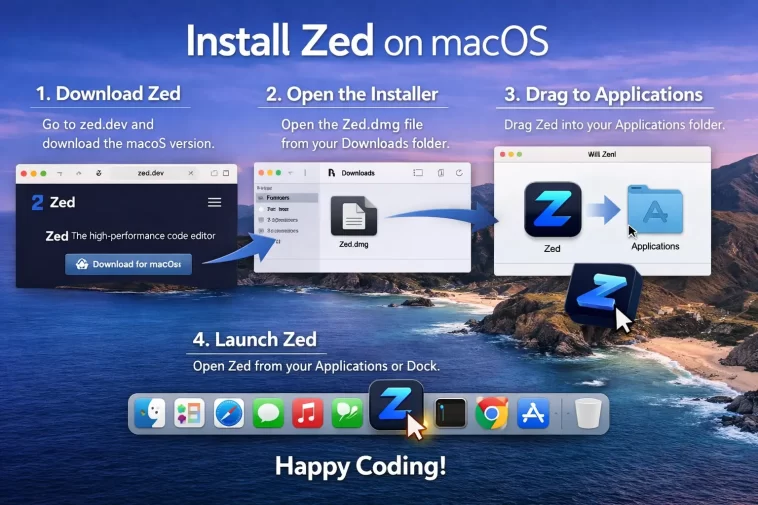
If you’re searching for How to Install Zed on macOS, the installation itself is usually quick, but there are a few things that can trip people up. I ran into one of them the first time I installed Zed on an older Mac, and the error message wasn’t particularly helpful.
Zed is one of those editors that feels fast immediately after launch. Getting it running isn’t difficult, but when macOS permissions, Gatekeeper, or version compatibility get involved, things can get messy.
Quick Answer
If you need the short version:
- Download the macOS version of Zed from the official release source.
- Move Zed into the Applications folder.
- Launch it from Applications, not from Downloads.
- Approve any macOS security prompts.
- If Zed won’t open, check Gatekeeper settings and macOS version compatibility.
- Most installation failures come from permission or security restrictions, not the editor itself.
Why Zed Installation Sometimes Fails on macOS
Most guides make it sound like you drag an app into Applications and you’re done.
Usually, yes.
But I’ve seen several cases where users run into problems immediately after downloading.
1. Gatekeeper Blocks the App
macOS checks applications downloaded from the internet.
Sometimes you’ll see messages like:
- “Zed cannot be opened because Apple cannot check it for malicious software.”
- “The application is damaged and can’t be opened.”
The second message is especially annoying because the application often isn’t damaged at all.
2. Unsupported macOS Version
Zed moves pretty quickly with updates.
Older versions of macOS occasionally fall behind compatibility requirements.
If you’re running an older Intel Mac with an outdated operating system, installation can fail or the application may crash during startup.
3. Launching Directly From Downloads
A surprisingly common mistake.
Users double-click the downloaded application without moving it into Applications first.
Sometimes it works.
Sometimes it creates weird permission behavior later.
4. Security or Device Management Policies
Work laptops are a different story.
Corporate MDM policies may block unsigned applications or restrict software installation entirely.
And no amount of reinstalling will fix that.
Zed Installation Requirements
Before starting, check the basics:
| Requirement | Recommended |
|---|---|
| macOS Version | Recent supported release |
| Processor | Apple Silicon or Intel |
| Disk Space | Minimal |
| Administrator Access | Helpful for troubleshooting |
| Internet Connection | Required for download |
The requirements aren’t particularly demanding.
The bigger issue is usually macOS security settings.
Step-by-Step: How to Install Zed on macOS
Step 1: Download Zed
Download the macOS build of Zed.
Make sure you’re downloading the correct version for your machine.
Most modern Macs use Apple Silicon chips.
Older Macs may still use Intel processors.
If you’re not sure:
- Click the Apple menu.
- Select About This Mac.
- Check the processor information.
Installing the wrong build doesn’t always cause problems, but it’s one variable you don’t need.
Step 2: Open the Downloaded File
After the download finishes:
- Open the Downloads folder.
- Locate the Zed application package.
- Open the disk image if provided.
You should see the application icon.
Step 3: Move Zed to Applications
Drag Zed into the Applications folder.
This step matters more than many people realize.
Running applications directly from Downloads can create odd permission issues later.
I’ve done this myself when I was in a hurry, and it ended up causing more confusion than the extra three seconds saved.
Step 4: Launch Zed
Open the Applications folder.
Double-click Zed.
The first launch may trigger a security prompt.
Approve it if requested.
macOS may ask:
“Are you sure you want to open this application?”
That’s normal.
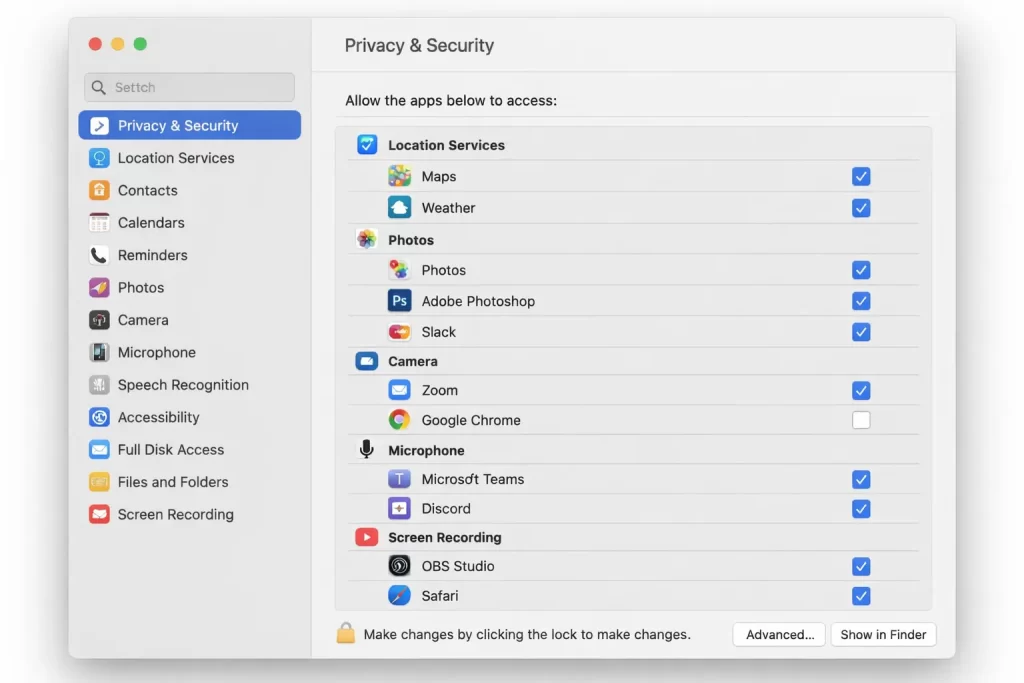
Step 5: Grant Requested Permissions
Depending on the version and your workflow, macOS may request access to:
- Documents
- Desktop
- Downloads
- Terminal integration
Grant only what you actually need.
You can always change permissions later.
What to Do If Zed Won’t Open
Installation is one thing.
Launching successfully is where most problems appear.
Fix 1: Open Through Security Settings
If macOS blocks the application:
- Open System Settings.
- Go to Privacy & Security.
- Scroll toward the bottom.
- Look for a blocked application notice.
- Click Open Anyway.
This solves a large percentage of first-launch issues.
From what I’ve seen, this is the fix that works most often.
Fix 2: Re-download the Installer
Corrupted downloads aren’t common.
But they happen.
Especially on unstable connections.
Delete the existing installer completely and download it again.
Don’t simply overwrite the previous file.
Fix 3: Remove Quarantine Attributes
Advanced users can try Terminal.
Run:
xattr -dr com.apple.quarantine /Applications/Zed.appThis removes the quarantine flag macOS may have assigned.
But only do this if you’re comfortable using Terminal.
Fix 4: Restart macOS
This sounds almost embarrassingly simple.
But I’ve seen launch services get stuck after installation.
A restart occasionally clears the problem immediately.
And yes, I know that’s the most stereotypical troubleshooting advice possible.
Common Installation Scenarios
Installing on Apple Silicon Macs
Installation is generally smooth.
Performance tends to be excellent.
Most users won’t need any additional configuration.
Installing on Intel Macs
Things can be slightly less predictable.
Some users report slower startup times.
Others experience no issues at all.
Your mileage may vary depending on hardware age.
Installing on Managed Work Devices
This is where installation problems increase dramatically.
Device management policies may:
- Block installation
- Restrict application launches
- Prevent permission changes
In these situations, local troubleshooting often won’t help.
You’ll need administrator approval.
What Actually Worked For Me
The first time I installed Zed, I assumed the process would be identical to every other editor I’d installed.
I downloaded it, opened it directly from Downloads, launched it, and got a security warning.
My first attempt was restarting the app.
Then I downloaded it again.
Then I checked the download integrity.
None of those changed anything.
The actual fix was moving Zed into Applications and approving the blocked application notice inside Privacy & Security.
That’s not entirely accurate, let me explain.
Moving the app alone didn’t fix it. The security approval step was the real solution. Moving it simply removed another possible source of confusion.
After that, Zed launched normally and hasn’t caused any installation issues since.
Advanced Fixes and Edge Cases
Check Crash Reports
If Zed launches briefly and then closes:
- Open Console.app.
- Search for Zed.
- Review recent crash entries.
Crash logs can reveal:
- Permission failures
- Missing dependencies
- Graphics-related issues
- Corrupted configuration files
Verify Application Attributes
Terminal users can inspect extended attributes:
xattr -l /Applications/Zed.appIf quarantine entries remain, macOS may continue blocking execution.
Verify Application Permissions
Open:
System Settings → Privacy & Security
Check:
- Files and Folders
- Full Disk Access
- Developer Tools
Not every installation needs these permissions.
But certain workflows may.
Test With a New User Account
This one gets overlooked constantly.
Create a temporary macOS user account.
Install Zed there.
If it launches successfully, the problem is probably tied to settings inside your primary account.
I’ve used this trick several times for unrelated macOS software issues and it often narrows down the cause surprisingly fast.
Prevention Tips
A few habits prevent most installation headaches:
- Always move applications to Applications before launching.
- Keep macOS reasonably up to date.
- Download fresh installers instead of reusing old copies.
- Remove abandoned editor installations you no longer use.
- Avoid modifying security settings unless necessary.
- Keep backups of editor settings if you customize heavily.
And don’t immediately assume the application is broken.
Most launch failures are caused by macOS security checks.
FAQ
Why does Zed say it’s damaged on macOS?
In many cases, it isn’t actually damaged. macOS security controls can trigger that message when quarantine attributes or verification checks fail.
Can I install Zed without administrator privileges?
Sometimes yes. On managed systems, probably not.
Does Zed work on Intel Macs?
Yes, although performance and compatibility can vary depending on macOS version and hardware age.
Why won’t Zed launch after installation?
The most common causes are Gatekeeper restrictions, missing permissions, or unsupported macOS versions.
Should I remove the quarantine attribute manually?
Only if standard approval methods fail. For most users, approving the application through Privacy & Security is safer.
I moved Zed into Applications but it still won’t open.
Check Privacy & Security for blocked application notices. That’s usually the next place to look.
Is reinstalling Zed usually the fix?
Honestly, not often. Reinstalling is recommended everywhere, but security settings tend to be the real culprit.
Editor’s Opinion
Zed has been one of the easier editors I’ve installed recently. The funny part is that most problems aren’t really Zed problems at all. They’re macOS security prompts hiding behind vague messages. If the app refuses to open, I’d check Privacy & Security before spending 30 minutes reinstalling stuff. That’s where I’d put my money.
