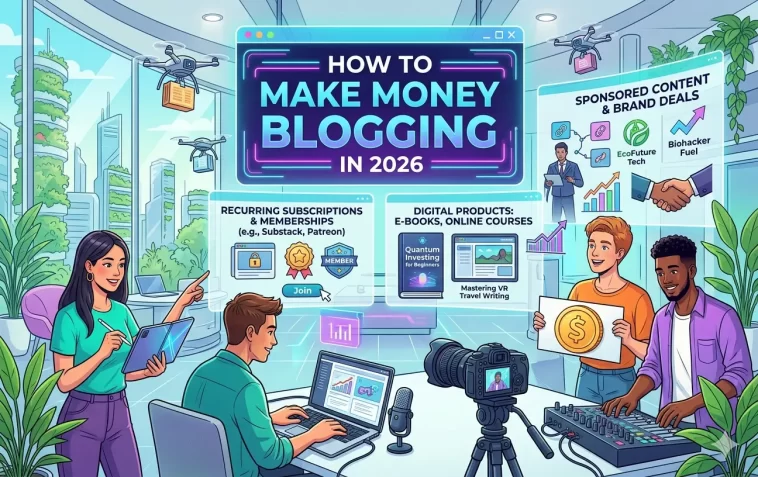
Make money blogging in 2026 — it’s still one of the most searched phrases online, and for good reason. Blogging has been around for decades, but it hasn’t died. It’s evolved.
The strategies that worked in 2015 don’t all work today. But the core idea — build an audience around a topic you know, then monetize that audience — is as solid as ever.
This guide is written for beginners who want to start a blog and actually earn from it. No fluff. No unrealistic promises. Just a clear, honest roadmap.
Is Blogging Still Worth Starting in 2026?
Yes — but you need to go in with the right mindset.
Blogging is not a get-rich-quick path. It takes 6–18 months before most blogs see meaningful traffic, and even longer before the income becomes consistent. But the blogs that survive that period often go on to earn thousands per month on a relatively passive basis.
What’s changed in 2026 is the competition and the tools. AI-generated content has flooded search engines, which means Google and other platforms are rewarding real expertise, personal experience, and genuine helpfulness more than ever. That’s actually good news for beginners willing to put in honest work.
If you’re willing to play the long game, blogging is absolutely still worth it.
What Kind of Blog Makes Money?
Not all blogs are created equal. The ones that earn fall into a few clear categories:
- Niche blogs — focused on one specific topic (e.g., budget travel for solo women, keto cooking for athletes, personal finance for freelancers)
- Authority blogs — in-depth resources on a broader topic built over time
- Personal brand blogs — built around a person’s expertise, story, or career
Niche blogs are the best starting point for beginners. A tight focus helps you rank faster, attract a loyal audience, and monetize more effectively. Trying to cover everything leads to a blog that’s good at nothing.
Step 1: Choose a Profitable Niche
Your niche is the foundation of everything. Choose it wrong and no amount of great writing will save you. Choose it right and you’ll have a much easier path ahead.
A good niche has three things:
- Audience demand — people are actively searching for information on this topic
- Monetization potential — there are products, services, or ads connected to this topic
- Your interest or expertise — you can write about it consistently without burning out
Some of the most profitable blog niches in 2026 include:
- Personal finance and budgeting
- Health, fitness, and nutrition
- Technology and software reviews
- Career development and remote work
- Parenting and family life
- Travel (especially budget or niche travel)
- Food and recipes
- Self-improvement and productivity
- Home improvement and DIY
Don’t just pick what’s “profitable” — pick what you can actually write about with depth and consistency. Passion without profit potential is a hobby. Profit potential without passion leads to burnout.
Step 2: Set Up Your Blog
Setting up a blog is easier than most beginners expect. Here’s the straightforward path:
Choose a Platform
WordPress.org is the gold standard for serious bloggers. It gives you full control, works with every monetization method, and scales with you. Avoid free platforms like Blogger or WordPress.com if you’re serious about earning — you don’t own your content or your audience on those platforms.
Get Hosting
You’ll need a web hosting provider to publish your blog. Beginner-friendly options include:
- Bluehost — widely recommended for beginners; affordable starter plans
- SiteGround — slightly more expensive but excellent performance
- Hostinger — budget-friendly with decent speed
Expect to pay $3–$10 per month for a basic hosting plan.
Pick a Domain Name
Your domain is your blog’s address (e.g., yoursite.com). Keep it:
- Short and easy to spell
- Relevant to your niche
- Memorable
Avoid hyphens, numbers, and overly clever spellings. Simple is better.
Install a Theme
WordPress has thousands of free and paid themes. For beginners, Astra, Kadence, or GeneratePress are fast, clean, and SEO-friendly. Don’t spend hours perfecting the design before you have any content — get something clean and move on.
Step 3: Create Content That Actually Ranks
Content is where most beginner bloggers struggle. Writing posts isn’t enough — you need to write posts people are actively searching for.
Learn Basic Keyword Research
Keyword research means finding the exact phrases people type into Google. You want to target keywords that:
- Have real search volume (people are actually looking for this)
- Are not too competitive (you can realistically rank for them)
- Match your niche
Free tools like Google Search Console, Ubersuggest, and AnswerThePublic are great starting points. Paid tools like Ahrefs or Semrush give deeper data when you’re ready to invest.
Write for People First, Algorithms Second
Google in 2026 prioritizes content that demonstrates genuine expertise and actually helps the reader. Thin, keyword-stuffed articles don’t cut it anymore.
Every post you write should:
- Fully answer the question someone came to your blog asking
- Include your own perspective, experience, or examples
- Be easy to read (short paragraphs, clear headings, simple language)
- Be longer and more thorough than competing articles where it makes sense
Post Consistently
You don’t need to post every day. But you do need a schedule you can maintain. Two to four quality posts per month consistently beats ten rushed posts followed by months of silence.
Step 4: How to Make Money Blogging
Once you have content and some traffic coming in, it’s time to monetize. Here are the main ways bloggers earn money in 2026:
Display Advertising
Display ads are the most passive income method. You sign up with an ad network, they place ads on your site, and you earn based on traffic.
- Google AdSense — easy to get into; lower rates; good for new blogs
- Mediavine — requires 50,000 sessions/month; much higher earnings
- Raptive (AdThrive) — requires 100,000 pageviews; premium rates
Ad income scales with traffic. At 50,000 monthly sessions, you might earn $500–$2,000/month depending on your niche. Finance and legal niches pay the most per click.
Affiliate Marketing
Affiliate marketing is one of the best income streams for bloggers. You promote products or services, and when a reader buys through your link, you earn a commission.
Popular affiliate programs include:
- Amazon Associates — easy to join; commission rates are low (1–10%) but volume adds up
- ShareASale — marketplace with thousands of programs across every niche
- CJ Affiliate — large network with well-known brands
- Individual brand programs — many companies run their own affiliate programs paying 20–50% commissions
The key to affiliate income is writing content that has buying intent — “best,” “review,” “vs,” and “alternatives” posts convert the best.
Selling Digital Products
This is where bloggers can make serious money. You create something once and sell it indefinitely.
Popular digital products for bloggers:
- Ebooks — guides, how-tos, workbooks
- Online courses — video or written courses on your area of expertise
- Templates — spreadsheets, Notion templates, Canva designs
- Printables — planners, checklists, trackers (huge on Pinterest)
- Membership communities — exclusive content or community for a monthly fee
Margins are excellent since there’s no physical product and no inventory. A $29 ebook that sells 100 times per month earns $2,900 with zero ongoing production cost.
Sponsored Posts and Brand Partnerships
As your blog grows, brands in your niche will pay you to feature their products or services. Rates vary widely:
- Small blogs (10K–50K monthly visitors): $100–$500 per post
- Mid-size blogs (50K–200K): $500–$2,000 per post
- Established blogs (200K+): $2,000–$10,000+
You don’t have to wait for brands to come to you. Build a media kit and reach out proactively once you have consistent traffic.
Offering Services
Many bloggers use their blog as a portfolio to land freelance clients. If you blog about marketing, you can sell consulting. If you blog about design, you can sell design services. Your blog builds trust — clients come pre-sold on your expertise.
Services provide fast income early on, while passive streams like ads and affiliates grow in the background.
Realistic Income Timeline for New Bloggers
Here’s what a typical blogging income journey looks like:
| Timeframe | What’s Happening | Typical Earnings |
|---|---|---|
| Months 1–3 | Setting up, writing first posts, learning SEO | $0 |
| Months 4–6 | Traffic starting to trickle in, first affiliate clicks | $0–$50 |
| Months 7–12 | Growing consistently, first real monetization | $100–$500/month |
| Year 2 | Established presence, multiple income streams | $500–$3,000/month |
| Year 3+ | Authority blog with passive income | $2,000–$10,000+/month |
These are averages. Some bloggers move faster. Many move slower. The biggest variable is how consistently and strategically you create content.
Common Mistakes New Bloggers Make
Picking a Niche That’s Too Broad
“Travel,” “health,” or “finance” as a niche is like opening a store called “Stuff.” You need to go narrower. “Budget travel in Southeast Asia for solo women” beats “travel” every time for a new blog.
Ignoring SEO Completely
Writing great content that no one can find is like hosting a party and forgetting to send invitations. Learn the basics of SEO from day one — it’s not complicated, and it makes a massive difference.
Trying to Monetize Too Early
Slapping ads on a blog with 200 monthly visitors doesn’t make money — it just makes your site slower and uglier. Focus on traffic first. Monetize seriously once you have an audience.
Giving Up Too Soon
Most blogs that fail do so because the owner quit within 6 months. That’s usually right before things start picking up. Set a commitment to at least 12–18 months before deciding it doesn’t work.
Writing for Algorithms, Not Humans
AI tools have made it easy to produce large volumes of generic content. But Google is better than ever at detecting hollow writing. Your real experience and opinions are your competitive advantage — use them.
Essential Tools for Beginner Bloggers in 2026
You don’t need to spend a lot to start. Here are the tools that actually matter:
- WordPress.org — your blogging platform
- Rank Math or Yoast SEO — on-page SEO plugin
- Google Analytics 4 — track your traffic and behavior
- Google Search Console — see what keywords bring people to your blog
- Canva — create blog graphics and social media images
- Grammarly — catch errors before publishing
- ConvertKit or Mailchimp — start building your email list from day one
Most of these have free tiers that are more than enough when you’re starting out.
FAQ: Make Money Blogging in 2026
How long does it take to make money blogging?
Most bloggers don’t earn significant income for the first 6–12 months. With consistent, strategic effort, many bloggers reach $500–$1,000/month by the end of their first year. Building to a full-time income typically takes 2–3 years.
How much do beginner bloggers earn?
Beginner bloggers in their first year typically earn between $0 and $500/month. Income grows significantly after the 12-month mark as traffic builds. Established bloggers with 2–3 years of consistent work often earn $2,000–$10,000+ per month.
Do you need to write every day to succeed?
No. Quality matters more than quantity. Two to four well-researched, well-written posts per month will outperform daily thin content. Consistency matters — but consistency means showing up regularly, not burning yourself out.
Is blogging still relevant when AI creates so much content?
Yes, and arguably more so. AI has flooded the internet with generic content, which means personal experience, genuine expertise, and real human perspective stand out more than ever. Google’s helpful content updates specifically reward blogs written by people with real knowledge.
What’s the best niche for a new blog in 2026?
The best niche is one that combines your genuine interest, a real audience, and monetization potential. Personal finance, health and fitness, technology reviews, and career development remain highly profitable. But any niche can work if you’re specific enough and committed enough.
Do you need social media to grow a blog?
Not necessarily. Many successful bloggers grow entirely through SEO (organic Google traffic) without a social media presence. That said, Pinterest is particularly effective for driving blog traffic in niches like recipes, home decor, travel, and personal finance.
How much does it cost to start a blog?
Starting a blog costs as little as $50–$100 for the first year (domain + hosting). You don’t need expensive tools, premium themes, or paid courses to get started. The main investment is your time.
Final Thoughts
Learning how to make money blogging in 2026 isn’t about finding a secret formula. It’s about picking the right niche, creating genuinely helpful content, building trust with an audience, and then connecting that audience to products, services, or advertisers they actually care about.
The bloggers succeeding today aren’t the most tech-savvy or the best writers. They’re the ones who stayed consistent, kept learning, and treated their blog like a real business — even before it made a single dollar.
Start with one niche. Write your first ten posts. Learn from what gets traffic. Build from there.
The path is longer than the ads suggest and shorter than your doubts tell you. Start today, and your 2027 self will be glad you did.
