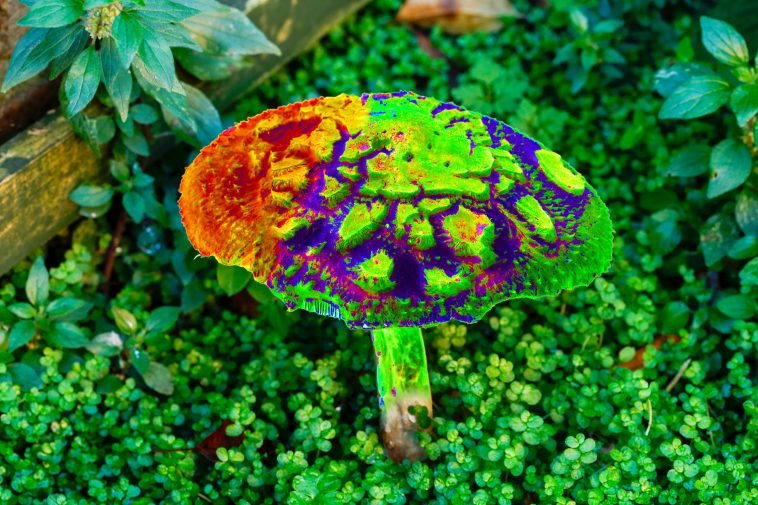
Lanmaoa asiatica mushroom hallucinations are puzzling scientists and doctors after hundreds of people in China were hospitalized with the same unusual symptoms. Each year, many individuals who eat this edible mushroom experience strange visions—often describing tiny “people” or “elves” dancing around them.
The phenomenon has sparked growing interest among researchers because the chemical responsible for these hallucinations remains unknown. While psychedelic mushrooms are usually associated with compounds like psilocybin, scientists say the Lanmaoa asiatica mushroom hallucinations appear to come from an entirely different substance.
A Popular Mushroom With Unexpected Effects
The mushroom responsible for these cases is Lanmaoa asiatica, a species commonly sold in markets and served in restaurants in the southwestern Chinese province of Yunnan. During the region’s mushroom season—typically between June and August—locals gather and cook a wide variety of wild fungi.
Lanmaoa asiatica is widely considered edible. However, doctors warn that eating it raw or undercooked can trigger a range of neurological symptoms.
Hospitals in the region report hundreds of cases every year linked to the mushroom. Most patients arrive experiencing intense hallucinations, confusion, dizziness, or temporary delirium. Despite the alarming symptoms, doctors say the condition has not caused any known deaths.
The strange experiences typically fade after one to three days, although some people report lingering effects slightly longer.
The “Tiny People” Hallucination
One of the most remarkable aspects of Lanmaoa asiatica mushroom hallucinations is how similar the visions are across different patients.
More than 90 percent of affected individuals report seeing extremely small human-like figures moving around them. These figures are often described as dancing, marching, or interacting with their surroundings.
In medical terminology, this type of experience is known as lilliputian hallucination—a rare phenomenon where people see miniature humans, animals, or fantasy creatures.
The descriptions are surprisingly detailed. Some patients claim the figures are only a few centimeters tall and appear vividly real.
A professor from Yunnan once described a striking experience after eating stir-fried mushrooms. According to reports shared by researchers, he said he saw hundreds of tiny figures marching like soldiers across the table.
When he lifted the tablecloth, he claimed the heads of the miniature figures stuck to the cloth while their bodies continued marching below.
Stories like this have become part of local folklore surrounding the mushroom.
Why Do Lanmaoa Asiatica Mushroom Hallucinations Happen?
Despite decades of reports, scientists still do not fully understand what causes Lanmaoa asiatica mushroom hallucinations.
Researchers initially assumed the mushroom contained well-known psychedelic chemicals such as psilocybin, the compound responsible for the effects of so-called “magic mushrooms.” However, laboratory analysis has shown that the mushroom does not appear to contain these substances.
This discovery deepened the mystery.
Scientists studying the mushroom believe the hallucinations must be triggered by an unknown psychoactive compound that has not yet been identified in nature.
Recent research has involved genetic sequencing of the mushroom species and chemical analysis of its extracts. These efforts aim to determine whether a completely new class of psychoactive molecules may be responsible.
Scientists Searching for the Hidden Compound
Researchers studying Lanmaoa asiatica mushroom hallucinations have begun examining the mushroom at the molecular level.
By sequencing its genome, scientists are trying to identify genes associated with known hallucinogenic compounds. So far, they have found no evidence of genes linked to substances such as:
- Psilocybin
- Ibotenic acid
- Muscimol
These compounds are commonly found in other psychoactive mushrooms, but they appear to be absent in Lanmaoa asiatica.
Because of this, scientists suspect the mushroom may contain a completely new chemical compound that has never been documented before.
Laboratory tests using animal models have also revealed behavioral changes when extracts from the mushroom are administered, further confirming that an active compound is present.
However, isolating and identifying that compound remains a major challenge.
An Unusual Type of Psychoactive Mushroom
Another unusual feature of the mushroom is its physical structure.
Most psychedelic mushrooms belong to species with gills under their caps. Lanmaoa asiatica, however, belongs to a different group called boletes, which have tiny pores instead of gills.
Psychoactive effects are rarely reported in bolete mushrooms, making this species particularly intriguing to researchers.
The discovery suggests that psychoactive compounds may exist in more mushroom families than scientists previously thought.
A Long History of Similar Reports
While the current research is focused on China, historical accounts of mushroom-related hallucinations show surprising similarities.
Medical records from the early 20th century describe cases of “mushroom madness,” where people reported seeing miniature figures after eating certain fungi.
Similar reports also emerged during scientific studies in Papua New Guinea during the 1960s. Participants in those studies experienced visions that resembled the Lanmaoa asiatica mushroom hallucinations reported today.
However, researchers have not yet confirmed whether those earlier cases involved the same species or a related compound.
Not a Recreational “Magic Mushroom”
Although the mushroom causes psychedelic effects, experts emphasize that it is not typically consumed intentionally for hallucinations.
The symptoms usually occur when the mushroom is raw or insufficiently cooked, suggesting the responsible compound may break down under high heat.
Because the hallucinations can last many hours—or even several days—most people consider the experience unpleasant rather than enjoyable.
Doctors in Yunnan regularly warn residents and tourists to cook wild mushrooms thoroughly to avoid accidental poisoning.
Are There Similar Mushrooms Elsewhere?
Genetic analysis has revealed that Lanmaoa asiatica has close relatives in other parts of the world, including North America.
However, these related species are rarely eaten, and there are no confirmed reports of hallucinations linked to them.
Scientists say this suggests either:
- The psychoactive compound is unique to Lanmaoa asiatica
- The compound appears only under specific environmental conditions
Further research will be required to determine whether similar mushrooms elsewhere could produce the same effects.
What Researchers Hope to Discover Next
Scientists believe studying Lanmaoa asiatica mushroom hallucinations could lead to important discoveries in neuroscience and pharmacology.
If researchers identify the compound responsible, it may reveal:
- A completely new class of psychoactive chemicals
- Previously unknown biochemical pathways in fungi
- New insights into how hallucinations occur in the human brain
Such discoveries could even contribute to future medical research on perception, consciousness, or psychiatric disorders.
For now, however, the mushroom remains one of the strangest unsolved mysteries in the world of fungi.
A Fascinating Scientific Puzzle
The story of Lanmaoa asiatica mushroom hallucinations highlights how much scientists still have to learn about wild mushrooms and their chemical properties.
Every year, hundreds of people experience vivid visions after eating this common edible fungus, yet researchers still cannot explain exactly why it happens.
Until the mystery compound is identified, the mushroom will likely remain both a culinary curiosity and a scientific puzzle.
And for those visiting Yunnan during mushroom season, experts offer one simple piece of advice: cook your mushrooms thoroughly.
