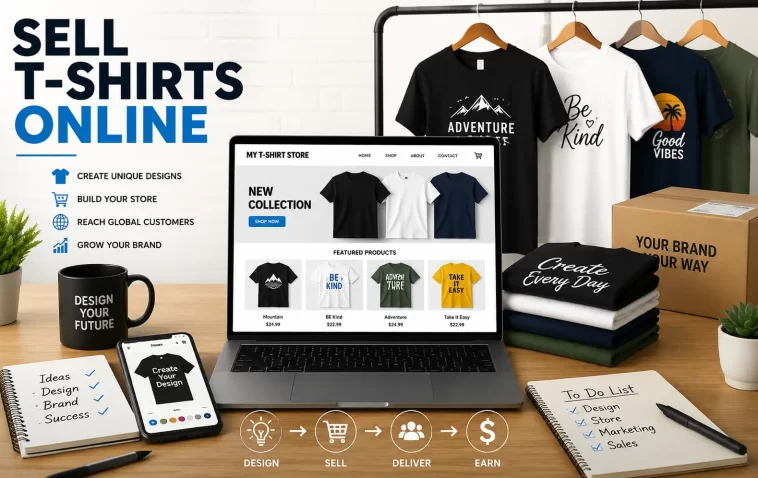
I still remember the first time I tried to sell t-shirts online. I had a folder full of designs sitting on my desktop, and no clue which platform actually deserved them. So I signed up for three different sites in one weekend, uploaded the same design everywhere, and waited to see what happened. Two of those platforms are still making me a small amount of passive income today. The third one I forgot even existed until I was writing this article.
That messy experiment taught me something useful: not every print-on-demand site works the same way, and picking the wrong one can waste weeks of effort. So I put together this list of the ten best places to sell t-shirts online, based on what actually works in 2026, not just what looked good five years ago.
Quick Answer
If you want the short version: Printify and Printful are the best all-around choices if you plan to connect your own store, while Redbubble, Merch by Amazon, and Etsy are better if you just want to upload a design and let an existing audience find it. Below, you will find all ten platforms broken down with their strengths, weaknesses, and who they fit best.
Why the Platform You Pick Actually Matters
A lot of new sellers assume any print-on-demand site will do. But the platform you choose affects your profit margin, how much control you have over pricing, and even how fast your shirts ship.
Some sites, like Amazon Merch, hand you a built-in audience but cap your creative freedom. Others, like Printful, give you full control but require you to build your own traffic. Neither approach is wrong. It just depends on whether you want speed or ownership.
The 10 Best Websites to Sell T-Shirts Online
1. Printify
Printify connects to Shopify, Etsy, Amazon, TikTok Shop, and more, and it does not charge you for the connection itself. <cite index=”2-1″>You can list up to 50,000 print-on-demand t-shirts and accessories through the platform</cite>, and it also offers a Pop-Up Store option if you want to start selling without building a full website first.
Best for: sellers who already have (or plan to build) their own store and want flexible print provider options.
2. Printful
Printful is one of the most trusted names in print-on-demand, and for good reason. <cite index=”6-1″>The platform lets you upload or build your designs, connect to your preferred sales channel, and then handles fulfillment from start to finish</cite>. It integrates with Shopify, Etsy, Wix, and WooCommerce, among others.
Best for: sellers who care about print quality and want a smooth mockup and design tool.
3. Redbubble
Redbubble is a marketplace, not a store builder, which means you upload your art and shoppers browse an existing catalog to find you. It operates across dozens of countries and multiple languages, so your reach can extend well beyond your home market without extra work on your part.
Best for: artists who want passive exposure without managing a storefront.
4. Merch by Amazon
If reach is your main goal, nothing beats Amazon’s built-in customer base. You upload a design, pick your products, and Amazon handles printing and shipping once someone buys. Approval into the program can take time, and slot limits apply at first, but once you are in, the traffic potential is hard to match anywhere else.
Best for: sellers who want visibility over customization.
5. Etsy (with a POD integration)
Etsy itself is not a print-on-demand company, but pairing it with Printful or Printify turns it into one of the most beginner-friendly ways to sell t-shirts. Etsy shoppers are already looking for niche, handmade-feeling products, which makes it a natural fit for small-batch or personalized designs.
Best for: sellers targeting niche audiences, gifts, or personalized apparel.
6. Zazzle
Zazzle leans heavily into customization, letting customers adjust fonts, colors, and layouts on your design before they buy. <cite index=”3-1″>The platform is used by major brands, and it automatically adapts your artwork’s size and format so shirts print the way you intended</cite>.
Best for: designers who want their work to reach a large, established audience without building anything from scratch.
7. Spreadshirt
Spreadshirt gives you the choice between selling through its marketplace or building your own branded shop with Spreadshop. <cite index=”7-1″>You set your own prices in your shop and can increase your profit with a volume commission structure</cite>, and there are no upfront costs to open one.
Best for: sellers who want a middle ground between marketplace exposure and brand control.
8. Threadless
Threadless works differently from most sites on this list. <cite index=”3-1″>You submit a design, and it needs to be upvoted by the community before it becomes available to sell</cite>. It is a slower path, but it comes with a strong built-in fan base for artists whose style resonates with the community.
Best for: illustrators and artists who want community validation and do not mind waiting for approval.
9. Society6
Society6 started as an art-print marketplace and later expanded into apparel. <cite index=”3-1″>Most products carry a default markup around 10 percent, though art prints let you set your own price</cite>. Traffic here tends to skew toward design-forward, artistic buyers rather than casual shoppers.
Best for: artists whose t-shirt designs double as wearable art.
10. Spring (formerly Teespring)
Spring lets you go from design idea to live product quickly. <cite index=”1-1″>You choose a shirt style, set your retail price, and Spring handles printing, packing, and global shipping with no inventory risk</cite>. There are no order minimums and no monthly fees to get started.
Best for: creators, especially those with an existing social media following, who want a fast setup.
Comparison Table
| Platform | Setup Speed | Own Store Needed? | Best For |
|---|---|---|---|
| Printify | Fast | Optional | Flexible print providers |
| Printful | Fast | Optional | Print quality |
| Redbubble | Fast | No | Passive exposure |
| Merch by Amazon | Slow (approval) | No | Built-in traffic |
| Etsy + POD | Medium | No | Niche and gift shoppers |
| Zazzle | Fast | No | Customizable products |
| Spreadshirt | Fast | Optional | Marketplace or own shop |
| Threadless | Slow (voting) | No | Community-driven art |
| Society6 | Fast | No | Art-focused buyers |
| Spring | Fast | No | Creators with a following |
How to Choose the Right Platform for You
Once you have the list in front of you, picking one comes down to a few practical questions.
- Do you already have an audience? If yes, Printful or Printify let you sell directly to that audience through your own store.
- Do you want traffic handed to you? Marketplaces like Redbubble, Zazzle, and Amazon Merch put your designs in front of shoppers who are already browsing.
- How fast do you want to launch? Spring and Printify Pop-Up Store are built for speed, while Threadless and Amazon Merch involve an approval step.
- Do you care about branding? If your goal is a real business with repeat customers, Spreadshop or a Shopify store connected to Printful will serve you better than a marketplace listing.
What Actually Worked For Me
When I started, I assumed Etsy alone would be enough since it had the most built-in traffic among the options I tried. I spent two weeks tweaking my Etsy listings and titles, and sales barely moved.
Turned out my mistake was treating Etsy like a standalone shop instead of pairing it properly with a print-on-demand backend and actual SEO-focused tags. Once I connected Printful to handle fulfillment and rewrote my listing titles around what buyers were actually searching for, orders started coming in within the same week. The lesson: the platform matters, but how you set it up matters just as much.
Advanced Tips and Edge Cases
- Selling on more than one platform at once can multiply your reach, but keep your designs organized with a spreadsheet so you are not guessing which platform has which artwork.
- Copyright checks matter more than people think. Marketplaces like Redbubble and Amazon actively pull down designs that infringe on trademarks, even accidentally similar ones.
- Seasonal designs sell in bursts. If you are producing holiday or trend-based shirts, upload them at least three to four weeks before the relevant date so they have time to get indexed and found.
- Mockup quality affects conversion rate. A flat, low-resolution mockup image will hurt sales even if the design itself is strong.
Prevention Tips for New Sellers
- Read each platform’s royalty and fee structure before uploading, since margins vary widely between marketplaces and your own store.
- Keep your original design files backed up outside any single platform, in case an account gets suspended or a listing gets removed.
- Avoid uploading the exact same title and description across every platform. Each one has its own search algorithm, and generic listings tend to underperform.
Frequently Asked Questions
What is the easiest website to sell t-shirts online for beginners? Etsy paired with Printify or Printful tends to be the easiest starting point, since Etsy already has shoppers actively searching for niche products.
Do I need to buy inventory to sell t-shirts online? No. Print-on-demand platforms print each shirt only after a customer orders it, so there is no upfront inventory cost or risk of unsold stock.
How much money can I realistically make selling t-shirts online? It depends heavily on your niche, design quality, and marketing effort. Profit margins on print-on-demand shirts typically range from 20 to 40 percent per sale, though top sellers with strong branding can do better.
Can I sell the same t-shirt design on multiple platforms at once? Yes, and many successful sellers do exactly that. Just be sure you actually own the rights to the artwork before uploading it anywhere.
Which platform is best if I want my own branded store instead of a marketplace listing? Printful or Printify connected to Shopify, WooCommerce, or Wix gives you the most control over branding, pricing, and customer experience.
Editor’s Opinion
honestly i think printify and printful still win for anyone serious about this, but dont sleep on etsy if your just starting out and dont wanna build a whole site. i tried redbubble for a month and it was kinda slow at first then picked up outta nowhere, so patience matters more then ppl admit. just pick one, upload ur stuff, and stop overthinking it lol.
