My first store failed because I picked a product I personally liked, not one anyone was actually searching for. Cool phone accessory, decent margin on paper, zero real demand once I actually launched ads against it. So this is the process I use now, built mostly from getting that first attempt wrong.
Quick Answer
- Look for 20%+ weekly sales growth sustained over 14-30 days, not a single viral spike
- Aim for 30-40% profit margin after landed cost, shipping, and ad spend
- Confirm demand across at least two sources — social engagement plus a marketplace best-seller list
- Avoid products already flooded across hundreds of near-identical stores
- Test 3-5 candidates a month instead of searching for one perfect product
Why Most Product Research Fails
Picking a product off gut feeling is the single most common way new stores burn through their budget in the first ninety days. And it’s an easy trap, because a product can look objectively cool and still have no actual market behind it.
Cause one — mistaking a single spike for real demand. A product can go viral in one TikTok video and then completely flatline a week later. Sellers who list it right after the spike often get stuck holding inventory or ad spend against a trend that already peaked before their store went live.
Cause two — ignoring saturation. If a product is already being sold by hundreds of near-identical dropshipping stores using the same supplier photos, you’re not finding an opportunity, you’re joining a race to the bottom on price. That’s not always obvious just from scrolling AliExpress, since low competition on a supplier page doesn’t mean low competition in ads.
Cause three — margins that can’t survive real ad costs. A $10 product with a $15 sale price feels fine until you actually pay for traffic. Once ad spend, returns, and platform fees are subtracted, thin-margin products rarely survive being scaled, even if the early numbers look promising.
There’s a less obvious cause too — picking a product that solves a problem nobody actually has, dressed up in a well-shot video. It looks convincing in the ad, converts okay in testing, and then return rates quietly kill the whole thing a month later because the thing didn’t really work as advertised.
Where to Actually Look for Product Ideas
Social platforms first. TikTok and Instagram surface product ideas before they hit the wider e-commerce world, usually through creators genuinely testing something for their own audience. Watch for the same product showing up across several unrelated accounts within days — that repetition is one of the clearer early signals that something’s catching on, sometimes even more reliable than raw view count.
Marketplace best-seller lists. Amazon Movers & Shakers, AliExpress trending, and eBay’s trending categories are free and update constantly. These platforms process enormous transaction volume, so their rankings are demand signals you don’t have to pay a tool to access.
Ad libraries. Meta’s Ad Library lets you see which ads are actively running and for how long. A product with multiple active creatives running for weeks tends to be one that’s actually converting, since advertisers don’t keep paying for ads that flop.
Search trend data. Google Trends won’t show you specific products, but it’s genuinely useful for confirming whether a category is trending up over 90 days or just spiking briefly. A steady upward curve is worth more than a single viral bump.
Free vs Paid Research Tools
| Method | Cost | Best For | Limitation |
|---|---|---|---|
| Google Trends | Free | Confirming category demand over time | No product-level or sales data |
| Amazon Movers & Shakers | Free | Real-time best-seller signals | US-centric, not niche-specific |
| Meta Ad Library | Free | Seeing which ads are actively scaling | No sales numbers, just ad activity |
| Paid research platforms (Sell The Trend, ZIK Analytics, etc.) | $30-50/month | Combining trend, sales, and supplier data in one place | Costs add up before you’ve made a sale |
Honestly, the free tools cover most of what a brand-new store needs. Paid platforms save time once you’re already testing multiple products a week and the manual scrolling starts eating your whole schedule.
Step-by-Step: Validating a Product Before You List It
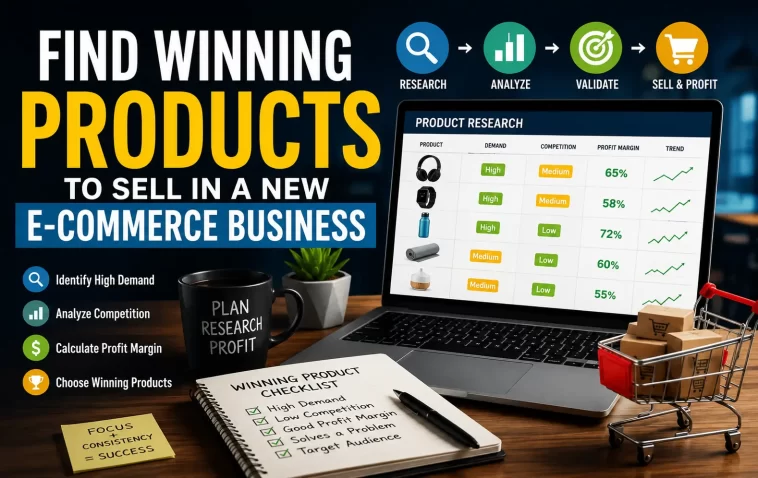
Step 1: Score it against a basic checklist. Margin, wow factor, whether it solves a real problem, visual appeal, and expected return rate. A product doesn’t need to be perfect on all five — a decent score across most of them is enough to justify a small test.
Step 2: Confirm demand across two sources minimum. Don’t rely on a single TikTok video or a single Amazon ranking. Cross-check with at least one other source — search trend data, a second marketplace, or an ad library — before committing budget.
Step 3: Calculate real landed cost, not just the supplier price. Add shipping, any import fees, packaging, and platform transaction fees before you decide on a sale price. Aim for at least a 3x markup on landed cost so there’s room left after ad spend.
Step 4: Check saturation honestly. Search the product name plus “dropshipping” or look at how many stores are running near-identical ad creatives. If everyone’s using the exact same supplier video, you’ll need a different angle or a different niche to stand out.
Step 5: Run a small paid test before scaling. Somewhere around $50-100 in ad spend is usually enough to see whether a product gets real engagement — decent click-through rate and a reasonable add-to-cart percentage — before you invest further.
Step 6: Track everything in one place. A simple spreadsheet with product name, source, landed cost, sale price, and test results builds pattern recognition over time that’s honestly more valuable than any single tool.
What Actually Worked For Me
I spent my first few weeks bouncing between three different paid research tools, convinced the right software would just hand me a winner. It didn’t, not really — most of what they surfaced was stuff I’d already seen trending on TikTok anyway. What actually changed my results was dumber than that: I started screenshotting products every time I saw the same item pop up in more than one creator’s videos within the same week. That repetition turned out to be a better signal than anything a paid dashboard gave me, and it cost nothing.
That said, I did get a little lucky on my first real winner. I wasn’t running a particularly disciplined process yet — I tested it mostly because the margin looked good, not because I’d validated demand carefully. It worked, but I wouldn’t count on that happening twice. The disciplined version of this process is slower and less exciting, but it’s a lot more repeatable than hoping for another lucky pick.
Advanced Considerations and Edge Cases
Seasonal products need an exit plan before you launch, not after. If a product has an 8-week selling window, you need to know that going in and plan your ad scaling and inventory accordingly, rather than realizing it mid-season when demand starts dropping.
“No competition” is sometimes a red flag, not an opportunity. If nobody else is selling something and it seems like an obvious gap, it’s worth asking why. Sometimes it’s genuinely untapped, and sometimes it means the product doesn’t actually sell.
High return rates can hide inside a good-looking test. A product with a strong add-to-cart rate can still lose money overall if it has sizing issues, easily breaks, or needs setup most customers can’t handle. Check return and refund patterns specifically, not just conversion rate, once you’ve got real sales data.
Prevention Tips
Block dedicated time weekly for research instead of squeezing it in reactively when sales slow down — a consistent pipeline of tested products avoids the feast-or-famine cycle a lot of new stores fall into. Don’t wait for a “perfect” product either; a decent, validated option tested this week beats a theoretically ideal one still sitting in your research spreadsheet next month. And build toward category authority rather than single products, so your first winner can lead into cross-sells instead of being a one-off.
FAQ
How many products should I test per month as a beginner? Somewhere around 3-5 is manageable without spreading your ad budget too thin across too many unknowns.
Do I need a paid research tool to start? No. Free tools like Google Trends, Amazon best-seller lists, and Meta Ad Library cover most of what a new store needs before it makes sense to pay for anything.
What margin should I actually aim for? Most sellers target 30-40% after landed cost, shipping, and fees. Below that, ad costs tend to eat profitability once you try to scale.
Is it too late if a product is already trending? Not necessarily, but check saturation carefully. Late entry into an already-flooded product usually means competing purely on price, which rarely ends well.
Editor’s Opinion
took me embarrassingly long to admit that liking a product has basically nothing to do with whether it’ll sell. the boring stuff — spreadsheets, checking margins twice, actually looking at saturation — is what separates a store that lasts from one that dies quietly after two months. not glamorous advice but it’s the honest one.
