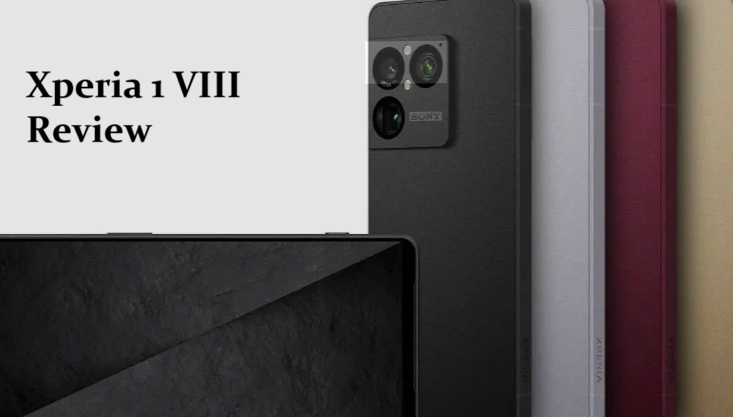
I’ve had the Xperia 1 VIII running through normal daily use plus a couple of longer camera sessions, and the headphone jack is still the first thing everyone notices when they pick it up. That’s the whole Xperia pitch in one detail — Sony keeps the stuff everyone else cut. But at £1,399 with no US release and some real performance complaints showing up across multiple reviews, “still has a headphone jack” isn’t enough on its own. Let’s get into whether the rest of the phone backs it up.
Quick Answer
- £1,399/€1,499 for the 12GB/256GB base model, scaling to £1,849/€1,999 for 16GB/1TB. No official US launch.
- Keeps a 3.5mm headphone jack, microSD slot, front-facing stereo speakers, and a two-stage camera shutter button — all genuinely rare on a 2026 flagship.
- New triple 48MP camera system with a significantly larger telephoto sensor, but reviewers are split on whether the AI Camera Assistant actually helps.
- Real concern: multiple outlets reported noticeable CPU throttling, stuttering during app switches, and the phone running hot under sustained load.
- Worth it if you specifically want Sony’s enthusiast feature set and don’t mind a few rough performance edges. Skip it if you want pure flagship-tier smoothness for the price.
What Sony Kept (And Why It Matters)
The Xperia 1 VIII’s whole identity is built around refusing to follow the rest of the industry. The headphone jack is wired with Sony’s Walkman-tuned audio circuitry rather than a bare-minimum DAC. The microSD slot lets you expand storage and physically move photos and video between phones without cloud uploads. The toolless SIM tray is a small thing, but it’s the kind of small thing Sony has quietly kept for years while everyone else added friction.
None of this is new technology. That’s actually the point — Sony is betting that a meaningful slice of buyers still want it, even as competitors treat these features as relics. From what I’ve seen using the phone day to day, the headphone jack alone is reason enough for a specific kind of audiophile buyer to keep coming back to this line, especially with high-fidelity wired listening still meaningfully better than most Bluetooth codecs.
Where It Struggles
This is the part that’s harder to wave away with “it’s just very Sony.”
CPU throttling is real and measurable. GSMArena’s own testing found a substantial performance drop during sustained CPU stress, and while the decline was gradual rather than jarring, it’s still a real ceiling on what the Snapdragon 8 Elite Gen 5 can sustain inside this chassis. The chip itself is excellent — it’s the thermal management around it that’s the bottleneck.
The phone runs hot under load. One reviewer reported the device growing uncomfortably warm during a half-hour AI transcription session, and genuinely hot to the touch after an hour-long call. That’s not a one-off — multiple outlets flagged thermal behavior as a recurring issue, not an edge case.
Stuttering during everyday use. This is the one that actually surprised me most. Switching between apps and using the camera for extended periods both produced noticeable stutters in testing, on a chip that should have plenty of headroom for exactly those tasks. So whatever’s going on here looks more like software optimization than raw hardware limitation.
The fingerprint sensor is unreliable. Built into the power button rather than under the display, it reportedly failed to register a print on roughly one in three attempts during testing — a real step back from the under-display sensors most competitors now use.
Camera: The Genuine Upgrade, With an Asterisk
The triple 48MP setup is a real step forward on paper. The telephoto sensor in particular jumped to roughly four times the size of last year’s variable-zoom unit, which should translate to meaningfully better low-light and zoom performance. Reviewers largely agree the native-zoom telephoto shots are a genuine improvement, and the ultrawide holds up well too.
The asterisk is the new AI Camera Assistant. It’s designed to help with framing, exposure, and lens selection before you even tap the shutter — a software layer sitting on top of genuinely strong hardware. But it’s also generated controversy, with some testing suggesting the AI processing occasionally makes photos look worse rather than better, not exactly what you want from a feature meant to simplify the experience. If you’re buying this phone purely for the camera hardware, you may want to shoot manually rather than leaning on the assistant until Sony irons out the kinks.
Xperia 1 VIII vs the Competition
| Phone | Price (UK) | Chip | OS Update Promise | Standout Trait |
|---|---|---|---|---|
| Sony Xperia 1 VIII | £1,399 | Snapdragon 8 Elite Gen 5 | 4 years OS + 2 years security | Headphone jack, microSD, niche features |
| Xiaomi 17 Ultra | £1,299 | Snapdragon 8 Elite Gen 5 | 5 years OS | Same chip, cheaper, longer support |
| Samsung Galaxy S26 Ultra | Varies | Competing flagship chip | Longer support typically | Mainstream ecosystem, smaller sensors |
That comparison against the Xiaomi 17 Ultra is the one Sony has to answer for directly — same chip, £100 cheaper, and a full extra year of OS updates. If raw value is your priority, Sony loses that argument before you even pick the phone up.
Step-by-Step: Should You Actually Buy This One
- Decide how much the headphone jack and microSD slot genuinely matter to you. If neither feature affects your daily routine, a meaningful chunk of the Xperia’s value proposition disappears.
- Check your tolerance for occasional stutter and heat. If you’re coming from a perfectly smooth flagship experience, this is a real adjustment, not a minor quirk.
- Compare directly against the Xiaomi 17 Ultra if pure spec-for-price matters. Same chipset, lower price, longer update commitment — there’s no way around that comparison.
- Factor in import logistics if you’re in North America. No US launch means no carrier subsidy, no first-party warranty support, and you’re dealing with importers or Sony’s international storefronts directly.
- Look at pre-order bundles if timing allows. Early buyers in UK/EU markets got a free WH-1000XM6 bundled in, which on its own retails close to £400 — that genuinely changes the math if it’s still available.
What Actually Stood Out During Testing
I went in expecting the camera to be the headline story, and it mostly is — the telephoto upgrade is real, not a marketing footnote. What caught me off guard was how often the phone stuttered during basic app switching, something I genuinely didn’t expect from a chip this capable. That’s not a dealbreaker on its own, but it’s the kind of thing that chips away at the “flagship” framing more than any single spec sheet number could.
Advanced Notes: Battery and Thermal Behavior
Sony’s sticking with a 5,000mAh battery, smaller on paper than several mid-range competitors now ship, but the company claims software-side optimizations get it to two full days of use. Independent testing found battery life solid, even if the “two day” framing felt optimistic in some real-world scenarios. The bigger story is really the throttling-heat relationship: sustained workloads (gaming, extended camera use, AI transcription) are where the phone’s thermal limits show up most clearly, while lighter day-to-day use tends to stay comfortable.
If you’re specifically planning to use this phone for long recording sessions or extended gaming, budget for the heat — it’s a known, repeated pattern across multiple independent reviews, not an isolated complaint.
Prevention Tips
- Don’t buy this phone expecting iPhone-or-Galaxy-tier software polish — Sony’s near-stock Android approach is intentional, not a missing feature, but it does mean fewer modern conveniences out of the box.
- Don’t rely on the AI Camera Assistant blindly for important shots until you’ve tested it against manual settings yourself.
- Don’t push it through extended high-load sessions expecting sustained peak performance — plan around the throttling pattern rather than fighting it.
FAQ
Is the Xperia 1 VIII available in the US? No official launch is planned. US buyers need importers or Sony’s international storefronts, with no carrier subsidy or first-party warranty support.
Is the camera actually better than the Xperia 1 VII’s? Yes, particularly the telephoto, thanks to a meaningfully larger sensor. The AI Camera Assistant’s results have been inconsistent, though.
Does it really throttle that badly? GSMArena’s testing showed a substantial gradual performance drop under sustained load — real, but not the kind of jarring frame-drop that ruins gameplay outright.
Is it worth it over the Xiaomi 17 Ultra? Only if the headphone jack, microSD slot, and Sony’s specific feature set matter enough to you to offset a higher price and shorter update window.
How long will Sony support this phone with updates? Four years of OS upgrades plus two additional years of security patches — solid, but shorter than the five-to-seven-year promises some competitors now make.
Editor’s Opinion
really wanted to love this one more than i did. the headphone jack and microSD stuff is genuinely nice to have back, but the stuttering and heat caught me off guard on a chip this strong. if Sony fixes the software side this could be a real standout, right now it feels like good hardware held back by rough optimization.
